
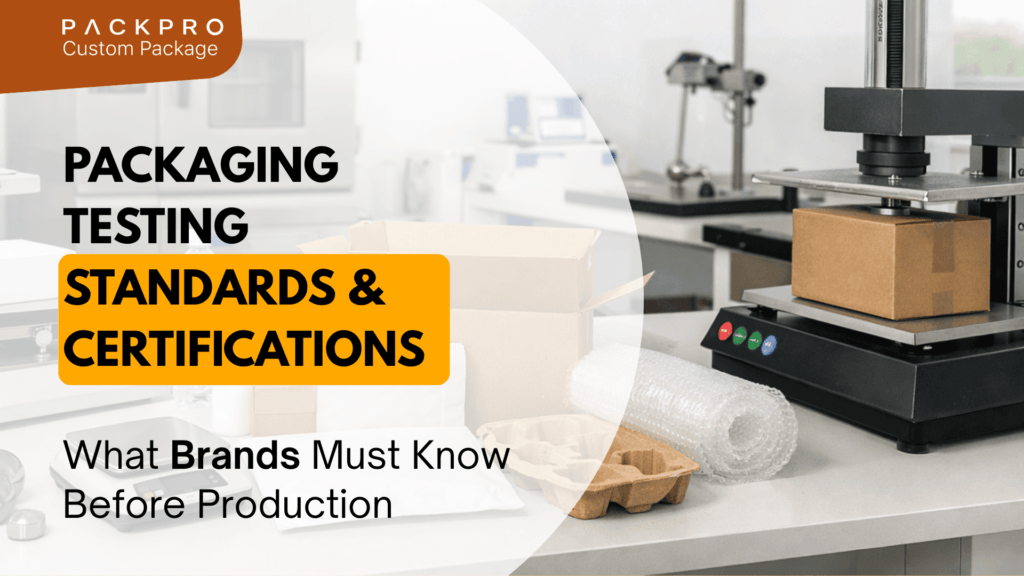
Packaging testing standards and certifications verify that packaging performs as required under real-world conditions. For brands ordering custom packaging at volume, understanding which tests apply to their product category, what the standards require, and which certifications provide commercial value is essential knowledge for making sound procurement decisions.
Quick answer: The most important packaging testing standards for global brands include ISTA and ASTM transit testing for shipping performance, Pantone and ISO colour standards for print consistency, FSC and ISO 14001 for environmental credentials, and food-contact safety standards where applicable. The right tests depend on packaging type, product category, and destination markets.
Why Testing and Certification Matter Before Production
Packaging failures discovered after a product has been shipped to customers are expensive in multiple dimensions. They damage the product, undermine brand trust, generate return costs, and in regulated categories can create compliance exposure. Testing packaging before committing to mass production prevents these outcomes.
Certifications provide a documented, verifiable basis for claims made about packaging performance and environmental credentials. As supply chains become more transparent and regulatory requirements tighten in major markets, certification is increasingly required rather than merely preferred.
Transit and Distribution Testing Standards
ISTA (International Safe Transit Association) provides a widely used series of test protocols that simulate the hazards packaging encounters during distribution. ISTA 1, 2, and 3 series tests cover combinations of vibration, shock, compression, and atmospheric conditioning that replicate real-world transit conditions. These tests are used by major retailers and e-commerce platforms to qualify packaging for their supply chains.
ASTM International standards, particularly ASTM D4169, provide an alternative framework for distribution simulation testing that is widely referenced in North American markets. The test levels and protocols align broadly with ISTA but use different sequencing and documentation conventions.
For corrugated shipping boxes, the Edge Crush Test (ECT) and Burst Strength Test (Mullen) measure specific structural performance parameters. ECT measures the resistance of corrugated board to edge compression, which is the primary load condition during pallet stacking. Weak stacking strength is one of the 6 real causes of crushed gift boxes. Burst Strength measures the force required to rupture the board surface, which is relevant for puncture resistance.
Print and Colour Standards
Colour consistency across packaging production runs requires reference standards that allow deviations to be measured and controlled. Pantone Matching System colours provide a universally recognized numerical reference for specifying and verifying print colour. ISO 12647 sets standards for offset printing process control, including colour tolerances for different print conditions.
For brands where colour accuracy is critical to brand identity, specifying Pantone references and approved colour tolerances in the purchase specification creates a contractual basis for managing colour quality throughout production and repeat orders.
Environmental Certifications
FSC Chain of Custody certification verifies that paper and board materials originate from responsibly managed forests. PEFC provides an equivalent framework recognised in European markets. ISO 14001 environmental management system certification applies to manufacturing facilities rather than materials, confirming that structured environmental management practices are in place at the production level.
The Global Recycled Standard verifies the percentage of recycled content in materials and provides a certified basis for recycled content claims in brand communications and product labelling.
Food Contact Safety Standards
Packaging intended for direct or indirect food contact is subject to safety regulations in all major markets. In the EU, Regulation EC 1935/2004 establishes the framework for food contact material safety. In the United States, FDA 21 CFR provides the relevant standards. Specific requirements cover permitted materials, migration limits for substances that may transfer from packaging to food, and documentation of compliance.
Brands supplying food products to regulated markets must confirm with their packaging manufacturer that all materials and inks used are compliant with the applicable food contact regulations in their target markets. This confirmation should be documented before production begins.
How to Specify Testing Requirements Before Ordering
Testing requirements should be communicated to the manufacturer at the quotation stage, not after production is underway. Include in the purchase specification which tests are required, which standards govern those tests, what the acceptance criteria are, and what documentation is required to confirm compliance. A manufacturer that cannot accommodate these requirements or cannot provide the required documentation should be evaluated carefully before being selected for a significant order.
Have More Procurement Questions?
See our Procurement FAQ page for quick answers on MOQ, lead times, sampling, quality inspection, and export shipping — all in one place. For our current facility certifications, see Our Certifications.