
Somewhere between “let’s get a quote” and “the boxes finally showed up,” a lot of first-time buyers learn the hard way that not every packaging supplier who answers an email is actually equipped to make their order. The website looked fine. The price was competitive. Then the samples never arrived, or arrived looking nothing like what was promised.
You can’t inspect a factory floor from your laptop. But you can ask the right questions and watch how a supplier answers them — and the answers, or the silence, tend to tell you everything you need to know before you’re out a deposit. Here are the seven red flags worth watching for.

1. They Won’t Show You the Factory
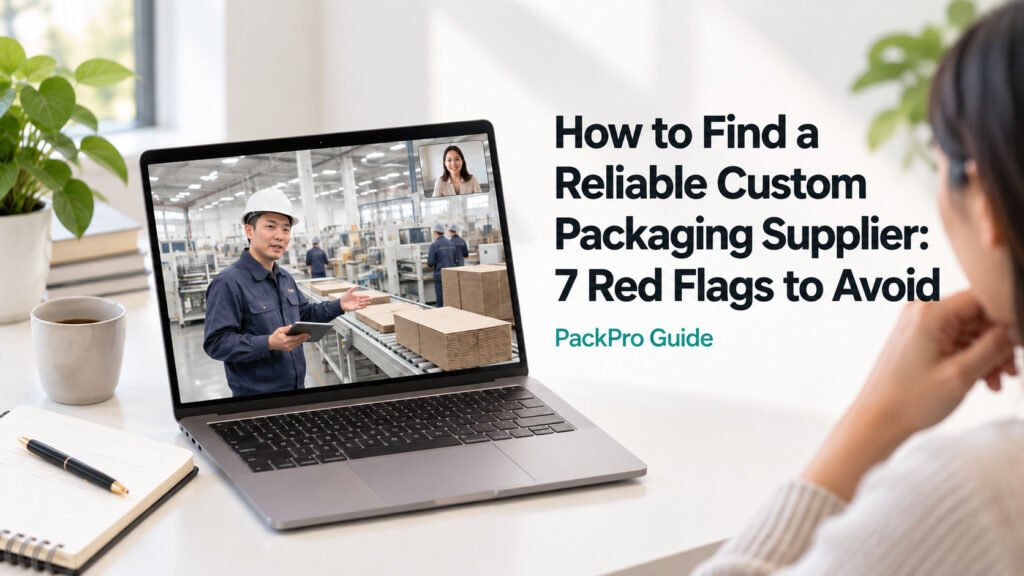
A real manufacturer has nothing to hide and every reason to show off. If you ask for factory photos, a video walkthrough, or a live video call and get vague excuses instead — “our policy doesn’t allow it,” “maybe later” — that’s worth pausing on. It doesn’t automatically mean you’re dealing with a scam. It often means you’re dealing with a trading company reselling capacity from a factory it doesn’t control, which isn’t inherently bad, but it’s something you deserve to know upfront, not discover after the deposit clears.
2. The Quote Arrives Without You Explaining Anything
A supplier who sends back pricing minutes after your first message, before asking about material, GSM, finish, or quantity breaks, isn’t quoting your box. They’re quoting a generic box and hoping it’s close enough. Suppliers worth working with ask questions first — sometimes more questions than feels convenient — because the price genuinely depends on the details.
3. No Physical Sample, or a Sample Fee That Feels Like a Deterrent
Photos and digital mockups are a starting point, not a substitute for holding the actual box. A legitimate supplier will send a pre-production sample, usually for a modest fee credited back once you place the bulk order. If a supplier refuses outright, or prices the sample so high it seems designed to make you skip it, take that seriously — the sample stage is where you catch problems while they’re still cheap to fix.
4. Pricing That’s Dramatically Lower Than Everyone Else
One quote coming in noticeably below every other one you’ve collected isn’t automatically a scam, but it deserves scrutiny before you celebrate it as a win. The gap usually comes from somewhere — thinner board than specified, a cheaper ink process, a lower GSM than what you asked for, or a supplier simply underbidding to win the order and planning to renegotiate once you’re committed. Ask exactly what’s included, and compare specs line by line, not just the number at the bottom.
5. Payment Terms That Only Protect Them
Most legitimate manufacturers work on a deposit-plus-balance structure — something like 30% to start production, the rest before or on shipment. A supplier pushing for full payment upfront, before you’ve even seen a sample, is asking you to carry all the risk in the relationship. That’s not how a confident manufacturer with nothing to hide usually operates.
6. Vague Answers to Specific Questions
Ask a real supplier what GSM their board runs, what finish options they support, or what their standard lead time is for your box style, and you’ll get a specific answer — often followed by a clarifying question of their own. Ask the same question to a supplier overselling their capability, and you tend to get “yes, no problem” to everything, which sounds reassuring right up until you realize it didn’t actually answer what you asked.
7. No Way to Verify They’re a Real, Registered Business
A legitimate factory has a business license, a physical address, and — for a China-based manufacturer shipping internationally — an export license. None of that is confidential. If a supplier is cagey about basic business verification, or you can’t find any trace of them beyond a single marketplace listing, treat that as a reason to keep looking rather than a minor inconvenience to work around.
What This Actually Looks Like in Practice
None of these on their own proves a scam — plenty of legitimate suppliers might be slow on one of these on any given day. What matters is the pattern. A supplier who’s transparent about their factory, asks detailed questions, offers a real sample, prices competitively without being suspiciously cheap, and answers specifics with specifics is one worth trusting with a deposit. One that ticks two or three of these boxes deserves a lot more due diligence before real money changes hands.
Frequently Asked Questions
Is it normal for a packaging supplier to ask a lot of questions before quoting?
Yes, and it’s actually a good sign. Vague, fast quotes tend to come from suppliers guessing at your specs rather than pricing your actual box.
How much should a packaging sample cost?
It varies by box complexity and material, but it should be modest relative to your order size, and it’s usually credited back against your bulk order. A sample fee that feels designed to discourage the request is a warning sign on its own.
Should I always ask for a factory video call?
If you’re placing a meaningful order, yes. A five-minute walkthrough of the production floor tells you more than a week of email back-and-forth.
What’s the safest payment structure for a first order?
A deposit to start production — commonly around 30% — with the balance due before or on shipment. Be cautious of any supplier asking for full payment before you’ve seen a sample.
Work With a Verified, Factory-Direct Supplier
PackPro is a factory-direct manufacturer with transparent MOQs, a physical sample on every order, and a team that answers specifics with specifics. Request a free quote today — we respond within 24 hours.
Get a Free Quote → packpropkg.com/contact
Related Guides
- Choosing a manufacturer — How to Choose a Custom Packaging Manufacturer in China: A Buyer’s Checklist
- Getting a quote — How to Get a Custom Packaging Quote: What to Prepare Before You Ask
- Supplier vs. distributor — Custom Packaging Supplier vs. Wholesale Distributor