
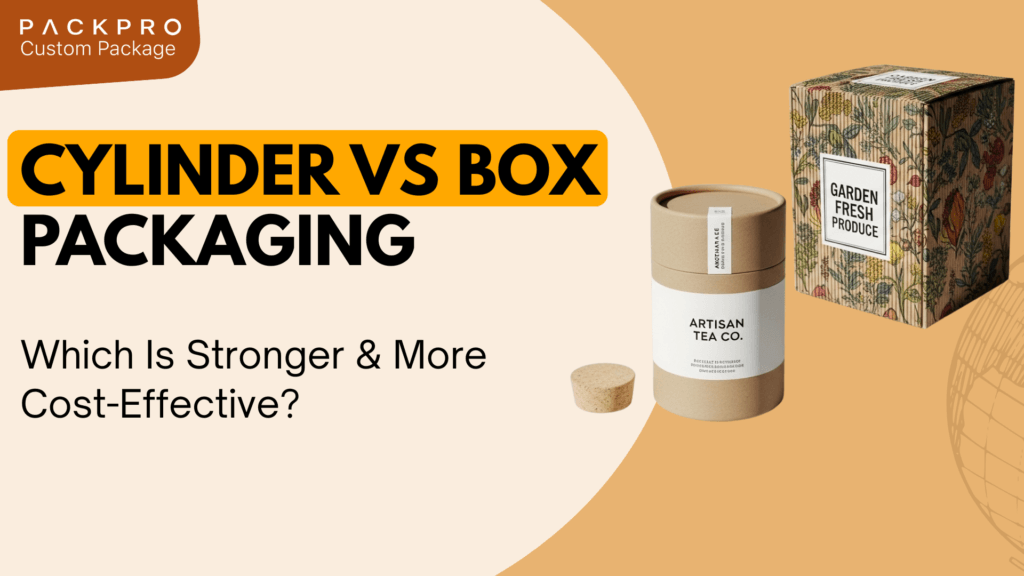
Quick Answer: Which Packaging Is Stronger & Cheaper?
When comparing pure vertical compression strength, cylinder packaging (round packaging tubes) is structurally stronger than standard folding cartons because the circular shape distributes pressure evenly, preventing collapse under weight. However, corrugated box packaging offers superior protection against impact and stacking for heavy bulk shipments.
Regarding cost-effectiveness, box packaging (folding cartons) is generally 20-30% cheaper to produce and ship due to flat storage and material efficiency. Cylinders require more storage space (shipping air) and specialized tooling, making them a premium choice rather than a budget one.
- Choose Cylinder Packaging for: High-end cosmetics, bottles, and items needing high shelf appeal.
- Choose Box Packaging for: Bulk shipping, cost efficiency, and space-saving storage.
Structural Strength Comparison: The Engineering Behind the Shape
When you act as a procurement manager or product developer, understanding the physics behind packaging shapes is crucial for reducing damage rates. The debate between a custom packaging manufacturer recommending tubes versus boxes often comes down to how the package handles external forces.
Why Cylinder Packaging Resists Crushing
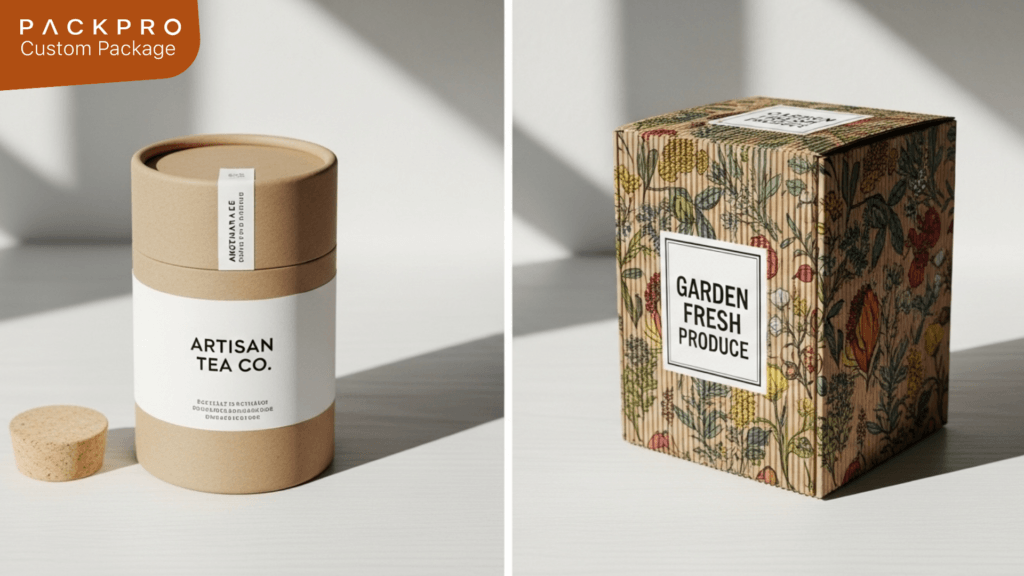
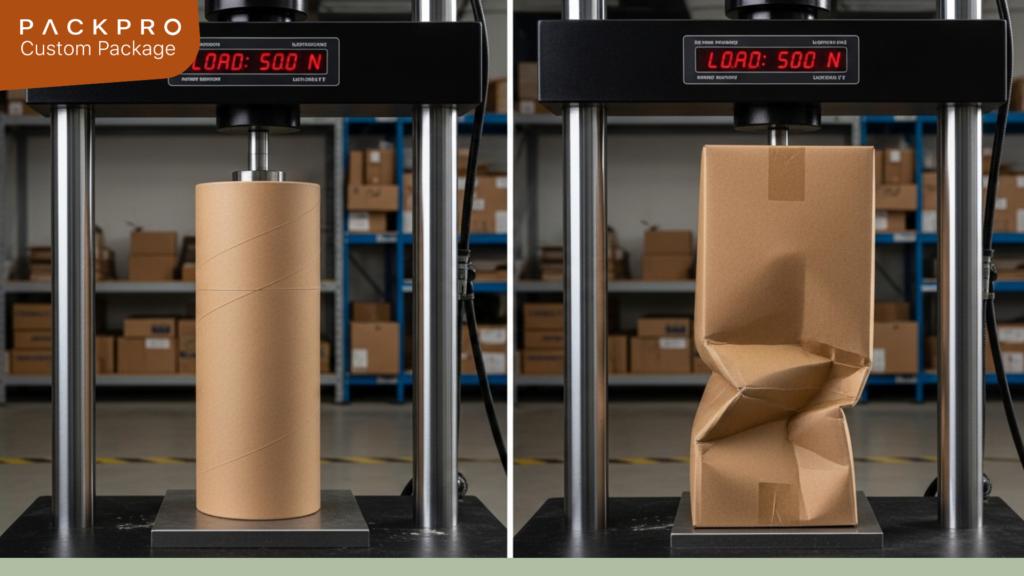
Cylinder packaging and round packaging tubes benefit from arch structural integrity. Because there are no corners, any external pressure applied to the side of a tube is distributed around the circumference. This makes rigid paper tubes exceptionally resistant to vertical crushing forces.
- Vertical Load: High resistance. Ideal for stacking bottles or jars inside.
- Side Impact: Moderate resistance. The curvature deflects some impact but can dent if the board thickness isn’t sufficient.
Many packaging manufacturers follow ISO 9001 quality standards to ensure consistent structural performance.
Why Box Packaging Varies in Strength
Box packaging strength is entirely dependent on the material grade.
- Folding Cartons: These offer low structural support. They rely on the product inside to provide rigidity.
- Rigid Box Packaging: Constructed from chipboard wrapped in paper, these offer significant protection and a premium feel but can suffer from “corner crushing” if dropped.
- Corrugated Box Packaging: The fluted layer creates a cushion. While a standard box might buckle under vertical pressure if not reinforced, it absorbs shock better than rigid tubes during transit drops.
Detailed Comparison Table: Cylinder vs. Box
To help you visualize the trade-offs, here is a direct comparison of features relevant to logistics and branding.
| Feature | Cylinder Packaging | Box Packaging (Folding/Rigid) |
| Structural Integrity | High vertical compression strength due to arch design. | Varies. Folding is low; Rigid is high; Corrugated is strongest for impact. |
| Shipping Durability | Excellent for protecting bottled liquids. Harder to stack without pallets. | Excellent stackability. Corrugated offers best impact absorption. |
| Storage Efficiency | Low. Tubes cannot be shipped flat; they ship “air,” taking up warehouse space. | High. Folding cartons ship flat. Rigid boxes are bulky like tubes. |
| Cost Level | High. Requires specialized tooling and higher shipping volume costs. | Low to Medium. Folding cartons are the most cost-effective packaging solution. |
| Best For | Luxury cosmetics, spirits, candles, posters, t-shirts. | Retail goods, electronics, subscription boxes, bulk shipping. |
| Customization | Premium labeling, foil stamping, metal end caps. | Window patching, complex die-cuts, extensive print surface area. |
Material Options and Their Impact on Performance
Selecting the right material is just as important as selecting the shape. As a custom packaging manufacturer, we often see brands overspend on materials they don’t need or underspend on protection.
Cylinder Materials
- Paperboard Tube: The standard for retail. Thickness usually ranges from 1mm to 3mm. Thicker walls equal higher crush resistance but higher weight.
- Composite Cans: Often lined with foil for food safety (like Pringles cans). These provide moisture barriers but are harder to recycle.
- Telescoping Tubes: A two-piece design where the lid slides over the base. This adds a double layer of board at the overlap, significantly increasing strength.
Box Materials
- Folding Box Board (FBB): Lightweight and printable. Best for lightweight retail items like toothpaste or cereal.
- Rigid Board (Chipboard): Used for iPhones or luxury jewelry. It does not fold flat. It provides a “vault-like” feel.
- Corrugated Board: The workhorse of shipping. Flutes (E-flute, B-flute) determine the cushioning. E-flute is thin enough for retail boxes but strong enough for mailing.
Shipping Performance and Logistics
Logistics is where the hidden costs of packaging reveal themselves. When analyzing a packaging strength comparison, you must also look at how that strength interacts with the supply chain.
The “Shipping Air” Problem
One of the biggest downsides of round packaging tubes and rigid box packaging is that they arrive at your facility fully assembled.
- Cylinders: You are paying to ship empty space inside the tube from the manufacturer to your warehouse. This increases freight costs significantly.
- Folding/Corrugated Boxes: These ship flat (knocked down). You can fit thousands of flat boxes on a single pallet, drastically reducing inbound freight costs.
Stacking and Palletizing
Box packaging is geometrically perfect for palletizing. Rectangles sit flush against one another, maximizing cube utilization in a shipping container.
Cylinder packaging leaves gaps between the units when packed in a master carton. This “lost space” means you fit fewer units per pallet, increasing your per-unit shipping cost.
Branding and Shelf Appeal: The Round Advantage
While boxes win on logistics, cylinders often win on the shelf.
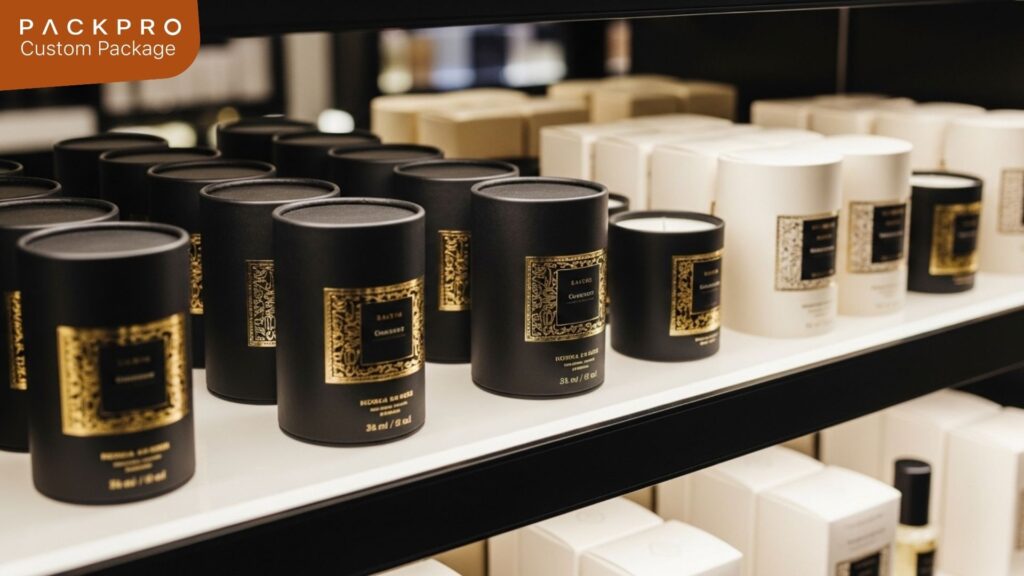
Human psychology is drawn to curves. In a retail environment dominated by rectangular boxes, round packaging tubes stand out visually. They suggest a premium, organic, or specialized product.
- 360-Degree Branding: Cylinders offer a continuous canvas. The user spins the product to read it, creating physical interaction.
- Perceived Value: Consumers often associate tube packaging with luxury spirits, high-end perfumes, or gourmet teas.
- Unboxing Experience: The friction-fit opening of a rigid tube or box creates a satisfying “pop” or smooth slide that elevates the user experience.
Looking for high-end options? Read our guide on Luxury Perfume Packaging Trends to see how shape influences price perception.
Production and Tooling Costs
When seeking a cost-effective packaging solution, you must factor in the initial setup.
Box Tooling
Die-cutting plates for boxes are relatively inexpensive. Changing the size of a box usually just requires a new cutting die, which is a fast and cheap process.
Cylinder Tooling
Manufacturing tubes requires mandrels (metal molds) of specific diameters. If you want a tube diameter that your manufacturer does not already have a mandrel for, the tooling cost is high. You are often limited to standard diameters (e.g., 2″, 3″, 4″) unless you are willing to pay for custom metalwork.
Sustainability Comparison
Sustainability is a key metric for modern procurement.
- Cylinders: Generally harder to recycle if they have metal or plastic end caps. All-paper tubes are eco-friendly, but their volume creates a higher carbon footprint during transport (fewer units per truck).
- Boxes: Corrugated and folding cartons are the gold standard for recycling. They are easily flattened by the consumer and have established recycling streams globally.
For more on weather-resistant eco-options, check our Waterproof Packaging Guide.
Decision Framework: Which Should You Choose?
If you are struggling to make the final call, use this framework to decide between cylinder packaging and boxes.
Choose Cylinder Packaging If…
- Your product is round. Bottles, jars, and candles fit naturally with no wasted internal space.
- You sell a luxury item. The aesthetic of a rigid tube justifies a higher unit price.
- You need vertical strength. You are stacking products that might be crushed in a standard folding carton.
- Budget is secondary to branding. You can absorb higher freight costs for better shelf presence.
Choose Box Packaging (Folding/Corrugated) If…
- Cost efficiency is the priority. You need the lowest cost per unit.
- You have limited warehouse space. You need packaging that stores flat.
- You ship direct-to-consumer. Rectangular boxes are easier to label and ship via standard carriers.
- Your product is rectangular or irregular. Electronics or kits fit better in boxes.
Choose Rigid Box Packaging If…
- You want the “Apple” experience. You want the premium feel of a tube but the stackability of a box.
- Gift sets. You are packaging multiple items together that need a tray insert.
Need to understand folding styles better? Visit our.
Packaging durability is often validated according to ISTA testing protocols to simulate real-world shipping conditions.
Frequently Asked Questions About Cylinder vs Box Packaging
Need Help Choosing Between Cylinder and Box Packaging?
Selecting the right packaging is a balance between protection, cost, and brand impact. As an experienced custom packaging manufacturer, we help brands navigate these trade-offs every day.
Whether you need a cost-effective packaging solution for a subscription box or a high-end rigid cylinder for a new fragrance launch, our engineering team can design the perfect structure for your product.
Don’t leave your product safety to chance.
Request a Free Consultation & Custom Quote Today
We specialize in structural design, material selection, and cost optimization to ensure your packaging protects your product and your bottom line.