
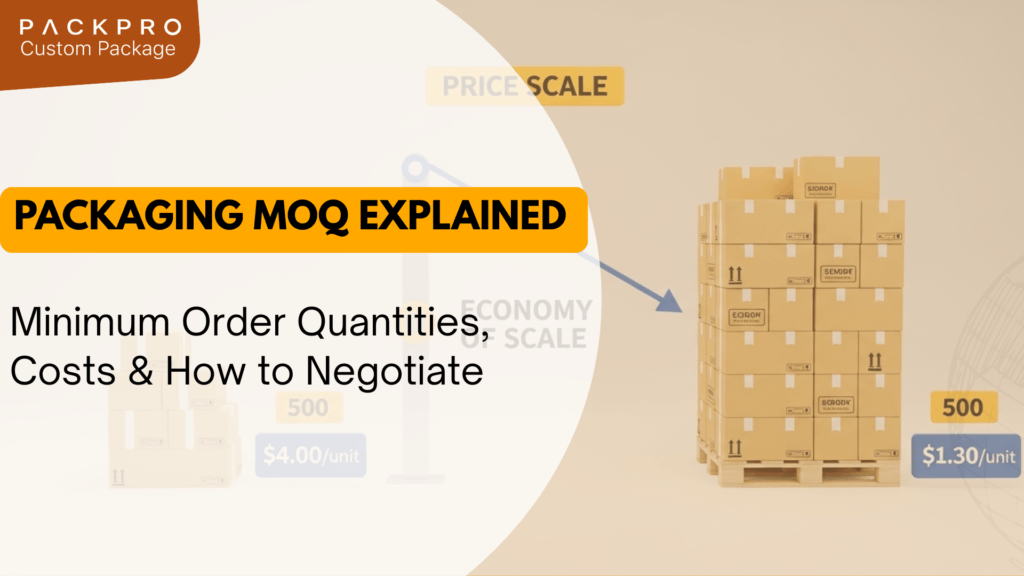
Minimum Order Quantity (MOQ) in packaging is the smallest number of units a manufacturer can produce in a single production run. Suppliers require an MOQ to cover their fixed costs, such as machine setup, labor, and raw materials. Without it, producing very small batches would be unprofitable. For brands, understanding and managing the packaging MOQ is critical for controlling costs, managing inventory, and launching new products effectively. A high MOQ can tie up capital, while finding a low MOQ packaging supplier can enable greater flexibility. Successfully navigating this requirement often involves strategic negotiation, choosing the right printing method, and finding a manufacturing partner who aligns with your business needs.
What Does MOQ Mean in Packaging?
In simple terms, the packaging MOQ is the baseline order size your supplier needs to justify a production run. Think of it as the “entry ticket” to manufacturing. These costs—often called setup costs—are the same whether you produce 100 boxes or 10,000. They include tooling setup, printing plate creation, machine calibration, and the initial material waste required to get the quality right.
By setting a minimum order quantity for packaging, manufacturers ensure they can distribute these fixed costs across enough units to make the job commercially viable. This is why the cost per unit drops significantly as your order quantity increases—the fixed setup cost is spread more thinly.
Why Do Packaging Manufacturers Require an MOQ?
Every production run comes with unavoidable fixed costs. A packaging manufacturer sets an MOQ to ensure that the revenue from an order is sufficient to cover these initial expenses and generate a profit.
Here’s a breakdown of the primary drivers behind packaging MOQs:
- Raw Material Costs: Suppliers of paperboard, corrugated sheets, and other materials have their own MOQs. A packaging manufacturer must purchase a minimum amount of material, which directly influences the minimum order they can accept from a brand.
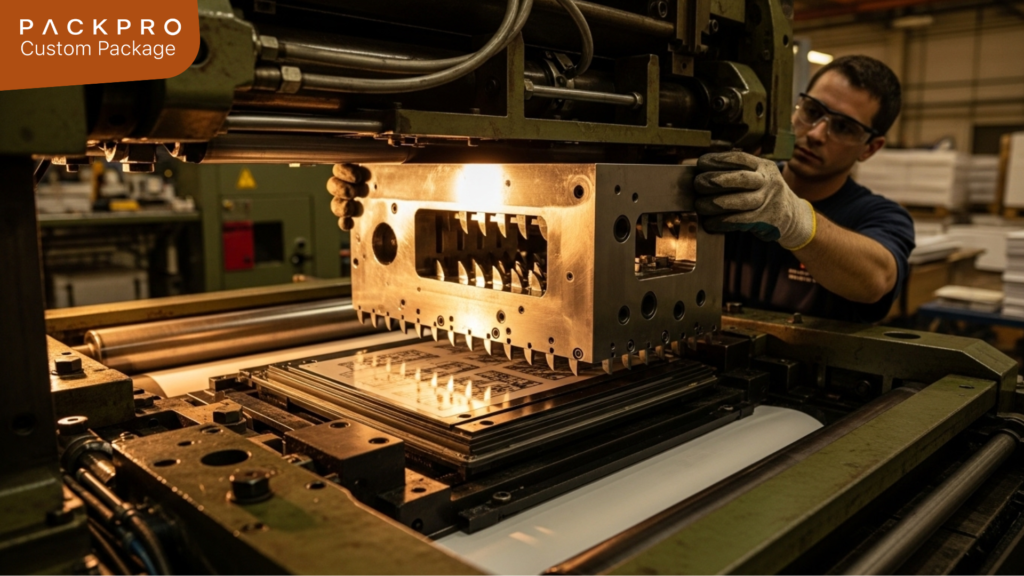
- Machine Setup & Tooling: Setting up large-scale machinery like offset printers and die-cutting presses is a time-consuming and labor-intensive process. This includes creating custom printing plates and cutting dies for your specific box design. These setup costs must be absorbed by the order size.
- Labor Efficiency: A production team operates most efficiently on larger runs. The labor cost to set up and tear down a machine for a small order is disproportionately high compared to a long, continuous run.
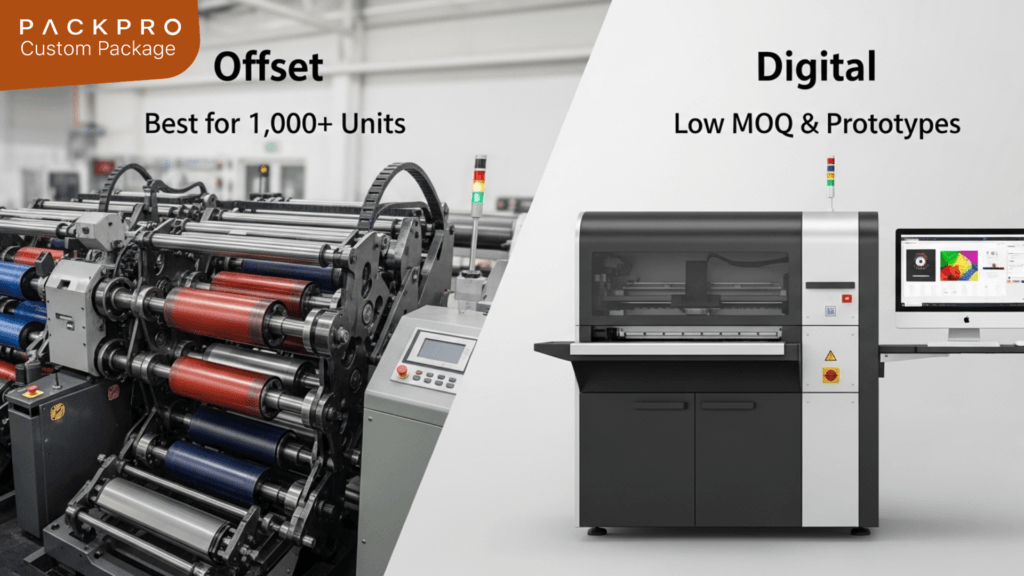
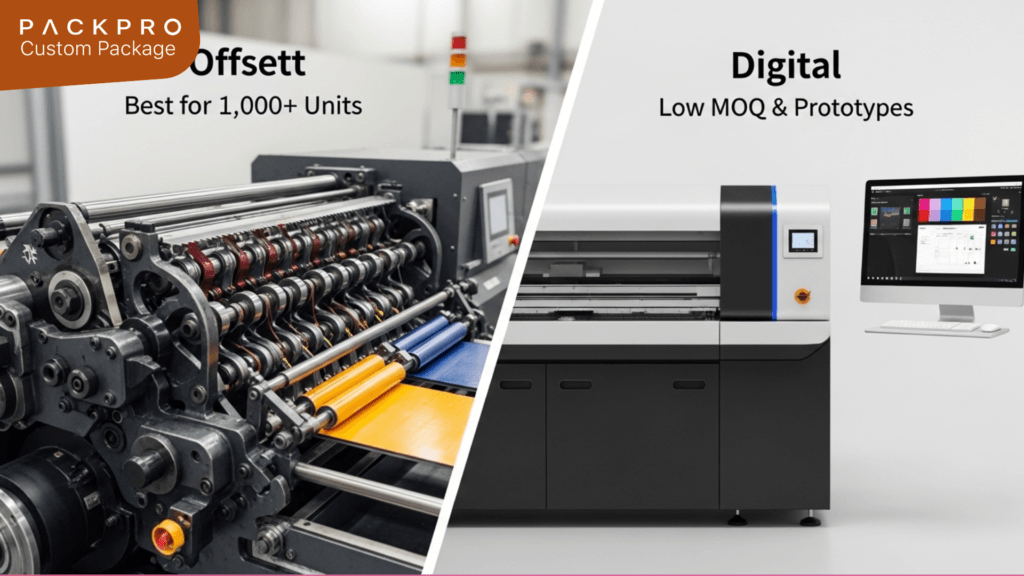
- Printing Method: The chosen printing technology has a massive impact. Offset printing, the standard for high-quality, large-volume runs, involves significant upfront setup. In contrast, digital printing has minimal setup, making it suitable for smaller orders.
- Economic Viability: Ultimately, a manufacturer needs to maintain profitability. Accepting orders below the MOQ would lead to financial losses, making the business unsustainable.
Typical MOQ Ranges for Custom Packaging
The minimum order quantity for packaging varies widely based on the box type, material, printing complexity, and the manufacturer’s capabilities. Here are some general guidelines to help you set expectations.
Folding Cartons
Folding cartons, commonly used for cosmetics, food, and retail products, typically have an MOQ ranging from 1,000 to 5,000 units. The specific number depends on the printing method. A run using offset printing will be on the higher end, while a digitally printed order may be accommodated at a lower quantity.
Rigid Boxes
Rigid boxes (or setup boxes) are the premium choice for luxury goods, electronics, and gift sets. They involve more manual assembly and specialized equipment. As a result, the custom packaging MOQ for rigid boxes is often between 500 and 2,000 units. The complex, multi-step manufacturing process makes smaller runs very cost-prohibitive.
Corrugated Boxes
Used for shipping and e-commerce, corrugated boxes (like mailer boxes) have a wide MOQ range. For simple, one-color flexo-printed boxes, the MOQ might be 500 to 2,000 units. However, for high-quality, multi-color litho-laminated mailers, the MOQ can easily climb to 2,000 units or more due to the offset printing and lamination setup.
Packaging MOQ Comparison Table
| Packaging Type | Typical MOQ | Cost Impact | Setup Cost | Best For |
| Folding Cartons | 1,000–5,000 units | Moderate per unit | Moderate (offset plates, die-cut) | Retail products, cosmetics, food |
| Rigid Boxes | 500–2,000 units | High per unit | High (wrapping, assembly) | Luxury goods, electronics, gift sets |
| Corrugated Mailers | 500–2,000 units | Low to Moderate per unit | Low to High (depends on printing) | E-commerce shipping, subscription boxes |
| Luxury Packaging | 500–1,500 units | Very High per unit | Very High (special materials, finishes) | High-end jewelry, spirits, premium gifts |
How MOQ Affects Packaging Manufacturing Cost
The relationship between MOQ and cost per unit is one of the most important concepts for a brand to understand. The total packaging manufacturing cost consists of two main components:
- Fixed Costs: These are one-time setup charges per production run (tooling, printing plates, machine setup).
- Variable Costs: These are the costs per unit (materials, ink, machine run-time).
The formula is simple: (Total Fixed Costs + (Variable Cost Per Unit x Quantity)) / Quantity = Final Cost Per Unit
As you increase the order quantity, the fixed cost portion is divided by a larger number, dramatically reducing its impact on the final per-unit price.
For example, if the setup cost is $1,500 and the variable cost is $1 per box:
- At 500 units: ($1,500 + $500) / 500 = $4.00 per box
- At 5,000 units: ($1,500 + $5,000) / 5,000 = $1.30 per box
This demonstrates why manufacturers push for higher quantities and why meeting the MOQ is crucial for achieving a commercially viable price point.
The Impact of Printing: Digital vs. Offset
The choice between digital and offset printing is a primary factor influencing your MOQ.
- Offset Printing: This is the gold standard for quality and cost-efficiency at high volumes. It uses custom plates to transfer ink onto paperboard. The setup is expensive and time-consuming, making it unsuitable for small runs. This method is the main reason for high MOQs (typically 1,000+ units).
- Digital Printing: This method prints directly from a digital file, much like a desktop printer. There are no plates and minimal setup costs. This makes digital printing the ideal choice for small orders, prototypes, and market tests. If you need a low MOQ packaging supplier, they will almost certainly be using digital printing technology.
In the “Shipping and Logistics” section, you could link to a major carrier like UPS or FedEx shipping calculators to help users estimate the “Weight and Destination” factors mentioned in your guide.
How to Negotiate MOQ with a Packaging Manufacturer
While MOQs are often firm, there is sometimes room for negotiation, especially if you approach it as a strategic partner. Here are a few practical strategies for MOQ negotiation.
- Offer to Pay a Higher Price Per Unit: This is the most direct approach. If a manufacturer’s MOQ is 2,000 units but you only need 1,000, ask if they will produce the smaller quantity for a higher per-unit cost. This allows them to cover their fixed setup costs while helping you manage inventory.
- Split the Order into Multiple Shipments: Propose ordering the full MOQ but request that the manufacturer produces it all at once and ships it to you in several batches over time. This helps with your cash flow and warehouse space. You may need to pay for the full order upfront, or the supplier may charge a storage fee.
- Standardize Your Packaging: If you have multiple products, try to use the same box size or structure for all of them. This allows you to combine the quantities for different SKUs into a single, large production run, easily meeting the MOQ. You can differentiate the products using labels or simple print variations.
- Discuss Your Long-Term Plans: If you are a startup, explain your growth forecast and potential for future, larger orders. A packaging supplier may be willing to accept a smaller initial order at a slight loss if they believe you will become a valuable long-term client.
- Inquire About Grouping Your Order: Ask your packaging supplier in China or elsewhere if they have other clients using similar materials or box structures. Sometimes, a manufacturer can group several small jobs together on the same sheet of material, effectively sharing the setup costs among multiple clients and allowing for a lower MOQ for everyone.
Common MOQ Mistakes Brands Make
Navigating packaging MOQs can be tricky, and several common pitfalls can lead to wasted money and excess inventory.
- Focusing Only on the Lowest Per-Unit Price: Ordering a huge quantity to get the absolute lowest unit cost can be a mistake. This ties up capital in inventory that might become obsolete if you rebrand or change your product. Balance unit cost with cash flow and risk.
- Ignoring Warehousing Costs: A large order of 10,000 boxes may seem cheap per unit, but where will you store them? Don’t forget to factor in the cost of storage, whether in your own space or a third-party warehouse.
- Failing to Plan for Obsolescence: Products and branding evolve. Ordering a two-year supply of packaging is risky. A slight change in regulations, branding, or product formulation can render your entire inventory useless.
- Not Requesting a Production Sample: Before committing to a 5,000-unit run, always get a production-grade sample. This helps you verify the quality, colors, and construction, preventing a costly mistake on a massive order.
When explaining “Offset Printing”, consider linking to a technical resource or a Wikipedia entry for “Offset Printing” to provide a deeper dive into the mechanical process for interested readers.
Frequently Asked Questions About Packaging MOQ
We offer both digital and offset printing solutions, allowing us to optimize your project for your specific budget and volume needs. Whether you’re a startup needing a low MOQ run or an established brand looking for cost-efficiency at scale, our team can guide you to the perfect solution.