
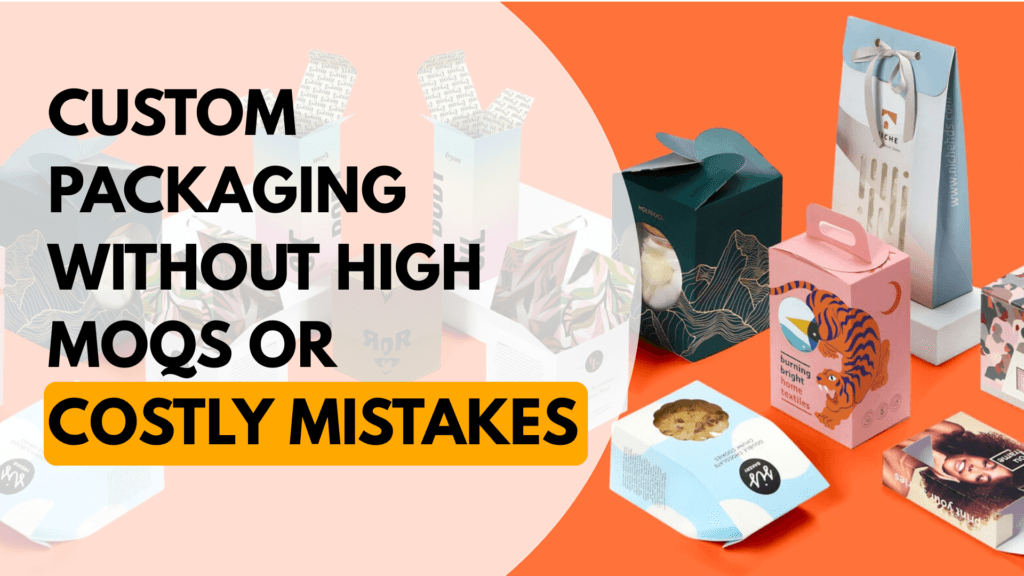
Custom packaging is often seen as a high-risk decision, especially for startups and growing brands. High minimum order quantities, unclear pricing, and the fear of expensive mistakes cause many businesses to delay packaging upgrades or settle for generic solutions that do little to support branding or customer experience. The assumption is that professional packaging requires large upfront commitments and equally large budgets.
That assumption is wrong. With the right approach, brands can achieve professional custom packaging in small quantities, without locking up cash flow or risking costly errors. The key is understanding how experienced buyers control cost, reduce risk, and scale packaging decisions gradually instead of all at once.
Quick answer: Brands can get custom packaging without high MOQs or costly mistakes by using digital printing, choosing standard box styles, validating designs with physical samples, and starting with low-risk production runs before scaling.
Why High MOQs Create Problems for Growing Brands
High minimum order quantities force brands to commit before they are ready. Ordering thousands of boxes upfront ties up capital that could be used for marketing, inventory, or product development. It also increases storage costs and reduces flexibility if branding, messaging, or product details change.
The real danger of high MOQs is that they magnify mistakes. A small sizing error, an overlooked print issue, or a design choice that looks good on screen but fails in reality becomes far more expensive when repeated across a large volume. This is why experienced buyers avoid treating the first packaging order as a final decision. Instead, they prioritize control and learning before scale.
Brands that work with custom packaging solutions designed for flexibility are better positioned to grow without unnecessary financial pressure.
How Costly Packaging Mistakes Actually Happen
Most costly packaging mistakes are not caused by poor suppliers. They happen when brands rush decisions or rely too heavily on assumptions.
One common mistake is designing packaging before product details are fully finalized. Changes to product size, inserts, or protective materials often require a complete redesign of the box. Another issue is approving artwork based only on digital previews, without accounting for how ink behaves on physical materials.
Costs also escalate when brands choose complex finishes too early. Foil stamping, embossing, and specialty coatings increase production time and unit cost. While these finishes have value, they are rarely necessary for an initial run and can be added later once demand is proven.
Professional buyers reduce these risks by simplifying early decisions and validating every critical step before committing to volume.
How Brands Get Custom Packaging With Low MOQs
Low MOQ custom packaging is possible when the production method matches early-stage needs. Digital printing plays a major role here, as it allows short runs without the high setup costs of traditional printing. This makes it easier to order smaller quantities while still achieving professional results.
Structural simplicity also matters. Proven formats such as custom printed boxes and custom mailer boxes are faster and more affordable to produce than complex, fully bespoke structures. These styles work well for ecommerce and retail without introducing unnecessary tooling costs.
Material choice further supports cost control. Kraft corrugated and standard paperboard options are widely available, durable, and predictable in production. They support clean branding while keeping unit costs manageable, especially at lower volumes.
Brands that focus on low minimum order custom packaging gain flexibility, reduce waste, and maintain the option to refine their design as their business evolves.
Why Sampling Is the Best Protection Against Costly Errors
Sampling is one of the most effective tools for avoiding expensive packaging mistakes. A physical sample allows brands to confirm fit, material strength, print quality, and overall presentation before full production begins.
By reviewing a sample, buyers can identify issues when changes are still affordable. Adjustments made at this stage cost far less than correcting problems after a full run has been produced. This is why experienced buyers always request a packaging sample before approving mass production.
In practice, sampling turns packaging from a gamble into a controlled decision. It ensures that what is approved once can be reproduced reliably in future orders.
Scaling Packaging Without Repeating the Same Mistakes
Starting with low MOQs allows brands to scale intelligently. Once packaging has been tested in real-world conditions, larger orders can be placed with confidence. Feedback from customers, fulfilment teams, and shipping performance helps refine the next production run.
Consistency is maintained by documenting specifications and saving approved samples. This prevents quality drift and ensures repeat orders match earlier expectations. Brands that take this approach often find that their second and third packaging runs are faster, smoother, and more cost-efficient than the first.
When brands are ready to scale, working with a stable supplier relationship becomes critical. Long-term partners retain specifications and understand brand standards, reducing errors over time.
When Low MOQ Packaging Becomes a Growth Advantage
Custom packaging should support growth, not slow it down. Low MOQ packaging allows brands to improve presentation, test new ideas, and evolve branding without being locked into a single design for years.
Packaging can also act as a marketing channel. Adding QR codes, reorder links, or brand messaging helps drive repeat engagement and reinforces brand recognition. Over time, packaging becomes an asset rather than a fixed cost.
Frequently Asked Questions About Low MOQ Custom Packaging
Is it possible to get custom packaging with low minimum order quantities?
Yes. Using digital printing, standard box styles, and common materials allows many suppliers to offer low MOQ custom packaging suitable for startups and growing brands.
Does low MOQ packaging cost more per unit?
Unit cost can be slightly higher, but overall financial risk is much lower. Smaller runs reduce waste, storage costs, and the impact of potential mistakes.
What is the biggest mistake brands make with custom packaging?
Committing to large quantities before validating size, material, and print quality through physical samples.
Can low MOQ packaging still look professional?
Yes. Clean design, appropriate materials, and proper print setup matter far more than order volume.
Final Thoughts: Control First, Scale Second
Custom packaging does not need to be an all-or-nothing decision. Brands that start with low MOQs, validate designs through sampling, and keep early production simple avoid costly mistakes while maintaining a professional appearance.
The most successful buyers focus on control first and scale second. This approach protects cash flow, preserves flexibility, and creates a strong foundation for growth.
If you want expert guidance on low-risk packaging decisions, PackPro Packaging helps brands implement flexible, scalable custom packaging strategies without unnecessary commitments. You can request a custom packaging quote to discuss low MOQ options, sampling, and cost control before production begins.