
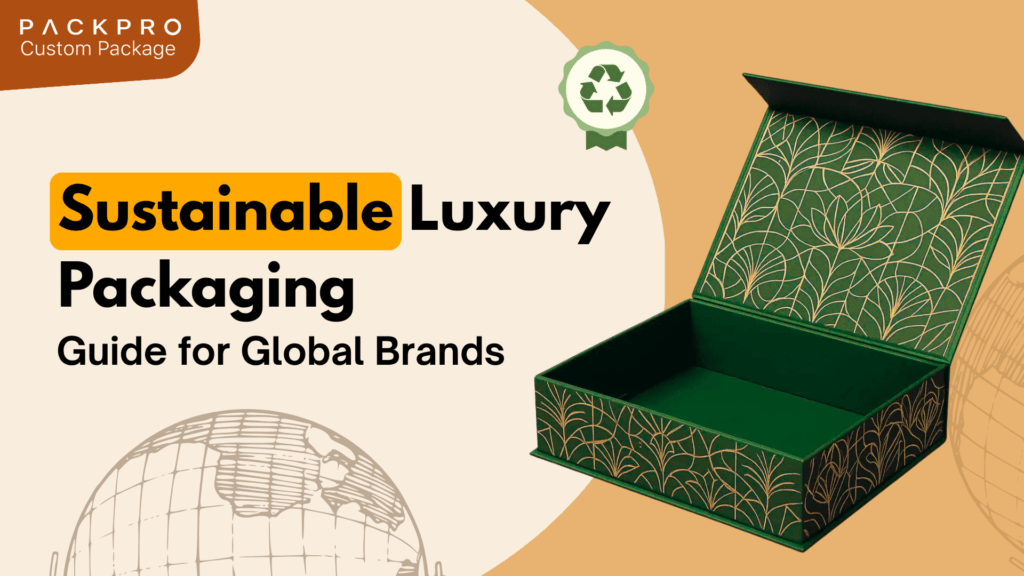
Sustainable luxury packaging has moved beyond niche appeal. What was once a differentiator for progressive brands is now an expectation from premium consumers globally. For packaging buyers, brand owners, and manufacturers alike, the challenge is no longer whether to pursue sustainable packaging, but how to do it without compromising the quality, material feel, and visual sophistication that luxury positioning demands.
Quick answer: Sustainable luxury packaging combines premium materials such as FSC-certified boards, recycled rigid box components, soy-based inks, and water-based coatings with high-end finishing techniques. When executed correctly, it meets environmental standards without sacrificing tactile quality, structural strength, or visual appeal.
This guide explains the materials, certifications, manufacturing approaches, and commercial considerations that global brands need to understand before making sustainable packaging decisions.
Why Luxury Brands Are Prioritising Sustainable Packaging
Consumer behaviour in premium markets has shifted significantly. Research consistently shows that high-value customers, particularly younger demographics, factor environmental responsibility into purchasing decisions. For luxury brands, this creates both pressure and opportunity.
Sustainable packaging signals that a brand takes its values seriously, not just in communication, but in every physical touchpoint. The unboxing experience, which is central to luxury positioning, now carries additional weight when the packaging itself reflects environmental integrity.
Beyond consumer perception, regulatory pressure in the EU, UK, and other major markets is increasing. Extended Producer Responsibility legislation, plastic use restrictions, and mandatory recycling labelling requirements are making sustainable packaging choices increasingly non-negotiable for global brands.
Core Materials Used in Sustainable Luxury Packaging
The material specification is the foundation of any sustainable luxury packaging strategy. Several categories are now well-established in premium manufacturing.
FSC-Certified Paperboard and Greyboard
Forest Stewardship Council certification is the primary standard for responsibly sourced paper-based materials. FSC-certified greyboard, used in rigid box construction, provides the same structural density and weight as conventional greyboard while ensuring that the source forests are managed sustainably. Most premium box manufacturers now offer FSC-certified options as standard.
Recycled Content Materials
Post-consumer recycled (PCR) content can be incorporated into both outer wrapping papers and inner structural components. The challenge with recycled paper in luxury contexts is colour consistency, as recycled fibres often produce a slightly off-white or grey tone. This can be managed through careful wrap selection or used intentionally as a design element that signals sustainability.
Uncoated and Kraft-Finish Wraps
Uncoated papers have a natural texture that communicates craftsmanship and restraint. Many contemporary luxury brands, particularly in fragrance, cosmetics, and fashion accessories, are shifting from high-gloss coated wraps to textured, uncoated surfaces. These materials are typically more recyclable and compostable than heavily coated alternatives.
Water-Based and Soy-Based Inks
Solvent-based inks contain volatile organic compounds (VOCs) that are harmful to both the environment and manufacturing workers. Water-based and soy-based inks produce comparable print quality for most luxury applications and are more suitable for recyclable packaging because they are easier to remove during the deinking process.
Water-Based Coatings and Laminates
Traditional glossy or matte laminates use plastic film that complicates recycling. Water-based coatings offer a viable alternative that provides surface protection without the environmental cost of plastic lamination. For brands requiring premium surface effects, spot UV using water-based formulas can replicate the visual contrast of conventional UV finishes.
Balancing Premium Feel with Environmental Performance
The most common concern among luxury packaging buyers is whether sustainable materials can deliver the tactile experience that premium consumers expect. In practice, the answer is yes, but it requires deliberate specification rather than simple substitution.
Rigid box construction using FSC-certified greyboard at appropriate thickness delivers the same weight and structure as conventional alternatives. The outer wrap selection, whether textured paper, linen-effect stock, or embossed material, determines the tactile impression independently of the substrate’s environmental credentials.
Finishing techniques such as foil stamping, embossing, and debossing remain fully compatible with sustainable base materials. The key is selecting foils with recyclability in mind. Certain metallic foils are compatible with paper recycling streams, while others require separation.
Magnetic closures, ribbon pulls, and premium inserts can all be specified using sustainable materials without visible compromise to the finished product. The difference, when it exists, is often in the cost rather than the appearance.
Certifications That Matter for Global Brands
Certification provides verifiable evidence of environmental claims and protects brands from greenwashing accusations. The following standards are most relevant for luxury packaging procurement.
FSC (Forest Stewardship Council): Covers responsible forestry for paper and board materials. The most widely recognised certification in global markets.
PEFC (Programme for the Endorsement of Forest Certification): A complementary standard to FSC, recognised particularly in European markets.
ISO 14001: Environmental management system certification for manufacturing facilities. Indicates that the supplier has structured environmental processes in place, not just material-level claims.
GRS (Global Recycled Standard): Verifies the recycled content percentage in materials. Relevant for brands making specific claims about PCR content.
OK Compost / TUV Austria: Industrial and home compostability certifications for packaging components that are positioned as compostable end-of-life options.
When sourcing from manufacturers in China, where most global luxury packaging is produced, it is important to verify that certifications are current and cover the specific materials being used in your production run. Some suppliers hold certifications for certain product lines but not others.
Manufacturing Considerations for Sustainable Luxury Packaging
Transitioning to sustainable materials within a luxury packaging specification requires understanding a few manufacturing realities.
Lead times may be slightly longer when sourcing certified materials, particularly if FSC-certified greyboard or specialist recycled papers need to be ordered in advance. Building this into production planning avoids delays.
Colour matching on recycled or uncoated papers is less predictable than on conventional coated stock. Pantone colour references remain essential, but physical sample approval on the final material is more important than ever when sustainable substrates are specified.
Certain finishing techniques have compatibility considerations with sustainable materials. Hot foil stamping, for instance, works well on most FSC papers but requires testing on highly textured stocks to confirm adhesion quality. A reputable manufacturer will conduct these tests as part of the sampling process.
Structural integrity testing should be maintained to the same standards as conventional luxury packaging. Sustainable materials do not reduce the obligation to ensure that packaging protects the product throughout transit and retail handling.
Communicating Sustainability on Luxury Packaging
Once a brand has committed to sustainable packaging, communicating that commitment effectively is important. However, communication on luxury packaging must be handled with restraint to avoid undermining the aesthetic.
The most effective approaches include small, well-designed certification marks placed on secondary surfaces such as the base or inside flap. QR codes linking to detailed sustainability information are increasingly common and allow brands to communicate without cluttering primary surfaces. Some brands integrate a brief, considered statement in the inside print that acknowledges the sustainable choice without becoming promotional.
Avoid overstating claims. Packaging that uses FSC-certified paper but includes plastic ribbon or non-recyclable magnetic components should not describe itself as fully sustainable. Precision in environmental claims is both ethically important and increasingly required under consumer protection regulations in major markets.
Cost Implications of Sustainable Luxury Packaging
Sustainable luxury packaging typically carries a modest cost premium compared to conventional alternatives, generally in the range of five to fifteen percent depending on the specific materials and certifications selected. This premium is narrowing as demand increases and sustainable materials become more widely available.
For brands operating at genuine luxury price points, this cost differential is typically absorbable within existing margins. The reputational and regulatory benefits increasingly outweigh the incremental cost, particularly as consumer and regulatory expectations continue to tighten.
Brands sourcing at volume can often negotiate sustainable material specifications at competitive rates by working with manufacturers who have established sustainable supply chains rather than treating each order as a custom specification.
Frequently Asked Questions About Sustainable Luxury Packaging
Can luxury packaging truly be sustainable without compromising quality?
Yes. FSC-certified greyboard, recycled wrapping papers, water-based coatings, and compatible finishing techniques can all deliver premium tactile and visual results while meeting meaningful environmental standards.
What certifications should luxury brands look for in packaging suppliers?
FSC and PEFC for paper and board materials, ISO 14001 for manufacturing processes, and GRS for recycled content claims are the most relevant certifications for global luxury packaging buyers.
Does sustainable luxury packaging cost significantly more?
The premium is typically five to fifteen percent above conventional alternatives, though this gap is narrowing as sustainable materials become more widely available at scale.
Are foil stamping and embossing compatible with sustainable packaging?
Yes. Most premium finishing techniques including foil stamping, embossing, and debossing are compatible with FSC-certified and recycled base materials. Some foil types are more recyclable than others, which should be specified at procurement stage.