
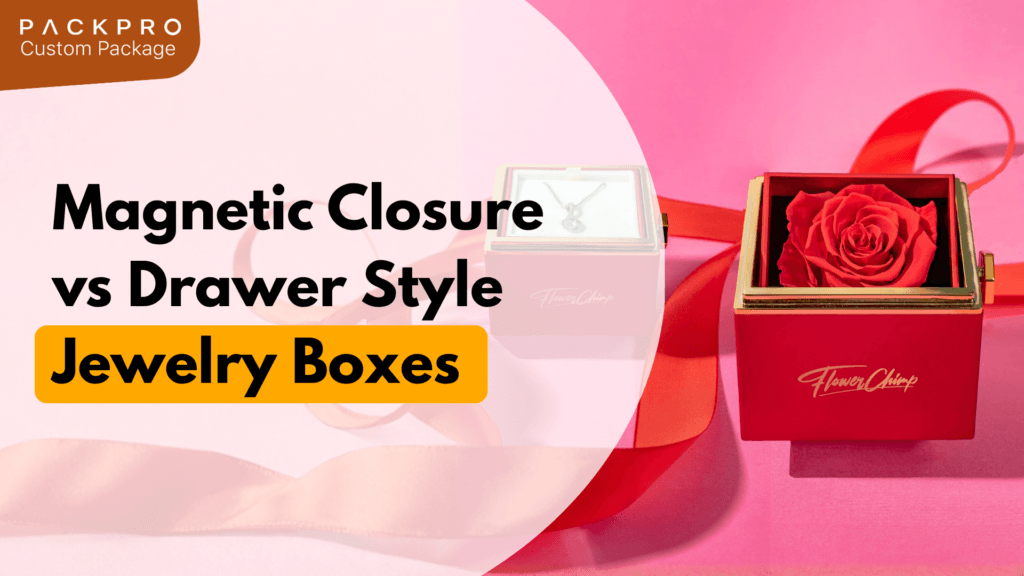
For global luxury brands, packaging is not a container; it is a strategic asset. The choice of structure for your jewelry packaging directly influences brand perception, customer experience, and long-term brand equity. Among all premium box formats, two consistently dominate the luxury jewelry market: the magnetic closure box and the drawer-style box. Each has a distinct structural logic, a different unboxing dynamic, and a separate set of cost and production implications.
Quick answer: Magnetic closure boxes offer a clean, accessible presentation ideal for retail and gifting. Drawer-style boxes create a slower, more theatrical reveal suited to high-end jewelry and watches. The right choice depends on your product value, brand positioning, and customer experience goals.
This guide breaks down the structural, experiential, and commercial differences between these two packaging formats so luxury brands and procurement buyers can make well-informed decisions.
Structural Differences Between Magnetic Closure and Drawer-Style Boxes
A magnetic closure box, also known as a rigid lid-and-base box with magnetic fastening, consists of a base tray and a separate lid. The lid is held in position by embedded magnets, typically concealed within the board layers, which engage with a metal plate or opposing magnet in the base. The opening motion is a single upward lift, smooth and deliberate.
A drawer-style box, also called a sliding drawer or pull-out box, uses a sleeve as the outer shell with an interior tray that slides out horizontally. The reveal is gradual and tactile, requiring the user to extract the inner tray by pulling a ribbon or gripping the tray edge. This format is closely associated with high-end watch packaging and fine jewelry presentation.
Both formats are constructed using rigid greyboard wrapped in paper, fabric, or specialty materials. Both support premium finishes including foil stamping, embossing, debossing, soft-touch coatings, and custom interior materials such as suede, velvet, or EVA foam.
Unboxing Experience and Brand Perception
The unboxing experience is central to luxury brand strategy. Each format creates a distinct emotional response.
The magnetic closure box offers immediacy. The upward reveal is clean, symmetrical, and visually impactful. It works well for gifting contexts where the recipient opens the box directly, as well as for retail environments where the product needs to be displayed and re-packaged easily. The magnetic closure also provides a satisfying tactile click on closing, which reinforces a sense of quality.
The drawer-style box creates anticipation. The horizontal extraction of the inner tray builds tension and slows the reveal, which is particularly effective for products at the higher end of the price spectrum. Watch brands frequently use this format because the gradual disclosure mirrors the care and precision associated with fine watchmaking. For jewelry, the drawer format signals deliberate luxury rather than accessible premium.
Practical Considerations: Retail, Storage, and Shipping
Magnetic closure boxes are easier to open and close repeatedly, making them well-suited for retail settings where staff may handle packaging frequently. Their lid-and-base construction also stacks efficiently, which benefits storage and logistics.
Drawer-style boxes require more precision in the tolerance between the sleeve and tray. If the fit is too tight, the drawer becomes difficult to open. If too loose, it slides unintentionally. Achieving the right balance requires experienced manufacturing and careful quality control. For brands sourcing from overseas manufacturers, this is an important specification to confirm during sampling.
Both formats can be designed to nest or stack for transit, though magnetic closure boxes typically offer slightly more flexibility for high-volume shipping configurations.
Cost Comparison and MOQ Considerations
Magnetic closure boxes are generally more cost-efficient to produce at comparable quality levels. The embedded magnet adds a material cost but the construction is less complex than a precision-fit drawer system. For brands managing packaging budgets carefully, magnetic closure boxes offer premium presentation at a lower per-unit cost.
Drawer-style boxes require tighter manufacturing tolerances and more material for the sleeve-and-tray construction. This translates to a higher per-unit cost, particularly at lower minimum order quantities. The investment is justified for ultra-premium products where the packaging forms an integral part of the ownership experience.
For both formats, sampling before mass production is essential. Tolerance, fit, magnet strength, and finish quality should all be verified on a physical sample before committing to volume.
Which Format Is Right for Your Brand?
Choose a magnetic closure box when your priority is clean presentation, retail versatility, and cost efficiency at premium quality. This format suits mid-to-high-end jewelry, fashion accessories, cosmetics gift sets, and any product where gifting convenience matters.
Choose a drawer-style box when your priority is theatrical presentation, ultra-premium positioning, and creating a memorable first impression. This format suits fine jewelry, watches, limited edition products, and corporate gifting at the highest tier.
Both formats can be produced with sustainable materials including FSC-certified greyboard and water-based coatings, which is increasingly important for global brands with environmental commitments.