
Sustainable packaging isn’t a novelty add-on anymore. It’s turning into a baseline expectation — judged less by how new or clever a material is, and more by how well it fits into a system: can it actually be recycled where your customer lives, and does it hold up to scrutiny beyond a green label on the box.
If you’re choosing materials for your packaging in 2026, here’s what’s actually worth knowing.
Mono-material design: the quiet trend doing the most work
One of the biggest shifts in sustainable packaging isn’t a new material at all — it’s simplifying what’s already there. Mono-material packaging means building a box or a pouch out of a single material type instead of mixing plastics, foils, and papers that are hard to separate for recycling.
For rigid and folding boxes, this usually isn’t a huge leap — most are already paper-based. The bigger impact is in flexible packaging (pouches, wraps), where mono-material structures let a product go straight into standard recycling streams instead of needing specialized chemical separation. If your product line includes any flexible packaging alongside boxes, this is worth asking your supplier about directly.
Paper and cardboard are still the safest sustainable bet
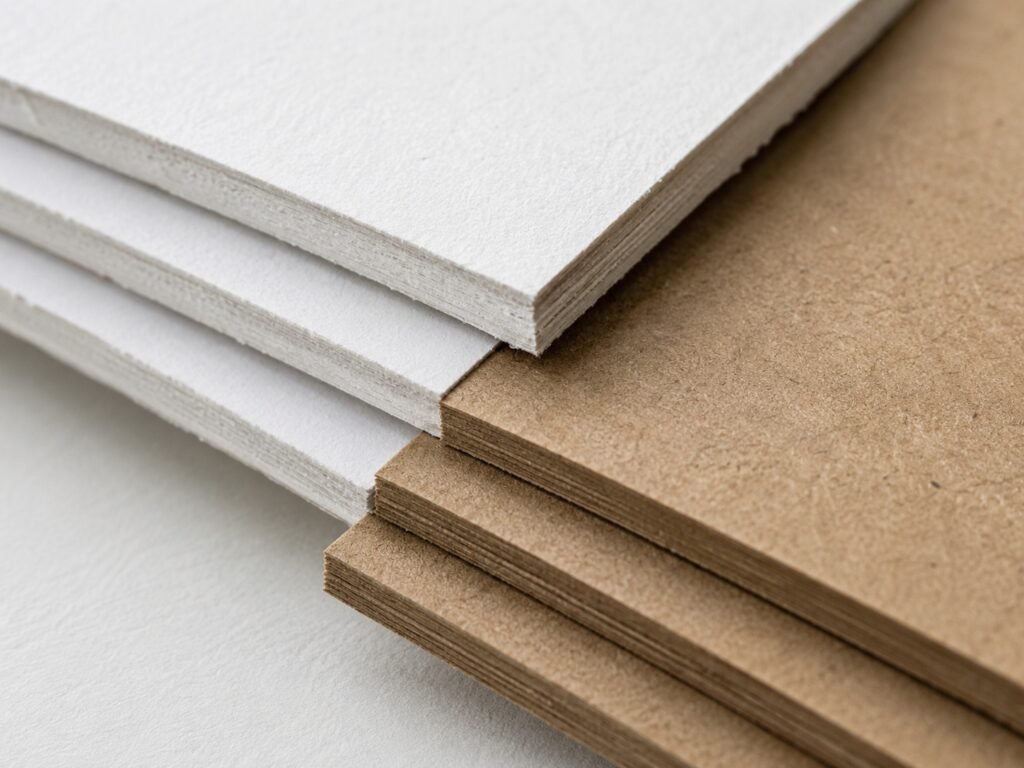
Paper-based materials have one advantage most alternatives can’t match: recycling infrastructure that already exists almost everywhere. In Europe, paper and cardboard are recycled at a rate around 82% — far ahead of most other packaging materials. That’s not because paper is inherently superior; it’s because the systems to collect and reprocess it are mature and widespread. For a closer look at how different paper-based materials compare structurally, see our guide on kraft, SBS paperboard, and corrugated.
This is part of why “paperization” — replacing plastic packaging with paper wherever it’s functionally possible — has picked up momentum. FSC-certified paperboard sits at the center of that shift. The certification tells you the wood pulp came from responsibly managed forests, which matters both for your product’s actual footprint and for how it reads to customers checking labels.
If you’re deciding between a plastic component and a paper one for any part of your packaging, and the paper version can do the job, that’s usually the safer long-term choice — both environmentally and in terms of how customers perceive it.
Bio-based materials: useful, but know what you’re getting
Beyond standard paper, a few bio-based materials are gaining real traction:
PLA (polylactic acid) is a compostable plastic made from corn starch. It behaves like conventional plastic in terms of clarity and flexibility, which makes it useful for windows on boxes or clear pouches, but it needs industrial composting conditions to break down properly — it won’t compost in a backyard bin the way some marketing implies.
Mycelium packaging, grown from mushroom root structures, is a genuinely different approach — it’s grown into molded shapes rather than manufactured, and it breaks down naturally. It’s still a more specialized and costly option, better suited to protective inserts or premium product lines than everyday shipping boxes.
Neither of these replaces standard paperboard for most brands. They’re worth considering for specific components where their properties actually solve a problem you have.
Smart packaging is starting to solve the “how do I recycle this” problem
One trend worth watching: packaging that tells customers what to do with it once they’re done. QR codes or NFC tags printed on the box that link to disposal instructions — this material goes in your blue bin, this part needs to be separated first, and so on. It doesn’t change what the box is made of, but it closes a real gap: a lot of packaging ends up in the wrong bin simply because nobody explained how to sort it.
If your packaging mixes materials in any way — a paperboard box with a plastic window, for instance — this kind of labeling is a low-cost way to reduce contamination and show customers you’ve thought about the full lifecycle, not just the unboxing moment.
How to actually choose
A few practical questions to run through before locking in a material:
- Can this material be recycled through the systems your customers already have access to, or does it need something specialized?
- If you’re mixing materials (paper plus a plastic window, for example), is there a mono-material alternative that does the same job?
- Does the certification you’re relying on (FSC, compostable claims, etc.) actually apply to the specific material you’re ordering, not just the category it belongs to?
- Are you choosing a bio-based material because it solves a real functional need, or because it sounds good in your marketing copy?
The market for sustainable packaging is growing fast — from roughly $334 billion in 2026 toward nearly $594 billion by 2035 — which means more material options will keep showing up. The brands that get the most out of that shift won’t be the ones chasing every new material. They’ll be the ones matching the right material to the right part of their packaging, and being straightforward with customers about what it actually does. If you’re weighing options for an upcoming order, talk to our team about what’s realistic for your product and budget.
Related Reading
- Kraft Paper vs SBS Paperboard vs Corrugated: Which Packaging Material Fits Your Product?
- Explore the Advantages of Using Corrugated Boxes
- How the EU’s 2026 PPWR Packaging Rules Are Changing Box Design
Frequently Asked Questions
What does FSC certification actually mean?
FSC certification confirms that the wood pulp used in a paper or paperboard product came from responsibly managed forests, verified through an independent chain-of-custody standard.
Is PLA the same as regular compostable plastic?
PLA is a specific type of compostable plastic made from corn starch. It generally needs industrial composting facilities to break down fully — it typically won’t compost in a home compost bin.
What is mono-material packaging?
Mono-material packaging is built from a single material type rather than mixed layers of plastic, foil, and paper, which makes it easier to recycle through standard municipal recycling streams.