
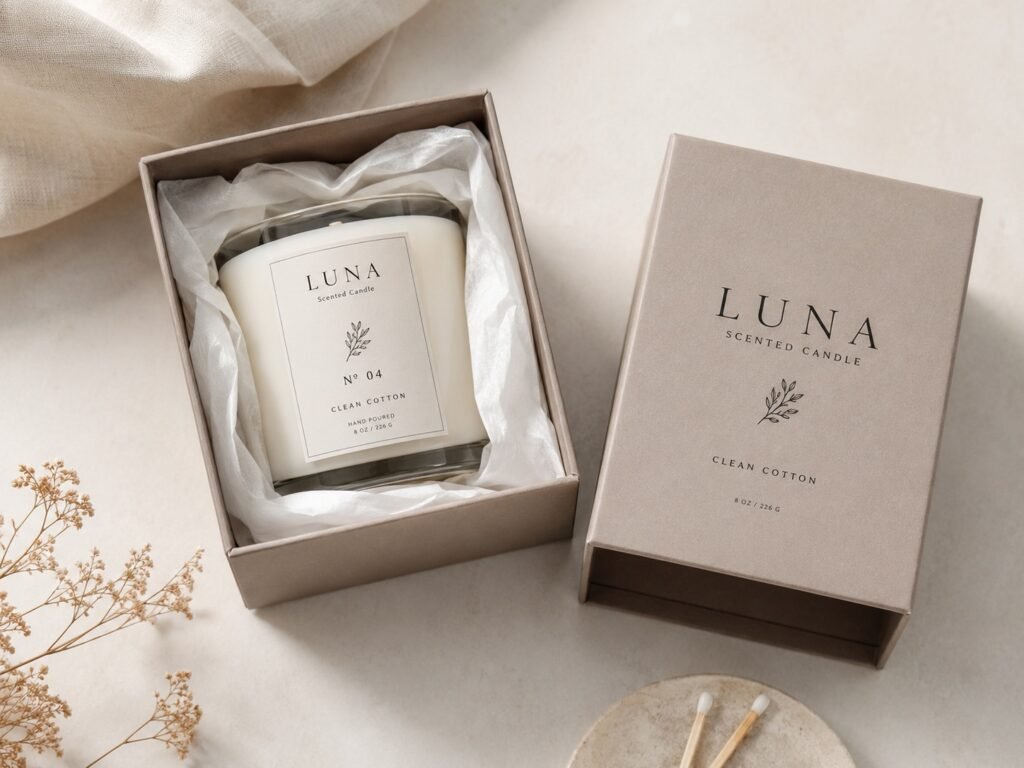
Candles and home fragrance products live or die on presentation. The wax and the wick matter, sure, but a customer decides whether your candle looks like a $12 grocery-store item or a $40 gift within about two seconds of seeing the box. For a startup brand, that makes packaging one of the highest-leverage decisions you’ll make — and one of the hardest to get without a low MOQ supplier.
Why this category needs custom packaging more than most
Candles and diffusers are fragile, often glass, and usually gifted. That combination means your packaging has to do three jobs at once: protect a breakable product in transit, look good enough to sit under a Christmas tree or on a gift table, and communicate your brand in the two seconds before someone decides to pick it up.
Generic kraft boxes or plain shipping cartons don’t do any of those three jobs well. They protect the product adequately, but they don’t sell the story, and for a fragrance brand, the story is most of what you’re selling.
The MOQ barrier hits this category especially hard
A startup candle brand testing three or four scents doesn’t need 5,000 units of a single box design — that’s an entire year of inventory locked into one SKU before you know which scent sells. Traditional factories built around large production runs don’t accommodate that. It’s part of why so many small fragrance brands start with plain packaging and plan to “upgrade later,” a plan that often never happens once the plain boxes are already paid for. Our guide to packaging MOQ, costs, and how to negotiate covers why this barrier exists in the first place.
Low MOQ manufacturing removes that bottleneck. With minimums starting around 300 units, you can order custom boxes for each scent or product line without betting your whole budget on one design.
What to look for in packaging for this category
Rigid boxes work well for premium candles and gift sets — the sturdier construction protects glass vessels better than a folding carton, and the weight of a rigid box reinforces the “this is a nice item” impression before the lid is even off. Our post on perfume box designs that feel luxury covers similar territory for another fragile, gifted product category.
Sleeve-and-tray or two-piece boxes give you a natural unboxing moment, which matters for a product category that leans heavily on gifting.
Inserts — foam, cardboard dividers, or molded trays — matter more here than in almost any other category, since you’re shipping glass. A box that looks great but arrives with a cracked jar isn’t doing its job.
Collapsible rigid boxes are worth considering if you’re planning to hold inventory. They give you the premium rigid feel without the storage cost of pre-assembled boxes sitting in a warehouse — useful for a category where seasonal scents mean you’re often stocking multiple SKUs at once. See our comparison of collapsible vs standard rigid boxes for the tradeoffs.
Materials worth knowing about
FSC-certified paperboard is a natural fit for this category. Home fragrance customers tend to care about sustainability messaging, and certified stock lets you make that claim honestly rather than just implying it with an earthy color palette. Our sustainable packaging materials guide covers the certification options in more detail.
Ordering process
The path is the same regardless of scent count or order size: share your bottle or jar dimensions, settle on a structure (rigid, folding carton, sleeve), get a sample before committing, then place your order. Because minimums start low, you can order a modest run for each scent instead of a single oversized run for one “hero” product — which matters when you’re still figuring out which scent your customers actually want to reorder.
Getting packaging right early saves you from redoing it later, once a design is already tied to a customer base that recognizes it. Talk to our team about packaging for your candle or fragrance line.