
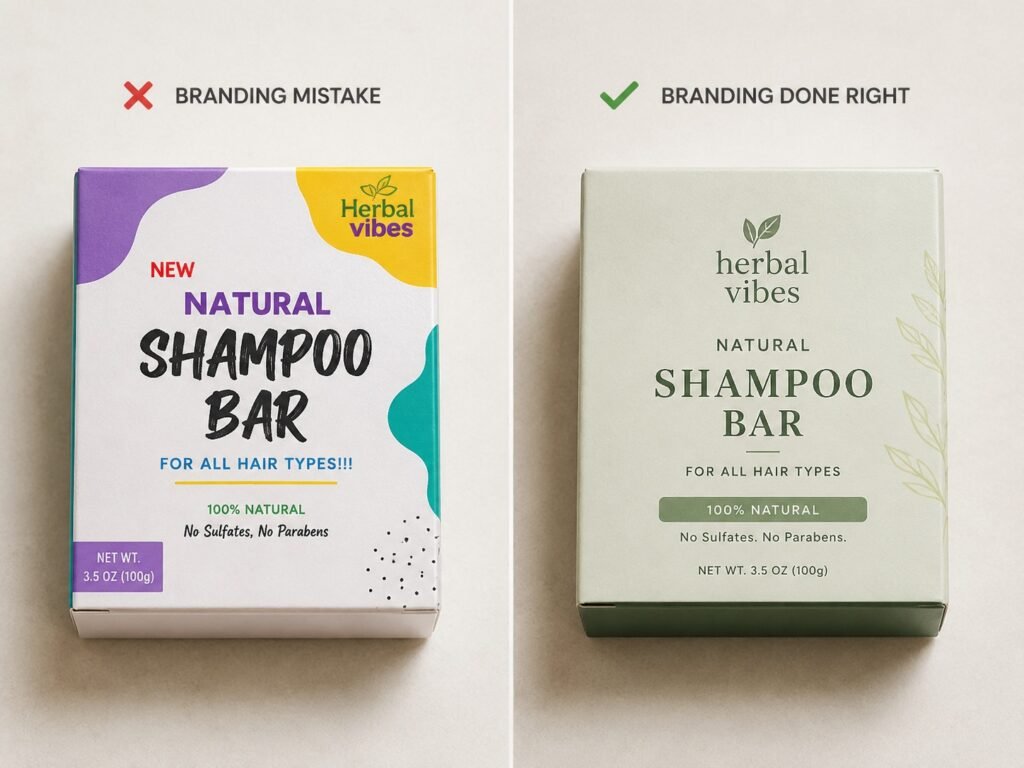
Most packaging mistakes don’t come from bad taste. They come from moving fast, working with a tight budget, and not having a system in place yet. Here are the ones that show up most often — and what to do instead.
1. Changing colors and fonts between every SKU
It’s tempting to give each new product its own look. But if your customer can’t recognize your brand across your product line, you’re starting over with recognition every time you launch something new. Pick a core palette and typography system, and let individual products vary within it rather than around it. Then make sure the printed box actually matches it: see Pantone-accurate packaging printing.
2. Designing the box before locking the brand identity
A gorgeous structural box design means nothing if it’s built around a logo or color scheme you’re going to change in three months. Get your core identity — logo, colors, typography — settled first. The packaging should be built on top of that foundation, not the other way around. Our startup packaging branding playbook walks through how to set that foundation.
3. Spending the whole budget on the outside of the box
The outside gets someone to buy. What’s inside — a thank-you card, a sticker, a simple insert — is what makes them remember you and post about it. Startups often pour their entire design budget into the exterior and leave nothing for the unboxing moment, which is often the more shareable part of the experience.
4. Assuming more design elements equal more premium
Minimalist packaging has become one of the more effective directions in the category precisely because it doesn’t require complex printing or expensive finishes to look expensive. Cramming in extra colors, patterns, and callouts usually reads as busy, not premium. A confident, restrained design often beats an elaborate one.
5. Skipping the physical sample
A screen mockup can’t tell you how a color looks under store lighting or how a box feels in someone’s hands. Startups on a deadline sometimes skip the sample step to save a week or two — and end up ordering a few hundred units of something that doesn’t match what they had in mind.
6. Treating sustainability as an afterthought
A meaningful share of consumers say they’ll pay more for packaging that’s better for the environment. If sustainable materials aren’t part of your plan from the start, retrofitting them later means redesigning packaging that customers have already gotten used to. It’s easier to build it in from the first run — see our sustainable packaging materials guide for where to start.
7. Copying a competitor’s packaging style directly
Looking at what’s working for others is smart research. Copying it outright isn’t a branding strategy — it’s a way to become forgettable next to the brand you’re imitating. Use competitor packaging to understand the category norms, then build something that’s recognizably yours.
8. Overspending on a full brand package before validating the product
Full brand transformations can run well into five figures. That’s a reasonable investment once you know your product has traction. It’s a risky one if you’re still testing whether people want to buy it at all. Start with the essentials — logo, palette, one solid box design — and expand once you’ve got proof the product sells.
9. Ignoring how the box performs in transit
A beautifully designed box that arrives dented or crushed does more damage to your brand than a plain one that arrives intact. Structural strength and protective inserts aren’t just functional details — they’re part of the first impression, especially for fragile or gifted items.
10. Not putting the brand identity in writing anywhere
If your color codes, fonts, and design rules only exist in one person’s head — or scattered across old files — every new designer or printer you work with will interpret your brand slightly differently. A simple one-page brand guide, even an informal one, keeps your packaging consistent as you bring on new vendors or team members.
None of these mistakes are expensive to fix early. They get expensive once you’ve built inventory, customer recognition, or vendor relationships around the wrong version of your brand. Talk to our team if you want a second opinion before your next print run.