
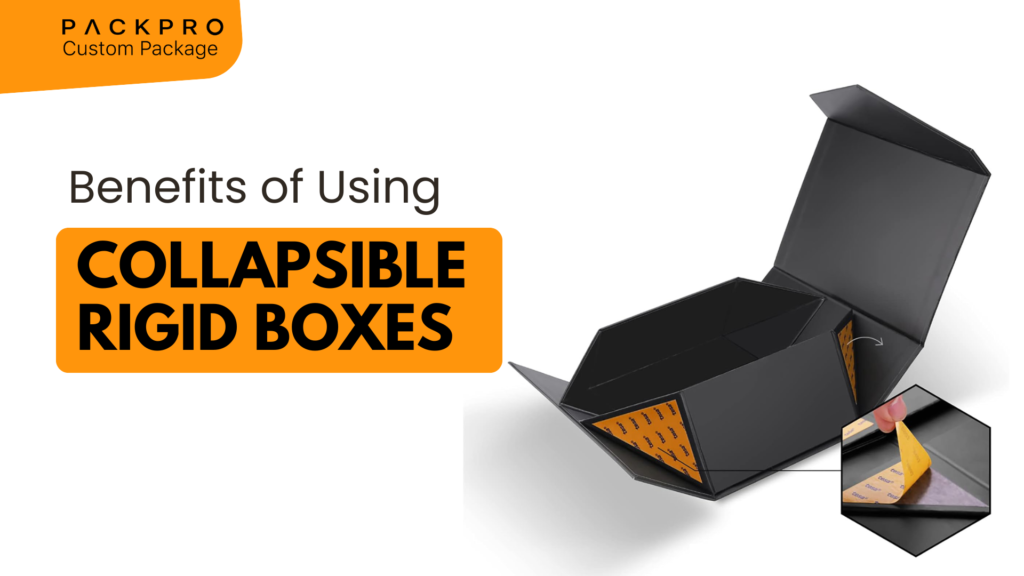
Traditional rigid boxes have long been the gold standard for luxury packaging — but their one major drawback has always been storage. They don’t collapse, they take up enormous warehouse space, and they’re expensive to ship when empty. Enter the collapsible rigid box: all the prestige of a rigid box, with the flat-pack convenience of a folding carton.
In this post, we explore exactly what collapsible rigid boxes are, how they work, and the substantial benefits they offer for both brands and customers.
What Is a Collapsible Rigid Box?
A collapsible rigid box (also known as a foldable rigid box or collapsible gift box) is a premium packaging format that looks and feels like a traditional rigid box but is engineered to fold flat when not in use. The corners are held together by magnets or hook-and-loop mechanisms, and when needed, the box pops open and snaps into shape in seconds.
The result is a box that stores and ships flat — just like a folding carton — but opens to reveal a rigid, high-quality presentation box indistinguishable from a traditional setup box.
How Do Collapsible Rigid Boxes Work?
The structure consists of rigid chipboard panels connected by flexible hinged joints at each corner. Magnets embedded in the corners hold the box in its open position. When you push the sides inward, the box folds flat into a compact square shape. To use it, simply push the corners outward — the magnets snap it back into its rigid box shape instantly.
Key Benefits of Collapsible Rigid Boxes
1. Dramatically Reduced Storage Costs
This is the most immediate and tangible benefit. Traditional rigid boxes are notoriously inefficient to store — their rigid structure means they can’t be stacked flat, consuming enormous warehouse space.
Collapsible rigid boxes reduce storage volume by up to 80% compared to traditional rigid boxes. A pallet that holds 200 traditional rigid boxes can hold 1,000 or more collapsible versions.
2. Lower Shipping Costs
Empty rigid boxes are essentially shipping air — the cost per carton is disproportionately high because of the space they occupy. Collapsible boxes ship flat, drastically reducing freight costs when transporting boxes from manufacturer to warehouse, and from warehouse to end-user in e-commerce fulfillment.
For high-volume brands or businesses with international supply chains, this shipping cost reduction can be substantial over the course of a year.
3. Premium Unboxing Experience — Unchanged
One concern brands often have is whether collapsible boxes sacrifice the premium feel of traditional rigid packaging. The answer is: not at all. Once assembled, a collapsible rigid box is virtually indistinguishable from a traditional rigid box in terms of:
- Structural rigidity and feel
- Print quality and finish options
- Interior presentation (foam, lining, inserts)
- Overall perceived luxury

4. Customer-Friendly and Reusable
Customers appreciate packaging they can fold flat and store or reuse. Traditional rigid boxes pile up and take up space in homes. Collapsible boxes can be folded down when not needed — making customers more likely to keep and reuse them, extending your brand’s physical presence in their lives.
5. Ideal for E-Commerce Fulfillment
For online businesses shipping premium products, collapsible rigid boxes solve a major operational challenge. They can be stored flat in large quantities, quickly assembled at the packing station, and shipped without the space penalties of traditional rigid boxes. The result is a luxury customer experience delivered cost-effectively through a standard shipping operation.

6. Environmentally More Responsible
The reduced shipping volume means fewer trucks, fewer carbon emissions, and lower fuel consumption across the supply chain. Combined with the fact that customers are more likely to reuse collapsible boxes, this format has a measurably smaller environmental footprint than traditional rigid packaging.
7. Full Customization Available
Like traditional rigid boxes, collapsible rigid boxes support the full range of premium finishes and branding options: matte or gloss lamination, foil stamping, embossing, debossing, spot UV, and custom interior linings. There’s no compromise on the visual or tactile quality of the finished product.
Collapsible Rigid Box vs. Traditional Rigid Box
| Feature | Traditional Rigid Box | Collapsible Rigid Box |
|---|---|---|
| Storage volume | Full box size (bulky) | Flat-packed (80% less space) |
| Shipping empty boxes | Expensive (shipping air) | Very cost-efficient |
| Assembly time | Pre-assembled (none) | 5–10 seconds per box |
| Perceived luxury | Very high | Equally high when assembled |
| Reusability | Possible but bulky | Easy to store and reuse |
| E-commerce suitability | Limited | Excellent |
| Cost per unit | Moderate to high | Slightly higher, offset by logistics savings |

Best Uses for Collapsible Rigid Boxes
- Luxury cosmetics and skincare gift sets
- Premium e-commerce apparel and accessories
- Corporate gifting programs
- Subscription box programs with premium positioning
- Jewelry and watch packaging
- Wedding and event gift boxes
Final Thoughts
Collapsible rigid boxes represent the best of both worlds in packaging: the premium look and feel of luxury rigid packaging, combined with the operational efficiency and cost savings of flat-pack formats. For brands that want to deliver a high-end customer experience without the logistical headaches of traditional rigid boxes, they’re an outstanding solution.
PackPro manufactures fully custom collapsible rigid boxes in a wide range of sizes and finishes. Get in touch with our team to explore the options and get a competitive quote for your brand.
Related Reading
- Why Collapsible Gift Boxes Are Used in Premium Packaging
- Rigid vs Folding Carton: Which One Should You Choose?
- Top 5 Collapsible Rigid Boxes That Save Space and Look Elegant
Frequently Asked Questions
How much storage space do collapsible rigid boxes save compared to traditional rigid boxes?
Collapsible rigid boxes reduce storage volume by up to 80% compared to traditional rigid boxes. A pallet that would hold 200 traditional rigid boxes can typically accommodate 1,000 or more collapsible versions when stored flat. This dramatic reduction in storage footprint translates directly into lower warehousing costs and greater inventory flexibility.
Do collapsible rigid boxes look as premium as traditional rigid boxes once assembled?
Yes — once assembled, a collapsible rigid box is virtually indistinguishable from a traditional rigid box in terms of structural feel, print quality, and overall perceived luxury. The same premium finishes including foil stamping, embossing, soft-touch lamination, and custom interior linings are all available on collapsible formats, so there is no compromise on the customer experience.
How long does it take to assemble a collapsible rigid box?
Assembly is extremely fast — typically 5 to 10 seconds per box. The rigid chipboard corners are held in place by embedded magnets, so the box snaps into its fully assembled shape simply by pushing the corners outward. This makes collapsible rigid boxes well suited for high-volume packing operations where assembly speed matters.
Are collapsible rigid boxes suitable for e-commerce shipping?
Collapsible rigid boxes are an excellent choice for e-commerce brands. They can be stored flat in large quantities at the fulfillment center, assembled quickly at the packing station, and shipped to customers without the freight cost penalties associated with pre-assembled rigid boxes. The result is a luxury unboxing experience that is also operationally efficient to deliver.
Are collapsible rigid boxes more environmentally friendly than traditional rigid boxes?
In most cases, yes. The reduced shipping volume means fewer truck journeys, lower carbon emissions, and less fuel consumption throughout the supply chain. Additionally, because collapsible boxes fold flat for home storage, customers are more likely to keep and reuse them rather than discarding them, further reducing the overall environmental impact compared to traditional rigid packaging.