
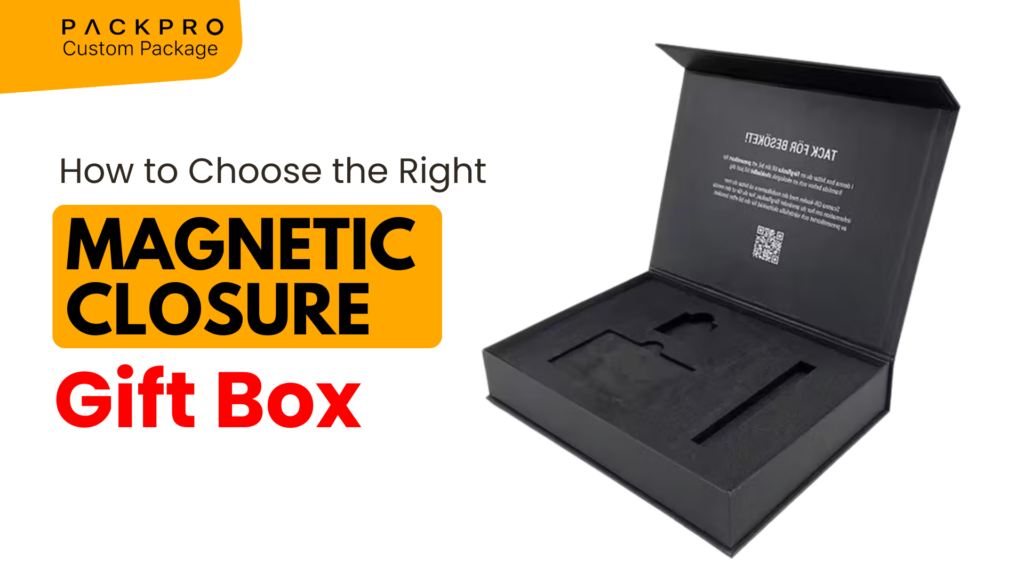
Magnetic closure gift boxes have become one of the most sought-after packaging formats for premium brands and gifting occasions. Their satisfying snap-shut mechanism, clean lines, and reusable quality make them a favorite for luxury products, corporate gifts, and high-end retail packaging.
But with so many options in size, material, and finish, choosing the right magnetic closure box can feel overwhelming. This guide walks you through every key decision so you end up with a box that enhances your product — not just holds it.
What Is a Magnetic Closure Gift Box?
A magnetic closure box (also called a magnet box or rigid box) is a type of rigid box that uses embedded magnets in the lid and base to keep it closed. Unlike folding cartons, magnetic boxes are made from thick chipboard covered in paper or fabric, giving them a substantial, premium feel.
The lid lifts cleanly away from the base, held shut by the magnets — creating a satisfying opening experience that has become a signature element of luxury unboxing.
Step 1: Determine the Right Size
Size is the most critical factor. A box that’s too large looks cheap and wastes material; a box that’s too small won’t close properly and can damage the product.
How to measure:
- Measure your product at its widest, longest, and tallest points
- Add at least 10–15mm clearance on each side for comfortable insertion and removal
- Account for any insert (foam, cardboard tray, tissue paper) which adds to the required interior dimensions
| Common Size | Approximate Dimensions | Typical Use |
|---|---|---|
| Small | 15 × 10 × 5 cm | Jewelry, small cosmetics |
| Medium | 25 × 20 × 8 cm | Scarves, wallets, tech accessories |
| Large | 35 × 25 × 10 cm | Shoes, apparel, gift sets |
| Extra Large | 40 × 30 × 15 cm | Corporate gift sets, hampers |
Step 2: Choose the Right Structure
Lid and Base (Two-Piece) Box
The classic design — a separate lid that fits over the base. The most common magnetic closure format. Lid depth can be shallow (just covering the top) or deep (covering up to half the box height).
Book-Style (Clamshell) Box
The lid is hinged at the back, opening like a book. Very popular for presentation boxes, phone boxes, and single-item premium packaging. Gives a dramatic open-reveal effect.
Collapsible Magnetic Box
A newer innovation — the box folds flat for storage and shipping, then assembles instantly when needed. Combines the premium look of a rigid box with the storage efficiency of a folding carton. Ordering a small run? See how to order custom magnetic gift boxes in small quantities.

Step 3: Select the Right Material and Finish
The outer covering of the box is what creates the visual and tactile impression. Common options include:
- Laminated art paper (gloss or matte) — The most common and cost-effective. Supports full CMYK printing with any finish.
- Specialty textured paper — Linen, leather grain, felt, or hammered textures that add a tactile dimension without printing.
- Velvet or soft-touch lamination — Ultra-premium look and feel. Soft, velvety surface that feels luxurious to the touch.
- Foil or metallic paper — Gold, silver, copper, or holographic foil covering for a striking, luxurious appearance.
Step 4: Consider the Interior
The inside of the box is just as important as the outside — especially for high-value products:
- Foam inserts — Custom-cut EVA or polyurethane foam that cradles fragile or high-value items securely
- Cardboard tray inserts — Structured compartments that hold multiple items in place
- Satin or velvet lining — Fabric lining that adds a luxurious feel to the interior; common in jewelry and watch boxes
- Tissue paper — Simple, lightweight, and effective for protecting products while adding a layer of presentation

Step 5: Think About Branding
Your magnetic closure box is a branding canvas. Consider these options:
- Full-color printing — Vibrant logo, pattern, or imagery printed directly on the outer covering
- Foil stamping — Gold or silver foil applied to your logo for a premium, metallic effect
- Embossing / Debossing — Raised or recessed logo imprinted into the surface — the most tactile and prestigious branding method
- Spot UV — Selectively glossy areas on a matte surface for a contrast branding effect
Step 6: Consider Magnet Placement and Strength
The magnets in a magnetic closure box are typically embedded in the front edge of both the lid and base. For most products, standard-strength neodymium magnets work well. However:
- For electronics, credit cards, or medical devices — avoid strong magnets or use non-magnetic closures instead, as magnets can interfere with these items
- For heavier products — ensure magnet strength is sufficient to hold the lid closed under the weight of the contents
- For frequently opened boxes (like display or sample boxes) — opt for lighter magnets that won’t fatigue the paper covering over repeated use

Quick Decision Guide
| Your Priority | Recommended Choice |
|---|---|
| Maximum luxury feel | Velvet lining + foil stamping + soft-touch cover |
| Cost-effective premium look | Matte lamination + debossed logo |
| Space-efficient for e-commerce | Collapsible magnetic box |
| Best unboxing experience | Book-style with foam insert + tissue paper |
| Corporate gifting | Large lid-and-base with branded interior print |
Final Thoughts
A magnetic closure gift box is an investment in your brand’s perceived value. Done right, it transforms a product into an experience — one that customers remember, share, and keep long after the original contents are gone.
At PackPro, we manufacture fully custom magnetic closure boxes with a wide range of sizes, finishes, and insert options. Contact our team today to start designing the perfect box for your product or gift range.
Related Reading
- Why Collapsible Gift Boxes Are Used in Premium Packaging
- Gift Packaging Ideas to Try in 2026
- Why Custom Rigid Boxes Are Used in Luxury Packaging
Frequently Asked Questions
What is the difference between a book-style and a lid-and-base magnetic closure box?
A lid-and-base box has a completely separate lid that lifts off the base, which is the most traditional magnetic closure format. A book-style box has its lid hinged at the back so it swings open like a book, creating a more dramatic reveal that is especially popular for single-item premium packaging such as phone boxes and high-end gift sets.
Can magnetic closure boxes damage electronics or credit cards?
Yes, strong neodymium magnets used in magnetic closure boxes can potentially interfere with electronics, demagnetize credit card strips, or affect medical devices like pacemakers. If your product includes any of these sensitive items, you should either use a non-magnetic closure style or discuss reduced-strength magnet options with your packaging manufacturer.
What finishes are available for the exterior of a magnetic closure gift box?
Magnetic closure boxes can be covered in a wide range of materials including gloss or matte laminated art paper, soft-touch velvet lamination, specialty textured papers (linen, leather grain, hammered), and metallic or foil papers. Branding enhancements such as foil stamping, embossing, debossing, and spot UV can be applied on top of any of these finishes to further elevate the design.
How much clearance should I add when sizing a magnetic closure box for my product?
As a general rule, add at least 10–15mm of clearance on each side of your product’s dimensions. This ensures the product can be comfortably inserted and removed without damaging either the product or the box. If you are using an interior insert such as foam or a cardboard tray, measure the insert first and size the box around the insert rather than around the bare product.
Are collapsible magnetic boxes as premium-looking as traditional rigid magnetic boxes?
Yes — once assembled, a collapsible magnetic box is virtually indistinguishable from a traditional rigid magnetic box in terms of appearance and feel. The key advantage is that collapsible boxes fold flat for storage and shipping, reducing warehouse space and freight costs by up to 80% compared to pre-assembled rigid boxes, making them ideal for e-commerce brands that want luxury packaging with operational efficiency.