
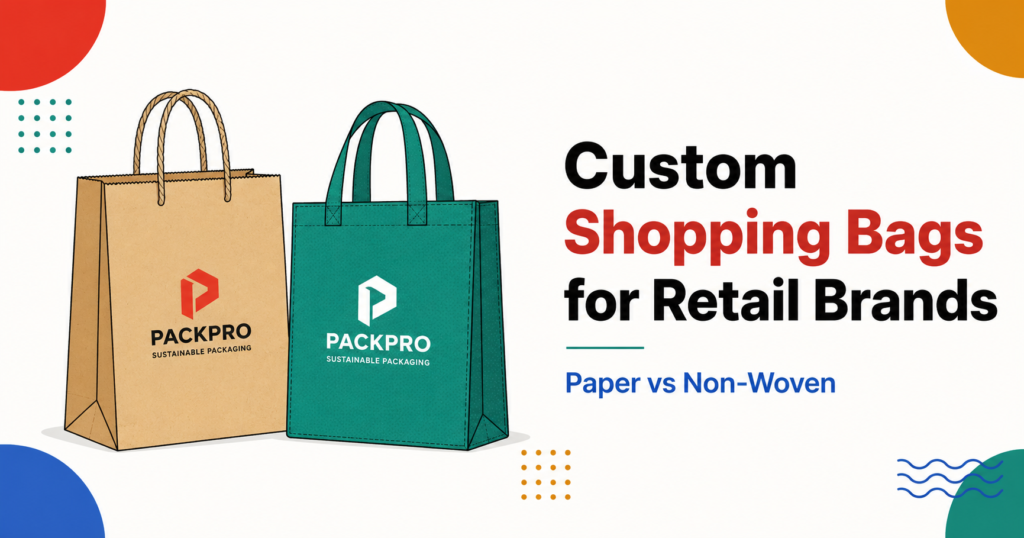
A shopping bag is one of the few pieces of packaging a customer carries in public, which makes the material choice more than a cost decision — it’s a visibility decision. Paper and non-woven each send a different signal, and each fits a different kind of retail brand.
Here’s how the two compare, and which one fits your store.
Paper Shopping Bags
Paper bags are the standard for boutique retail, gift shops, and single-use branded checkout bags. They print cleanly, fold flat for storage, and read as premium when paired with rope or ribbon handles. Most retail paper bags run 120–200 GSM kraft or coated paper — heavier stock (150 GSM+) holds up better with rope handles and heavier products, while lighter stock suits smaller, lighter items.
They’re single-use by design — a paper bag will handle a shopping trip or two, not months of daily reuse — but they’re widely recyclable through standard paper recycling and generally the more sustainable-reading choice for a checkout bag customers use once.
Non-Woven Bags
Non-woven bags (made from spunbond polypropylene) are built for repeat use — they’re the reusable totes handed out at trade shows, grocery stores, and events. Typical weight runs 80–120 GSM: 80 GSM suits lighter promotional giveaways, while 100–120 GSM holds up to regular grocery-level loads. They’re more durable and water-resistant than paper, but the tradeoff is a less premium, more utilitarian look, and recyclability depends on local facilities accepting polypropylene, which is less universal than paper recycling.
Paper vs Non-Woven at a Glance

| Paper Bags | Non-Woven Bags | |
|---|---|---|
| Typical use | Single-use checkout, gifting | Reusable tote, events, groceries |
| Typical GSM | 120-200 GSM | 80-120 GSM |
| Durability | Handles one to a few uses | Built for months of repeat use |
| Look & feel | Premium, print-friendly | Casual, sturdy |
| Recyclability | Standard paper recycling | Depends on local PP recycling access |
Handle Types Worth Knowing
- Twisted paper handles — the most common on paper bags, cost-effective and reliable up to moderate weight.
- Flat/ribbon handles — a cleaner, more premium look, best suited to lighter retail items like apparel or accessories.
- Rope handles — the sturdiest paper-bag option, standard for heavier or higher-end retail packaging.
- Die-cut handles — cut directly into the bag body, common on non-woven totes for a low-cost, no-attachment option.
Choosing Between Them
If the bag is meant to be part of a premium unboxing or gifting moment that a customer carries out of your store once, paper is almost always the right call. If the goal is brand visibility over time — something a customer keeps using for months, like an event giveaway or grocery-style tote — non-woven earns its cost back through repeat exposure. Some retail brands use both: paper for in-store checkout, non-woven for event or loyalty-program giveaways.
Frequently Asked Questions
What GSM paper bag do I need for heavier retail items? 150 GSM or heavier kraft paper with rope handles is the safer choice for anything with real weight — lighter stock risks tearing at the handle attachment point.
Are non-woven bags more expensive than paper bags? Per unit, often similar or slightly higher — but because non-woven bags are reused, the effective cost per impression is usually lower over time.
Can I print full-color branding on both bag types? Yes, both support full-color printing, though paper generally shows finer print detail and non-woven works better for bold, simple logo designs.
What’s the MOQ for custom shopping bags? This varies by factory and handle type, but low-MOQ options are common for both paper and non-woven bags — ask specifically if you’re a smaller or first-time buyer.
Get Custom Shopping Bags for Your Store
PackPro produces both paper and non-woven shopping bags with flexible handle options and low MOQs for growing retail brands. Request a free quote today — we respond within 24 hours.
Get a Free Quote → packpropkg.com/contact
Related Guides
- GSM guide — What Is GSM in Packaging? Paperboard Thickness Guide
- Sustainable materials — Sustainable Packaging Materials: FSC, Recyclable & Compostable Explained
- US e-commerce brands — How US E-commerce Brands Get Custom Boxes from China with Low MOQ