
By the PackPro packaging engineering team, Dongguan, China. Last updated 2026-11-09.
Quick answer: Packaging smells come from solvent residues in glues and inks, uncured UV coatings, foam and adhesives, and trapped moisture. To prevent them, specify water-based or low-odour glue, vegetable or low-migration ink, solvent-free lamination, and fully cured coatings. Allow ventilation time before packing, avoid sealing fresh boxes into airtight cartons, and run a sealed-jar odour test on a sample. For direct food contact, use a food-safe liner or inner pack and verify compliance with applicable regulations.
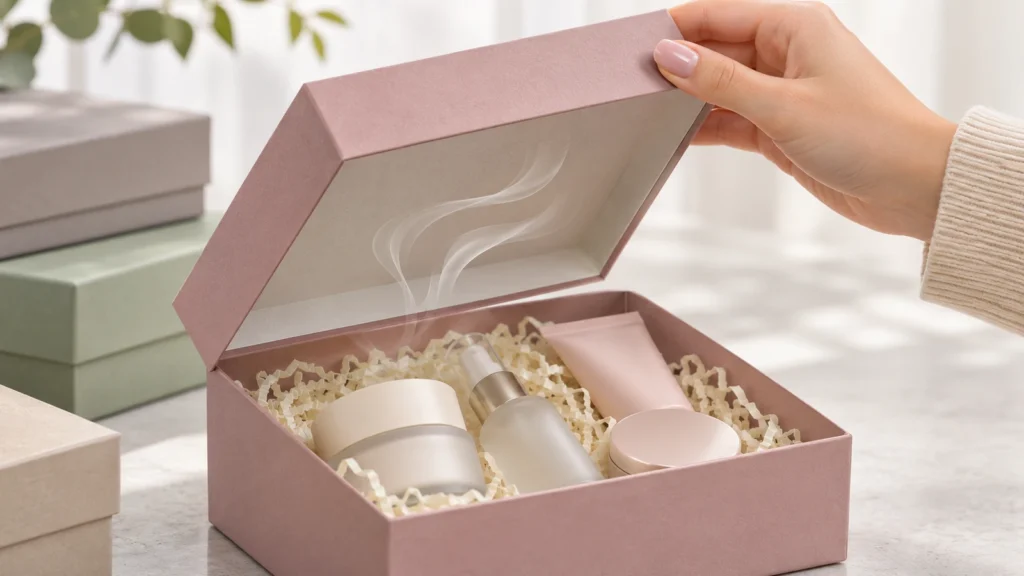
An unpleasant smell is one of the quickest ways to make a premium product feel cheap. In cosmetics and fragrance, odour can clash with the scent of the product itself. In food, tea and confectionery, it can taint the product and trigger complaints. The cause is nearly always chemical, and prevention starts at the specification stage.
Where packaging odour comes from
| Source | Why it smells | Prevention |
|---|---|---|
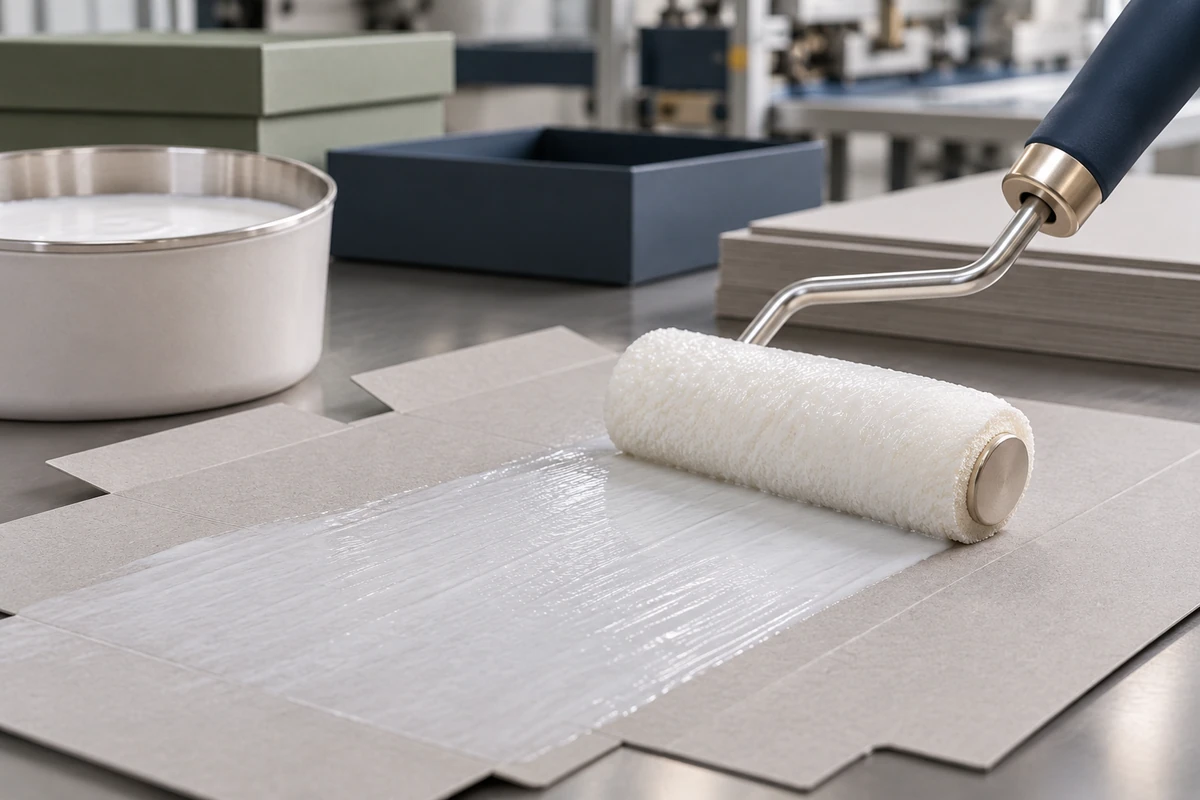
| Solvent-based glue | Volatile solvents evaporate slowly | Specify water-based or hot-melt low-odour adhesives |
| Conventional printing inks | Residual solvents and oils | Use vegetable-oil or low-odour inks; allow full drying |
| UV varnish or UV ink | Uncured monomers if under-cured | Verify correct curing and lamp settings |
| Laminating film and adhesive | Solvent-based laminating adhesive can retain odour | Use solvent-free or water-based laminating |
| Foam, EVA or sponge inserts | Blowing agents and additives | Choose low-odour foam; ventilate before packing |
| Recycled board | Residual inks or contaminants | Choose virgin or tested recycled board for sensitive products |
| Trapped moisture and mould | Musty smell after shipping | See our humid-region guide |
What “low odour” should mean in your specification
- Adhesives: water-based or low-VOC hot-melt for box forming and wrapping.
- Inks: vegetable-oil based or low-migration inks designed for sensitive products.
- Coatings: water-based varnish where possible; properly cured UV where gloss is needed.
- Lamination: solvent-free or water-based lamination adhesives.
- Inserts: low-odour, non-yellowing materials with confirmed cure time.
Ask the factory for material data sheets and test reports for the specific items on your order, rather than a general statement that materials are “eco-friendly”.
Cosmetics versus food: different risks
Cosmetics and fragrance. Boxes are usually secondary packaging, but odour can still transfer through caps, tubes and tissue, and will be noticed when a customer opens the box. Pay special attention to adhesives, inserts and soft-touch lamination. Our cosmetic packaging range is designed with these sensitivities in mind.
Food, tea and confectionery. Odour and chemical migration are both concerns. Direct food contact requires materials suited to food use and compliance with the regulations of the destination market, for example the EU framework for food contact materials or the US FDA rules for food contact substances. When the box is not intended for direct contact, a food-grade inner bag, liner or tray is the standard solution. See our food packaging range.
Useful regulatory starting points:
Regulations differ by country and by use, so confirm the requirements for your market with a qualified compliance adviser.
Production practices that reduce odour
- Allow drying and curing time. Glue, ink, varnish and lamination continue releasing volatiles after production. Cutting this time short is a leading cause of smell complaints.
- Ventilate before packing. Hold finished boxes in a ventilated area, and avoid sealing them into airtight cartons immediately after production.
- Separate odour sources. Do not store boxes next to solvents, fresh paint or strongly scented items.
- Use odour-neutral packing materials. Check cartons, tape and wrapping film.
- Seal products separately. A sealed inner pack prevents transfer between product and box.
A simple odour test you can run
- Sealed jar test: Place a cut piece of the box (about 5 cm by 5 cm) in a clean glass jar with a lid. Leave it for 24 hours at room temperature, and for a stricter test warm it gently to about 40 to 60 degrees Celsius for a few hours. Open the jar and smell it immediately.
- Product co-storage test: Seal the box with the actual product (or a neutral absorbent such as sugar or tea) for 48 to 72 hours and check for transferred smell.
- Multiple testers: Ask two or three people to evaluate, since sensitivity varies.
- Retain a reference sample: Keep a signed-off sample for comparison against later batches.

What to put in your quote request
State the product type, whether packaging touches food or skin, the odour requirement (“low odour, no solvent smell”), required certificates, and the test you want to see. The packaging RFQ template includes a compliance and odour section.
Frequently asked questions
Why does my new packaging smell strong?
Fresh glue, ink, varnish, lamination or foam still release volatile compounds. Insufficient drying or ventilation, or solvent-based materials, make the smell stronger.
How long does it take for packaging smell to go away?
It depends on materials and ventilation, ranging from a few days to a couple of weeks. The safest approach is to prevent the smell with low-odour materials and proper curing time.
Is packaging odour dangerous?
Not necessarily, but it can indicate residual solvents. For food, cosmetics or children’s products, use materials suited to the application and verify compliance for your market.
What glue is best for low-odour packaging?
Water-based adhesives and low-VOC hot-melt adhesives are common low-odour options for rigid and folding boxes. Ask your factory for the specific data sheet.
Can I use any custom box for food?
Not automatically. Direct food contact needs food-suitable materials and compliance with local rules. For most luxury boxes, use a food-safe inner liner or sealed inner pack.
Does PackPro supply low-odour packaging?
PackPro can specify low-odour adhesives, inks and laminations on request. Tell us your product and destination market via our contact page.
Planning a packaging project? Send us the brief.
Share your product dimensions, target quantity and destination market, and the PackPro engineering team will reply with a structural recommendation and a quotation. You do not need a finished design to start.
Request a custom quote | Email: info@packpropkg.com | WhatsApp / phone: +86 184 7552 0523
PackPro is the brand of Dongguan City XinHongCai Paper Products Co., Ltd, a factory-direct packaging manufacturer in Dongguan, China with FSC, BSCI, ISO 9001 and ISO 14001 certification (see certifications).