
By the PackPro packaging engineering team, Dongguan, China. Last updated 2026-11-09.
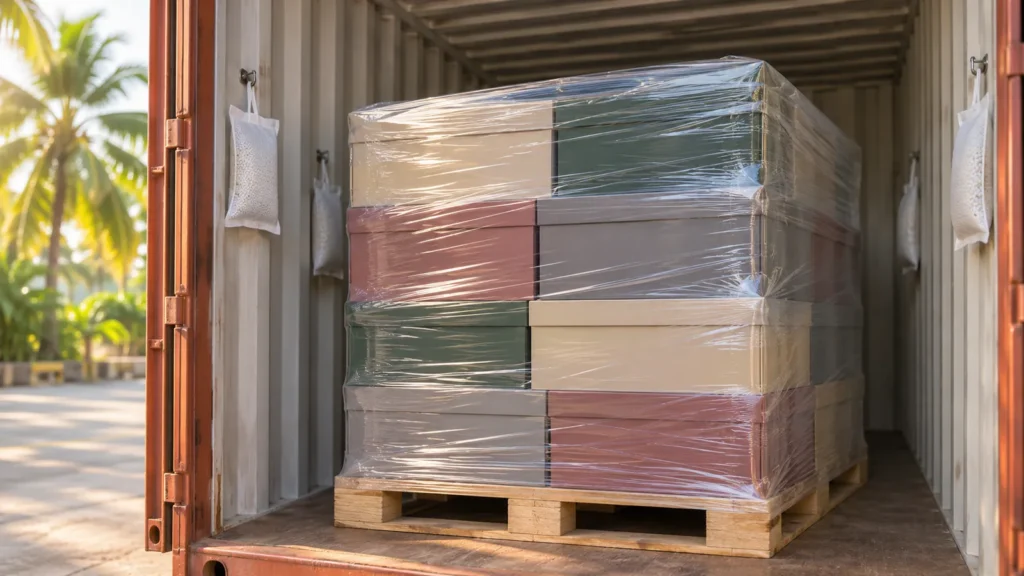
Quick answer: Paper-based boxes absorb moisture when relative humidity stays high, which causes warping, soft corners, lid gaps, foil failure and mould. To protect packaging shipped to the Gulf or Southeast Asia, pack boxes only after they are fully dry, wrap them in PE film or liners, use moisture-resistant master cartons, add desiccants inside the container, palletise with stretch wrap, and choose boxes that ship flat so they take up less sealed volume. Test with a humidity conditioning sample before ordering.
Humidity is the most underestimated risk in packaging exports. A box that leaves a dry factory looking perfect can arrive three to six weeks later with a warped lid, wavy surfaces or a musty smell. This guide explains how it happens and the practical steps that reduce the risk.
Why humid regions are a problem
Paper and board are hygroscopic: they exchange moisture with the surrounding air until they reach equilibrium. Coastal Gulf cities and most of Southeast Asia regularly see relative humidity (RH) above 70 percent, often with high temperatures. Sea containers add another risk, known as container rain, where warm humid air cools at night and condenses on the ceiling and cargo.
When boxes absorb moisture unevenly, you see:
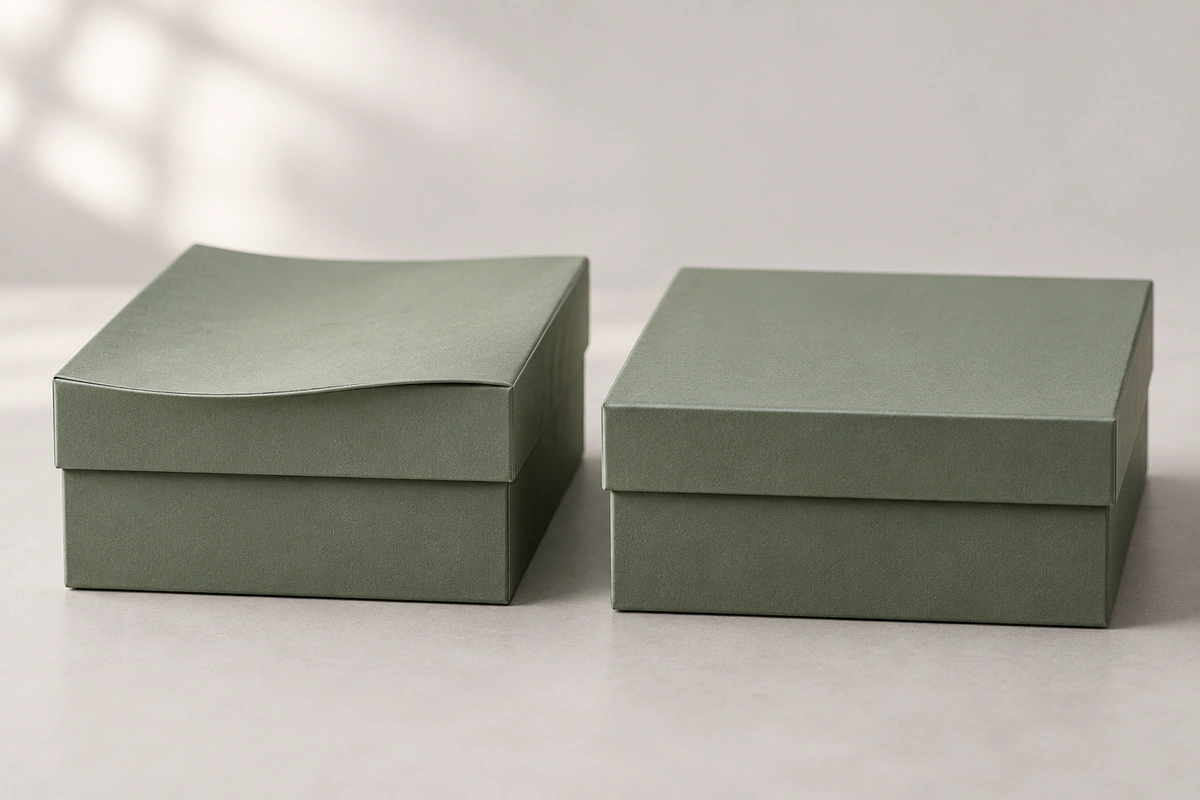
- Warped lids and trays, so lids do not close flush (see magnetic box lid won’t close flush)
- Fit problems, as swollen board tightens drawers and lids (see rigid box tolerances)
- Foil or lamination lifting (see foil peeling guide)
- Soft or crushed corners in cartons
- Mould spots on paper, inserts or ribbons in severe cases
Risk by destination (general guide)
| Region | Typical conditions | Main risks | Priority protection |
|---|---|---|---|
| Gulf coast (UAE, Saudi west coast, Qatar, Kuwait) | Hot, high coastal humidity; very dry indoors | Rapid moisture swings, warping | Wrapped cartons, desiccant, avoid open storage at ports |
| Singapore, Malaysia, Indonesia | Hot and humid all year | Mould, soft board, odour | Moisture barrier, desiccant, quick clearance |
| Thailand, Vietnam, Philippines | Humid with monsoon season peaks | Container rain, wet pallets | Sealed liners, high-quality cartons, container desiccant |
| Inland dry regions | Low RH | Board shrinkage, edge cracking | Avoid over-drying before shipping |
Protection layers, from factory to doorstep
1. At the factory
- Confirm boxes are completely dry before packing. Wet glue or fresh lamination trapped in a sealed carton is a common hidden cause.
- Ask the factory to hold packed cartons in a controlled area rather than outdoors.
- Use moisture-resistant or higher-grade corrugated for master cartons.
2. Inner packing
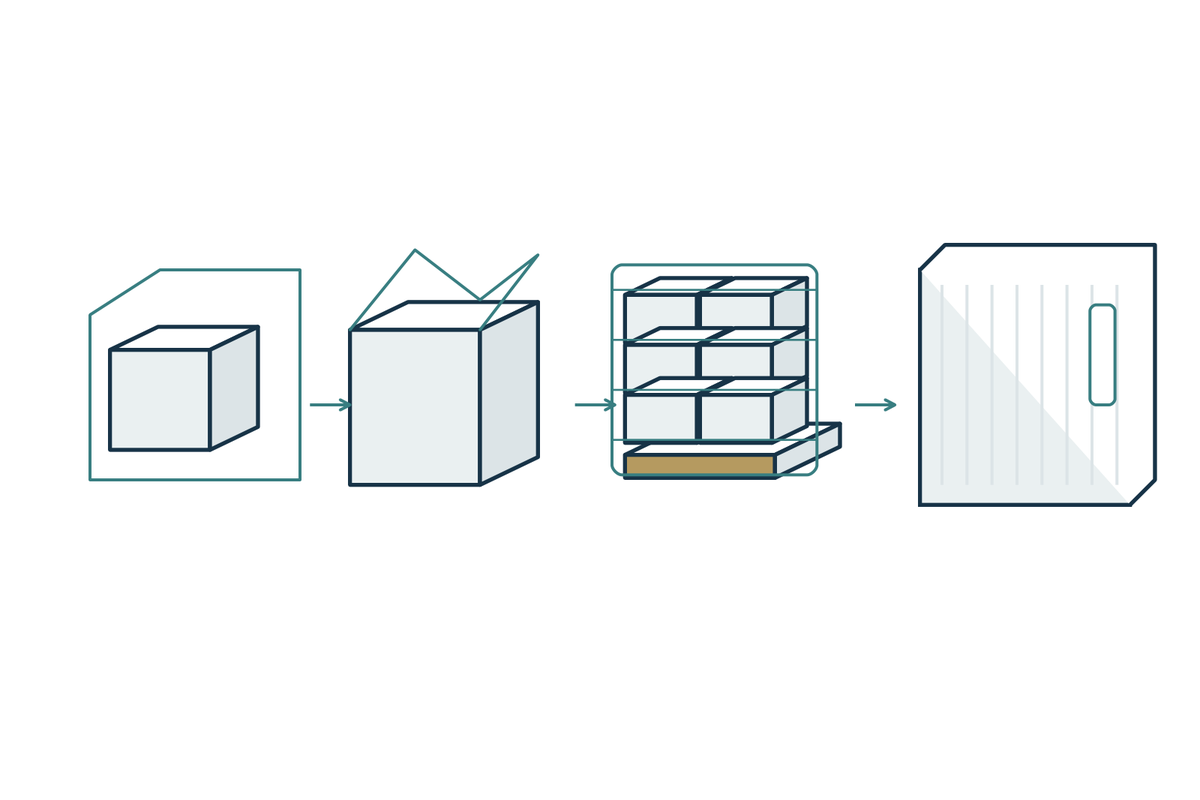
- Place groups of boxes in PE bags or shrink film, sealed at the ends.
- Use tissue or interleaving between decorated surfaces to prevent sticking and marking.
- For inserts with foam, check that foam is fully cured and odour-free.
3. Outer packing and palletising
- Stretch-wrap pallets completely, including the top, with a layer of film or a waterproof cover.
- Keep cartons off the floor of the container with pallets.
- Corner boards and strapping prevent stack collapse as cartons soften.
4. In the container
- Place desiccant strips or bags along container walls and ceiling, sized by container volume (ask your freight forwarder to calculate).
- Avoid loading cargo with high moisture content (such as fresh wood pallets) in the same container.
- Consider ventilated or climate-managed containers for high-value shipments.
5. At arrival
- Unload quickly and store boxes in a dry, ventilated warehouse.
- Open cartons within a few days to inspect, and keep unused boxes wrapped.
- Avoid placing boxes directly against exterior walls or on concrete without pallets.
Choose a structure that suits the route
Packaging that ships flat can reduce exposed volume and the number of cartons in transit. Collapsible rigid boxes fold flat and can cut shipping volume, which helps both freight cost and the amount of air (and moisture) trapped in cartons. For a comparison of structures, see our collapsible box range.
Test before you ship the full order
- Conditioning test: Place a sample box in a humid environment (for example 80 to 90 percent RH) for 24 to 72 hours and check for warping, fit and finish changes.
- Transit test: ISTA-style tests simulate vibration, drop and compression. See ISTA for standard procedures.
- Pilot shipment: For a new route, ship a small first order and review it on arrival before releasing a large one.
What to put in your purchase order
- Destination country and port, and expected transit time
- Required outer carton specification (burst strength, liners)
- Requirement for PE wrapping and desiccant
- Pallet and container loading instructions
- Acceptance criteria for warping, fit and surface defects on arrival
You can copy these into our packaging RFQ template.
Frequently asked questions
Why do boxes warp during sea shipping to humid regions?
Board absorbs moisture unevenly, especially if cartons are not sealed or if container rain wets the cargo. The resulting stress curls lids and trays.
How can I prevent mould on packaging shipped to Southeast Asia?
Ensure boxes are fully dry before packing, use moisture barrier liners, place desiccants in the container, and unpack and store them in a dry area soon after arrival.
Do desiccants really help in containers?
Yes. Container desiccants absorb excess moisture in the air, reducing condensation risk. The quantity depends on container size and transit time, so ask your freight forwarder to calculate it.
Are collapsible boxes better for humid destinations?
They do not eliminate humidity risk, but because they ship flat, they take less volume and fewer cartons, which can reduce exposure and freight cost. Proper wrapping is still essential.
Should I use shrink wrap on every box?
Not necessarily. Wrapping groups of boxes in PE film or bags is often enough and more economical. Individually wrapped boxes make sense for very high-value or retail-ready items.
Can PackPro pack boxes for humid destinations?
Yes. Tell us your destination and we can specify PE wrapping, master carton grade and pallet protection in the quotation. Start on our contact page.
Planning a packaging project? Send us the brief.
Share your product dimensions, target quantity and destination market, and the PackPro engineering team will reply with a structural recommendation and a quotation. You do not need a finished design to start.
Request a custom quote | Email: info@packpropkg.com | WhatsApp / phone: +86 184 7552 0523
PackPro is the brand of Dongguan City XinHongCai Paper Products Co., Ltd, a factory-direct packaging manufacturer in Dongguan, China with FSC, BSCI, ISO 9001 and ISO 14001 certification (see certifications).
Related reading
Sources and further reading
- ISTA packaging test standards
- FSC for certified board materials
- ICC Incoterms rules for who bears transit risk