
By the PackPro packaging engineering team, Dongguan, China. Last updated 2026-11-09.
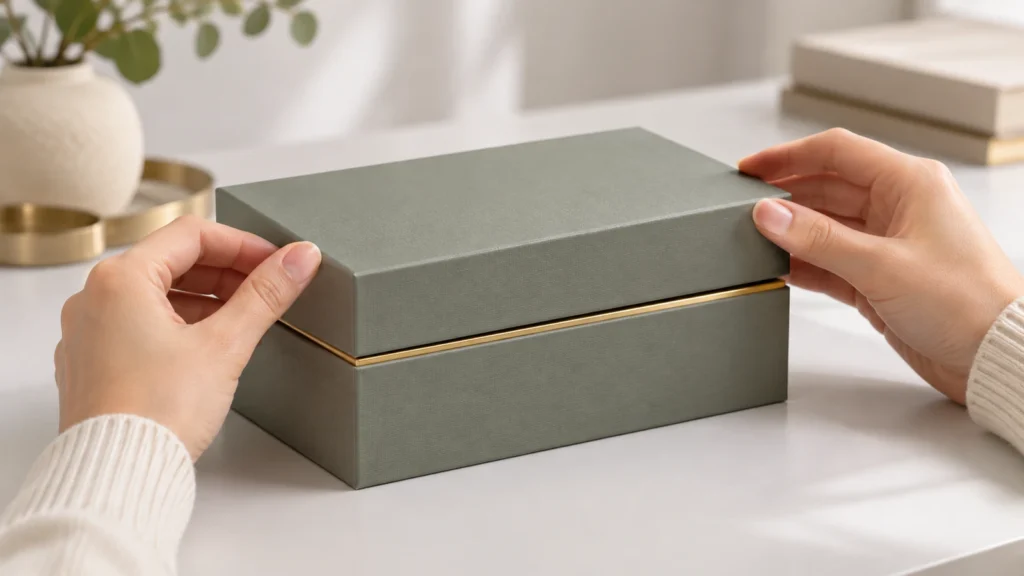
Quick answer: Rigid boxes are handmade from board and paper, so no two units are identical. A lid-and-base or drawer box feels “too tight” when the lid’s inner size does not leave enough clearance over the base’s outer size (after wrap paper thickness), and “too loose” when the clearance is excessive or the neck is missing. Typical industry clearance is around 1 to 2 mm total for a snug fit, and a manufacturing tolerance of roughly plus or minus 1 to 1.5 mm applies on each dimension. Specify both the target clearance and the tolerance in your order.
Few things frustrate a brand more than a premium box whose lid either refuses to come off or slides away on its own. This is almost never a “quality” problem in the sense of bad workmanship. It is usually a specification problem: the fit was never defined, so each batch is built to a slightly different interpretation. This article explains where the fit comes from and how to define it.
Why fit varies in rigid boxes
Rigid boxes are built from chipboard (greyboard) wrapped with printed paper. Three things create variation:
- Board thickness. Greyboard comes in standard thicknesses, commonly 1.5 mm to 3 mm, and each layer of wrap paper adds a small amount on top.
- Wrap and glue. Paper wrapped around corners and edges adds thickness at the folds. The more layers, the tighter the fit.
- Hand assembly. Most lid-and-base and drawer boxes are formed partly by hand or semi-automatically, so small positional shifts of 0.5 to 1 mm are normal.
Because of this, rigid boxes are specified with tolerances, not exact values. For a primer on terms such as “neck”, “wrap” and “greyboard”, see our packaging glossary.
Fit by box type
| Box type | What controls the fit | Typical clearance guidance* | Common problem |
|---|---|---|---|
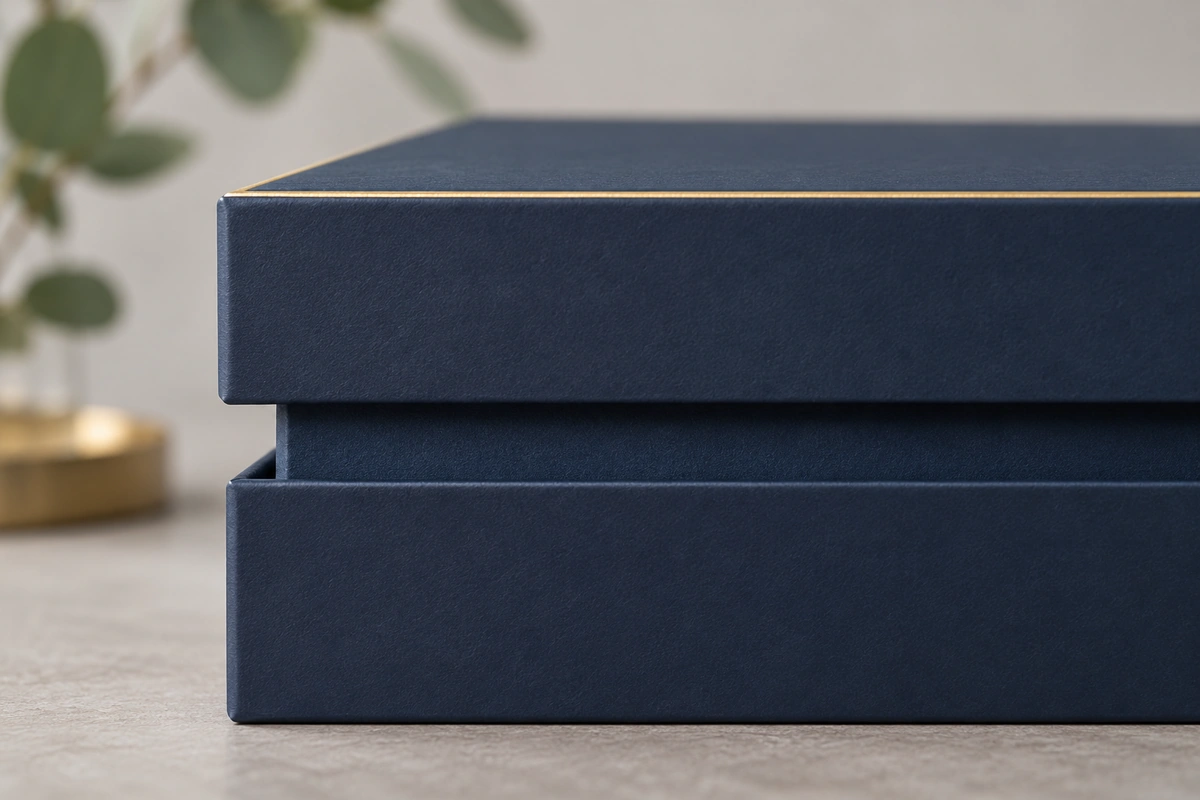
| Lid-and-base box, full-cap lid | Gap between lid inner wall and base outer wall | About 1 to 2 mm total | Too tight: wrap thickness not included; too loose: oversize lid |
| Lid-and-base with neck | Neck height and neck-to-lid gap | About 1 to 1.5 mm per side on the neck | Neck too tall makes the lid hard to lift |
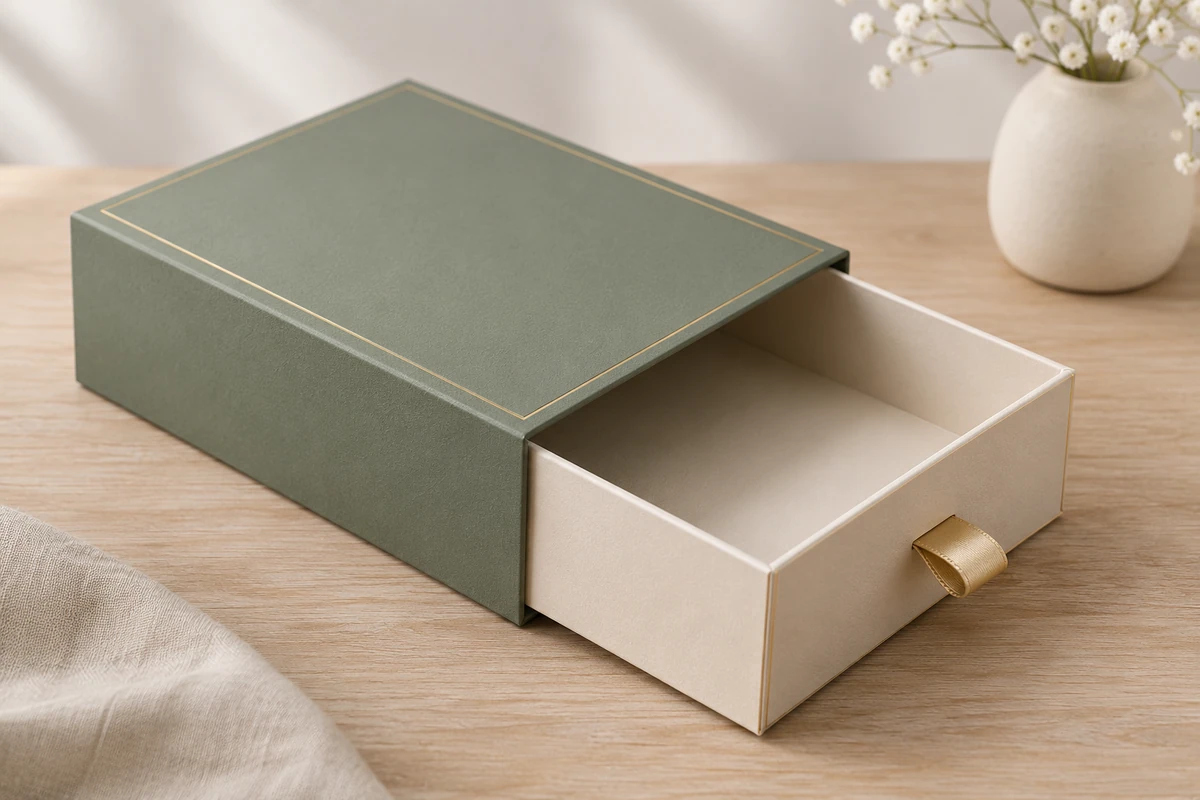
| Drawer box (sleeve and tray) | Gap between tray and sleeve walls | About 1 to 2 mm total | Tray sticks in humid weather, or slides out freely |
| Shoulder-neck box | Shoulder width and lid depth | About 1 to 2 mm | Lid wobbles if the shoulder is short |
| Magnetic flip-top | Lid depth and hinge play | About 1 to 2 mm | Lid does not sit flush, see our flush-closing guide |
*These are common industry ranges, not guarantees. Final values depend on board thickness, paper, and structure, and should be confirmed on an approved sample.
Too tight: the usual causes
- Wrap thickness ignored. The designer drew the box on outer dimensions but did not allow for paper on both walls.
- Neck too high or too close. A neck that is nearly the same height as the base wall leaves little room for error.
- Humidity swelling. Board absorbs moisture and expands slightly, which tightens a drawer or lid in humid regions.
- Over-gluing. Excess glue at corners increases wall thickness.
- Thick finishes. Heavy lamination or foil edges can add measurable thickness at the closing line.
Too loose: the usual causes
- Clearance set too generously to avoid the “too tight” problem.
- Missing neck on a box that needs one, so the lid has nothing to locate on.
- Board shrinkage after a very dry storage period.
- Lid walls bowed outward because of an uneven wrap or glue.
- Heavy product pulling the base walls outward over time.
How to specify the fit
Include these items in your drawing or purchase order:
- Target clearance (for example, 1.5 mm total) and acceptable range
- Tolerance on length, width and height (commonly plus or minus 1 to 1.5 mm for rigid boxes, confirm with your manufacturer)
- Board thickness and wrap paper weight
- Whether the lid has a neck, and its height
- Sample approval requirement: a pre-production sample signed off before mass production
Always make the white sample or a printed sample with the real product, and test the fit after leaving the box in conditions similar to the destination for 24 to 48 hours.
Test the fit like a buyer, not a designer
- Open and close the box 20 times in a row.
- Hold the closed box upside down and shake gently.
- Stack 3 boxes and check whether the lids shift.
- Pack and unpack with the real product, including any insert.
- Check five units from the batch, not only the best one.
A fit that passes all five tests on five units is a fit you can order in volume with confidence.
Frequently asked questions
How much gap should a rigid box lid have?
For most lid-and-base and drawer boxes, a total clearance of about 1 to 2 mm gives a snug but easy fit. The exact figure depends on board thickness and wrap paper, so confirm it on a sample.
What tolerance is normal for custom rigid boxes?
Handmade or semi-automatic rigid boxes commonly vary by about plus or minus 1 to 1.5 mm per dimension. Tighter tolerances are possible but can raise cost, so request only what your product needs.
Why is my drawer box hard to open?
Typical reasons are insufficient clearance, wrap thickness that was not accounted for, or humidity swelling the board. Reduce the tray width slightly or increase the sleeve inner size by 0.5 to 1 mm.
Why does my lid fall off too easily?
The clearance may be too generous, the neck may be missing or too short, or the lid walls may have bowed. A neck of suitable height usually fixes the problem.
Does lamination change the fit?
Slightly. Lamination films are thin, but combined with wrap paper and glue they add measurable thickness at the folds, so include them when approving the sample.
Can PackPro match a fit I already like on another box?
Yes. Send us the sample or its measurements and we can replicate the clearance. You can start with our quote form.
Planning a packaging project? Send us the brief.
Share your product dimensions, target quantity and destination market, and the PackPro engineering team will reply with a structural recommendation and a quotation. You do not need a finished design to start.
Request a custom quote | Email: info@packpropkg.com | WhatsApp / phone: +86 184 7552 0523
PackPro is the brand of Dongguan City XinHongCai Paper Products Co., Ltd, a factory-direct packaging manufacturer in Dongguan, China with FSC, BSCI, ISO 9001 and ISO 14001 certification (see certifications).
Related reading
Sources and further reading
- ISTA for transit and conditioning test methods
- ISO 9001 quality management for how factories control process variation