
By the PackPro packaging engineering team, Dongguan, China. Last updated 2026-11-09.
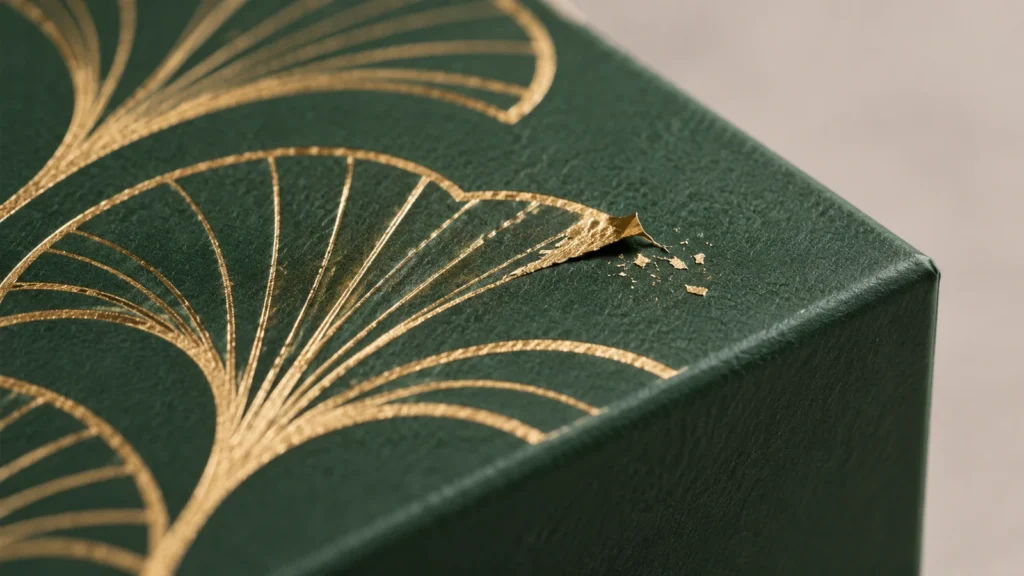
Quick answer: Foil peels or scratches off boxes mainly because the foil was stamped onto the wrong surface (soft-touch lamination, heavy varnish or oily ink), the stamping temperature, pressure or dwell time was wrong, or the foil grade did not suit the substrate. The most reliable fixes are to stamp before laminating or on bare paper, use a foil grade tested for the exact finish, and run a tape-peel and rub test on a pre-production sample.
Gold, silver and coloured foil are among the most popular luxury finishes in packaging. They are also one of the most common sources of claims, because foil defects show up after shipping, when the box is in the customer’s hands. This guide covers why foil fails and how to prevent it.
How hot foil stamping works
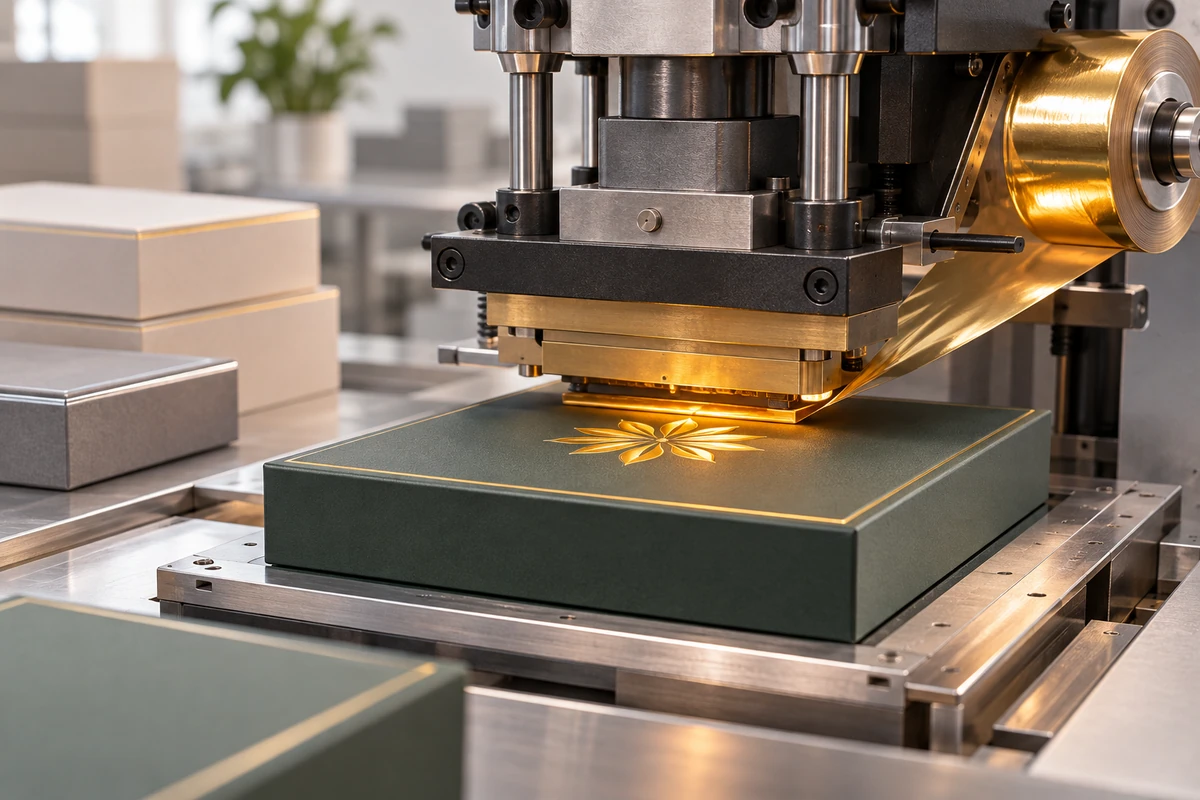
In hot foil stamping, a heated metal die presses a thin foil film against the box paper. Heat activates an adhesive layer on the foil, which bonds to the surface; the carrier film is then peeled away. Three variables control the bond: temperature, pressure and dwell time. The substrate, meaning the paper, coating or film underneath, must also be receptive.
The 7 most common causes of peeling and scratching
| # | Cause | What you see | Fix |
|---|---|---|---|
| 1 | Foil stamped on soft-touch or PE lamination | Foil flakes off with light rubbing or tape | Stamp before laminating, use a foil made for laminated surfaces, or use a window without lamination |
| 2 | Heavy varnish, UV or silicone-rich ink under the foil | Patchy coverage, foil lifts at edges | Keep the foil area free of varnish and slip additives (a “knockout”) |
| 3 | Temperature too low | Weak bond, dull foil that rubs off | Re-calibrate die temperature for the foil grade |
| 4 | Temperature or pressure too high | Foil “fills in” fine lines, halos or cracks | Reduce temperature or pressure; check die quality |
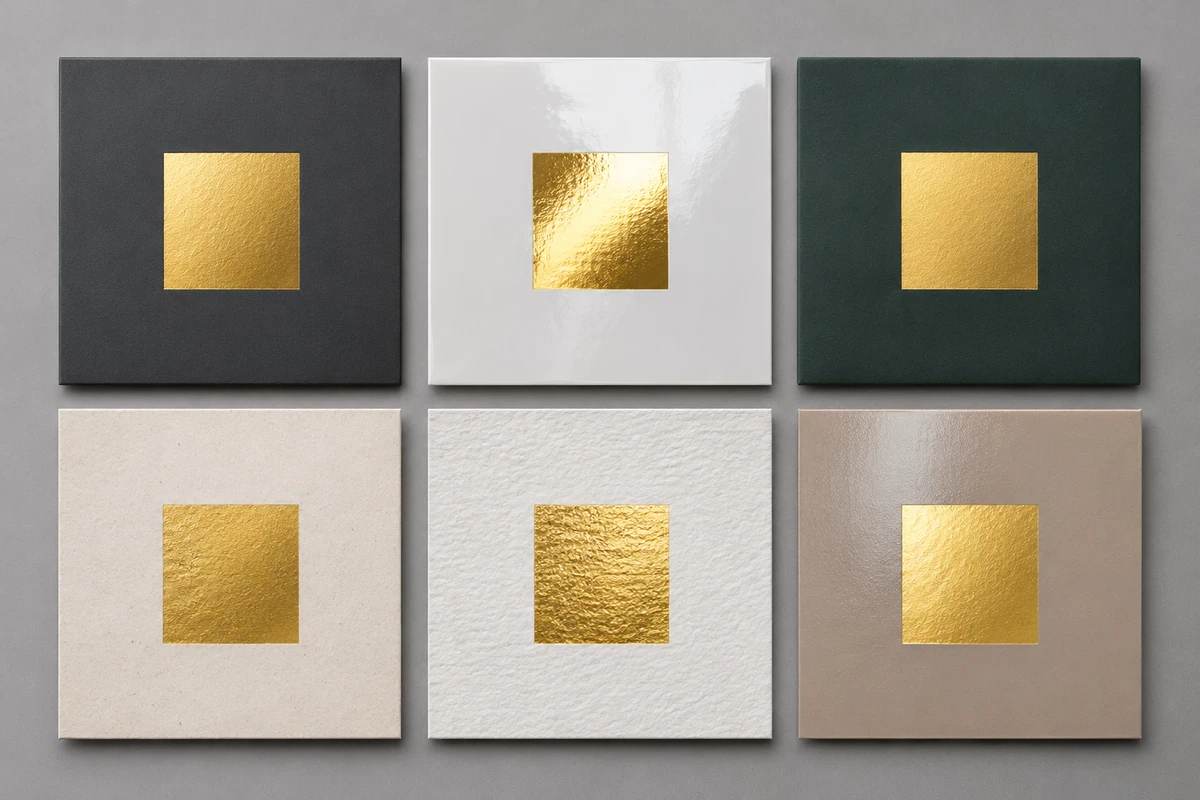
| 5 | Wrong foil grade for the paper | Poor transfer on textured or dark papers | Test the foil on the actual paper before approval |
| 6 | Fine detail on a rough surface | Broken thin lines, uneven edges | Increase line width or choose a smoother stock |
| 7 | Moisture in paper or storage conditions | Foil fails after shipping to humid regions | Control moisture, see our humid-region shipping guide |
Why soft-touch and foil are a difficult pair
Soft-touch lamination has a rubbery, low-energy surface designed to feel velvety. That same property makes it difficult for foil adhesive to grip. Brands often combine soft-touch with gold foil because it looks excellent, then see foil lift at the corners. There are three standard solutions:
- Foil first, laminate second. Foil is stamped on the printed paper, then a thin lamination or varnish protects the area. This reduces the foil’s shine slightly.
- Foil on bare paper areas. Leave the logo area unlaminated and stamp directly onto the paper.
- Foil grade for laminated surfaces. Some foils are formulated to bond with specific films. Ask your factory to test on your exact lamination.
For related durability issues on soft-touch finishes, see Fingerprints and Scuffs on Soft-Touch Boxes.
Simple tests to run on a sample
- Tape test: Press standard adhesive tape firmly on the foil and pull it off at a steady speed. No foil should lift.
- Rub test: Rub the foil 20 to 50 times with a dry cotton cloth, then a slightly damp one. Note any loss.
- Fingernail scratch test: Drag a fingernail across a thin line. Foil should not flake.
- Fold test: For areas near edges, fold the wrapped edge and inspect for cracking.
- Humidity test: Store a sample in a humid environment for 24 to 48 hours and repeat the tape test.
Foil design tips that reduce risk
- Keep fine lines above about 0.2 to 0.3 mm; thinner lines may break up.
- Avoid foil right on a folded edge or corner where wear is highest.
- Avoid very large solid foil areas on soft-touch; they show wear more clearly.
- Consider embossing or debossing around foil to protect the edge.
- Choose cold foil or printed metallic ink for large areas where heat stamping is difficult.
What to include in your quote request
State the foil colour (with Pantone or foil code), the foil areas in mm, the surface it is applied on (paper, laminated, textured), the expected handling (retail shelf, e-commerce shipping, repeated opening) and the test you want to see passed. You can use our packaging RFQ template to organise this.
Frequently asked questions
Why is the foil on my boxes peeling off?
The usual causes are stamping on soft-touch or heavily varnished surfaces, incorrect temperature or pressure, or a foil grade that does not match the paper. Test the real combination on a sample before production.
Can you hot foil over soft-touch lamination?
It can be done with a foil grade formulated for laminated films, or by stamping before lamination. Standard foil on standard soft-touch usually bonds poorly, so test first.
What is the difference between hot foil and cold foil?
Hot foil uses heat and a metal die to transfer foil, giving a sharp, premium look. Cold foil is applied with adhesive during printing, which suits large areas and fine halftones but offers a slightly different appearance.
How do I stop foil from scratching during shipping?
Use a protective varnish or film over the foil where design allows, avoid foil on high-wear corners, and pack boxes with tissue or sleeves between units for e-commerce shipping.
Does humidity affect foil adhesion?
Yes. Moisture in the paper can weaken the bond or change how the surface accepts the foil, particularly on long sea shipments.
Does PackPro offer foil stamping?
Yes. PackPro applies hot foil stamping, embossing and other finishes on rigid and collapsible boxes. See our gift box range or request a quote.
Planning a packaging project? Send us the brief.
Share your product dimensions, target quantity and destination market, and the PackPro engineering team will reply with a structural recommendation and a quotation. You do not need a finished design to start.
Request a custom quote | Email: info@packpropkg.com | WhatsApp / phone: +86 184 7552 0523
PackPro is the brand of Dongguan City XinHongCai Paper Products Co., Ltd, a factory-direct packaging manufacturer in Dongguan, China with FSC, BSCI, ISO 9001 and ISO 14001 certification (see certifications).