
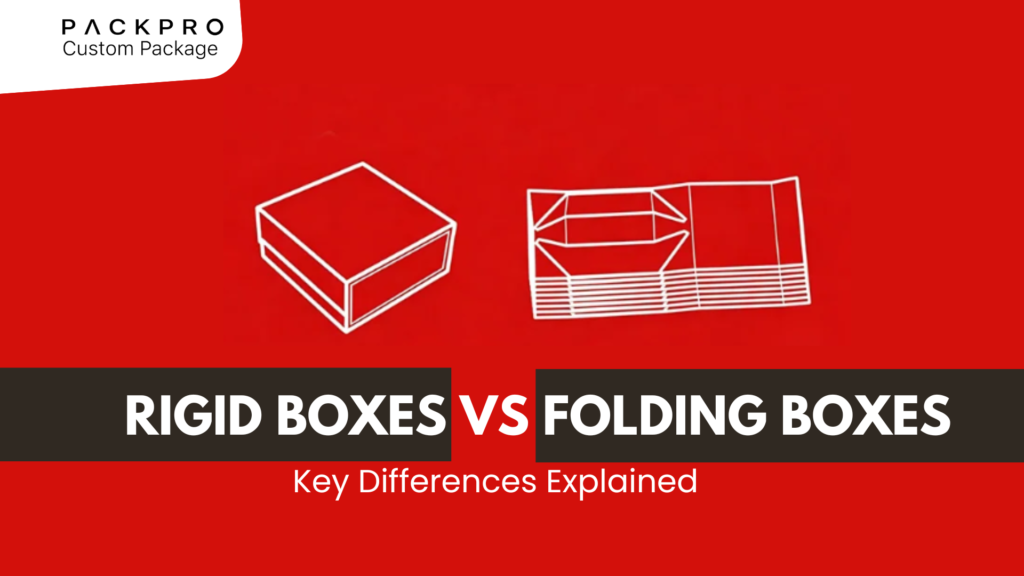
When it comes to product packaging, the choice between rigid boxes and folding cartons can make or break your brand’s success. Packaging is the critical first touchpoint between your product and potential customers — it protects contents, communicates brand values, and creates memorable unboxing experiences that drive loyalty and repeat purchase.
Whether you’re launching a luxury cosmetics line, shipping electronics, or packaging everyday retail products, choosing the right solution impacts everything from product safety to shipping costs and brand perception. This guide breaks down everything you need to know about rigid boxes, folding cartons, and custom paperboard packaging — helping you make an informed decision that aligns with your product, budget, and brand identity. Browse PackPro’s full range of custom gift boxes and collapsible packaging to explore ready-to-quote options.

What Are Rigid Boxes?
Rigid boxes — also known as set-up boxes — are constructed from thick, durable chipboard or paperboard ranging from 1 to 3 millimetres in thickness. Unlike folding cartons, rigid boxes are manufactured fully assembled and maintain their shape permanently. They never collapse or fold flat, which is precisely what gives them their premium character.
The construction process wraps a sturdy chipboard base with high-quality decorative paper, fabric, leather, or specialty textured materials. This multi-layer approach creates packaging that feels substantial in hand and communicates luxury at first touch. Custom rigid boxes support advanced finishing techniques including embossing, debossing, foil stamping, spot UV coating, metallic textures, and magnetic closures — making them the go-to choice for brands where the box itself is part of the product experience.
Key properties to understand: the non-collapsible structure provides superior protection but requires more storage space; the thick paperboard (1–3mm) creates a substantial tactile experience; and higher production costs reflect the premium materials and labour-intensive assembly involved.
Types of Rigid Boxes

Two-Piece Rigid Boxes
The classic separate lid-and-base design. The most widely used rigid box format — ideal for jewellery packaging, gift boxes, luxury accessories, and high-end confectionery where the lid lift is itself part of the reveal moment.
Book-Style (Hinged Lid) Rigid Boxes
Opens like a book with a spine hinge, often featuring magnetic closures for a smooth, theatrical reveal. Popular for premium electronics (smartphones, tablets), luxury cosmetics, collector’s editions, and high-value gift sets where the opening experience is a deliberate part of the brand story.
Magnetic Closure Boxes
Enhanced with embedded magnets that snap the lid shut with a satisfying click. This format conveys sophistication and is widely used for luxury fashion items, premium beauty products, high-end tech accessories, and corporate gift packaging where repeat opens matter.
Shoulder Rigid Boxes
Features a stepped-edge lid design that sits over a raised shoulder on the base, adding visual interest and providing an extremely secure closure. Common in wine and spirits packaging, premium food gifting, and luxury personal care products.
Advantages and Disadvantages of Rigid Boxes
Rigid boxes deliver unmatched durability and brand elevation — their thick paperboard construction provides superior crush resistance and impact protection, making them ideal for fragile items like glassware, electronics, and delicate cosmetics. The substantial weight, quality materials, and sophisticated appearance signal luxury and exclusivity instantly, and the rigid structure creates the “wow” unboxing moment that brands leverage for social sharing and influencer marketing. The durability also means customers keep and reuse the box, extending brand presence in their homes.
The trade-offs are real, however. Rigid boxes cost 3–5× more per unit than folding cartons due to premium materials and largely manual assembly. Their non-collapsible nature means they occupy the same warehouse volume whether empty or full, increasing storage and shipping costs significantly. Production lead times are also longer — typically 2–4 weeks versus 1–2 weeks for folding cartons. While recyclable, the additional materials and larger shipping volume increase the environmental footprint compared to lighter alternatives.
What Are Folding Cartons?
Folding cartons are the versatile, cost-effective backbone of retail packaging. Constructed from lightweight paperboard (typically 0.3–1mm thickness), they are die-cut, printed, and shipped completely flat — then assembled on-site or by automated machinery at scale. This is the format you see on supermarket shelves, in pharmacy aisles, and inside e-commerce shipments every single day.
The fundamental advantage lies in their collapsible nature. Folding cartons ship and store flat, dramatically reducing logistics costs, then fold into shape in seconds. This efficiency makes them the logical choice for high-volume production runs. For e-commerce brands specifically, PackPro’s e-commerce packaging range offers folding-carton solutions purpose-built for shipping performance and unboxing presentation.
Key characteristics: collapsible and space-efficient; lightweight (0.3–1mm board); cost-effective through automated production; high-volume compatible; supports full-colour printing, coatings, and finishes; and provides moderate protection suitable for non-fragile items.
Types of Folding Cartons
Straight Tuck End (STE)
Both tuck flaps open and close in the same direction. The default format for cosmetic packaging, food products, pharmaceutical packaging, and health and beauty items — clean, simple, efficient.
Reverse Tuck End (RTE)
Top and bottom flaps tuck from opposite sides, making the box easier to open. Popular for retail packaging, consumer electronics accessories, toys and games, and personal care products.
Auto-Bottom (Snap Lock Bottom)
Pre-glued bottom automatically forms when opened, speeding up packing line assembly dramatically. Ideal for food service packaging, retail point-of-purchase displays, e-commerce shipping cartons, and subscription box products.
Seal End and Tuck Top Snap Lock
Seal end cartons are fully enclosed and require sealing after filling — the standard for cereal boxes, pasta, detergent, and beverage multi-packs. Tuck top snap lock combines easy-to-tuck closure with automatic bottom formation, used for frozen foods, baked goods, and small appliances.
Advantages and Disadvantages of Folding Cartons
Folding cartons win on economics and logistics. Lower material costs and automated production make them the economical choice for high-volume needs — you can store 50–100 flat cartons in the space of a single assembled rigid box, which translates directly to lower warehousing and freight costs. Fast turnaround (1–2 weeks), sustainability benefits from reduced material usage and lighter shipping weight, and support for vibrant full-colour printing all make folding cartons the dominant packaging format globally. Many food packaging applications use FSC-certified paperboard folding cartons as their primary format.
The limitations are equally clear. Thinner paperboard offers less protection — folding cartons are unsuitable for highly fragile or valuable items without additional inner packaging. They lack the substantial, luxurious feel of rigid boxes, which can impact perceived product value in premium categories. And most folding cartons are single-use by design, limiting the reusability that helps rigid boxes extend brand presence.
Rigid Boxes vs Folding Cartons: Side-by-Side Comparison
| Feature | Rigid Boxes | Folding Cartons |
|---|---|---|
| Material Thickness | 1–3mm thick chipboard | 0.3–1mm paperboard |
| Structure | Non-collapsible, maintains shape | Collapsible, ships flat |
| Cost per Unit | Higher ($2–$10+) | Lower ($0.10–$1) |
| Storage Efficiency | Requires significant space | Highly space-efficient |
| Protection Level | Excellent for fragile items | Moderate for standard products |
| Customisation | Extensive premium options | Versatile printing and coatings |
| Production Time | 2–4 weeks typical | 1–2 weeks typical |
| Brand Perception | Premium, luxury positioning | Versatile, practical positioning |
| Best For | High-end, luxury products | Mass market, everyday items |
| Typical Industries | Jewellery, luxury cosmetics, premium electronics | Food, pharmaceuticals, mass retail |
| Sustainability | Recyclable but higher material use | Recyclable with lower footprint |
| Minimum Order | 500–1,000 units typical | 250–500 units possible |

Which Packaging Is Right for Your Brand?
Choose Custom Rigid Boxes When
- Luxury brand positioning is essential — selling premium jewellery, high-end cosmetics, luxury watches, or designer accessories where the box communicates quality before the product is even seen.
- Product fragility demands superior protection — glassware, delicate electronics, fine cosmetics, or valuable collectibles that cannot risk damage in transit.
- Unboxing is part of your marketing strategy — subscription boxes, influencer seeding, gift products, or any scenario where the opening experience is shared on social media. Explore PackPro’s custom gift box range for ready-to-configure options.
- Brand differentiation requires standing out — in crowded markets where tactile packaging quality justifies premium pricing and builds perceived value.
- Limited editions or special releases — where the packaging itself reinforces the exclusive, collectible nature of the product.
Choose Folding Cartons When
- Cost efficiency is the priority — for startups, mass-market products, or thin-margin categories where folding cartons deliver attractive packaging within budget.
- High-volume production is planned — thousands or millions of units where automation compatibility and economies of scale make folding cartons the only logical choice.
- Logistics and storage must be optimised — limited warehouse space or high shipping volumes where flat-pack efficiency delivers significant cost savings.
- Sustainability goals drive decisions — lower material usage, reduced shipping emissions, and simpler recycling support green commitments. The Sustainable Packaging Coalition identifies right-sizing as one of the most impactful actions brands can take.
- FMCG or regulatory environments apply — grocery, pharmacy, or mass retail channels where folding cartons are the industry standard and can be designed for compliance requirements.
Understanding Paperboard: The Material Foundation
Both rigid boxes and folding cartons are built on paperboard — a thick paper-based material manufactured from wood pulp or recycled fibres. The difference lies in thickness and treatment: rigid boxes use thick chipboard (1–3mm) wrapped in decorative materials, while folding cartons use thinner, scored paperboard (0.3–1mm) printed and die-cut for folding.
SBS (Solid Bleached Sulfate)
Premium white surface with excellent ink absorption — the standard for luxury folding cartons in cosmetics and pharmaceuticals. Produces the sharpest colour reproduction of any paperboard grade.
CUK (Coated Unbleached Kraft)
Natural brown appearance with a white-coated printable surface. Strong, economical, and popular for food packaging and eco-conscious brands that want natural aesthetics with full-colour print capability.
Chipboard and FBB (Folding Box Board)
Chipboard — made from recycled paper — provides the thick, rigid structural base for set-up boxes and is the most cost-effective board for structural applications. FBB uses a multi-layer construction with a mechanical pulp core that balances strength and printability, making it versatile for a wide range of folding carton applications. All grades are available from FSC-certified sources — important for brands with sustainability commitments.
Industry Applications
Where Rigid Boxes Dominate
Rigid boxes lead in any market where the packaging directly contributes to perceived product value. Luxury goods and fashion — designer clothing, fine jewellery boxes, luxury watches, and high-end accessories — depend on rigid packaging to communicate quality before the product is revealed. Premium cosmetics and beauty — luxury skincare packaging and prestige fragrance boxes — use rigid boxes as the primary brand carrier. Consumer electronics from smartphones to premium headphones use rigid boxes to reinforce their price positioning. Specialty food and gifting — artisan chocolates, premium spirits, and luxury gift hampers — all rely on rigid packaging to justify premium shelf prices.
Where Folding Cartons Excel
Folding cartons dominate in volume-driven, regulation-heavy, and price-competitive categories. Food and beverage — cereal, frozen meals, baked goods, beverage multi-packs — rely on folding cartons for efficient packing line performance and shelf-ready presentation. Pharmaceutical and healthcare — prescription medications, OTC drugs, medical devices, and nutritional supplements — use folding cartons to meet strict regulatory requirements for labelling and tamper-evidence. Personal care and household goods — oral care, hair care, cleaning products — benefit from the cost efficiency and logistics advantages that folding cartons provide at mass-market volumes.
Cost Analysis: What Should You Budget?
When comparing packaging options, look beyond per-unit price to the total cost of ownership — including storage, shipping, handling, and inventory holding costs.
| Packaging Type | Tier | Price Range per Unit |
|---|---|---|
| Rigid Boxes | Budget | $2–$4 |
| Rigid Boxes | Mid-range | $4–$7 |
| Rigid Boxes | Premium | $7–$15+ |
| Rigid Boxes | Ultra-luxury | $15–$50+ |
| Folding Cartons | Basic | $0.10–$0.30 |
| Folding Cartons | Custom printed | $0.30–$0.75 |
| Folding Cartons | Premium | $0.75–$2 |
| Folding Cartons | Specialty | $2–$4 |
Prices vary based on size, quantity, customisation, and materials. Higher volumes reduce per-unit costs significantly. PackPro’s MOQ starts at 1,000 units — request a free factory quote for exact pricing on your brief.
Rigid boxes make financial sense when your product price point is over $50–$100, packaging contributes directly to perceived value, premium positioning supports higher margins, and customer lifetime value benefits from brand experience. Folding cartons optimise ROI when products are under $50, high volumes compensate for lower margins, packaging is primarily protective, and distribution costs significantly impact profitability.
Sustainability Considerations
Both packaging types can be produced sustainably, but their environmental profiles differ. Rigid boxes use more material per unit and have a greater shipping footprint, but their durability encourages reuse — customers keep rigid boxes, extending their life well beyond the initial sale. They often contain recycled chipboard content, and the quality construction prompts consumers to recycle rather than discard. The challenge is the mixed-material construction (board, paper wrap, magnets, fabric linings) which can complicate end-of-life recycling.

Folding cartons have a smaller material footprint, lighter shipping weight, simpler recycling process, and are frequently made from high-percentage recycled content. Their single-use design is the main limitation. Regardless of which format you choose, these practices reduce environmental impact: specify post-consumer recycled board, use water-based inks, right-size packaging dimensions, choose recyclable finishing options, source FSC-certified fibre, and include recycling instructions on pack.
Design and Branding: Getting the Most from Each Format
Premium Finishes for Rigid Boxes
Custom rigid boxes support the full spectrum of luxury finishing techniques: embossing and debossing create tactile logo and text relief; hot foil stamping in gold, silver, rose gold, or holographic adds metallic accents; spot UV coating highlights specific design elements with gloss contrast; soft-touch lamination creates a velvety, luxurious exterior feel; and textured wrap papers in linen, leather grain, or custom patterns give structural character. Structurally, custom die-cut shapes, magnetic closure positioning, interior compartments, ribbon pulls, and window cutouts all contribute to a distinctive brand identity that a flat carton cannot replicate.
Effective Branding with Folding Cartons
Folding cartons deliver compelling shelf presence through print excellence: full-colour offset or digital printing produces vibrant, detailed graphics at scale; matte or gloss lamination controls the light reflection and tactile feel; metallic inks give a budget-friendly alternative to foil stamping; and spot coatings highlight key design elements. Design strategies that maximise folding carton impact include bold shelf-facing graphics, clear product information hierarchy, window patches for product visibility, QR codes linking to digital brand experiences, and seasonal variation printing for promotional campaigns.
2026 Packaging Trends to Watch
The packaging industry in 2026 is being shaped by sustainability mandates, personalisation technology, and the growing importance of the unboxing moment as a marketing channel. For rigid boxes, the leading trends are sustainable luxury (premium packaging using eco-certified materials), smart packaging with NFC chips and QR authentication, minimalist design with clean sophisticated aesthetics, modular reusable systems, and artisanal hand-finished textures that differentiate in a premium-crowded market.
For folding cartons, the key developments are mono-material designs (fully recyclable single-material constructions replacing multi-layer laminates), digital printing for short-run personalisation and variable data, active packaging with freshness indicators and interactive features, augmented reality integrations activated by smartphone cameras, and compostable bio-based barrier coatings replacing traditional plastic laminations.
Conclusion
The choice between rigid boxes and folding cartons ultimately depends on your product characteristics, brand positioning, target market, and business economics. Both formats play vital roles in the packaging ecosystem — and many brands use both strategically: rigid boxes for gift sets, limited editions, and flagship products; folding cartons for refills, everyday lines, and mass-market SKUs. This hybrid approach optimises costs while maintaining premium positioning exactly where it matters.
The best packaging solution protects your product, tells your brand story, creates memorable customer experiences, and supports your business objectives. PackPro delivers both formats — factory direct from Dongguan, China — with low MOQ from 1,000 units and free samples. Explore our custom rigid gift box range, collapsible box options, and e-commerce packaging solutions — or request a free factory quote within 24 hours.
Frequently Asked Questions
What is the minimum order quantity for rigid boxes?
Minimum orders typically range from 500–1,000 units. Some manufacturers offer lower minimums at higher per-unit costs. PackPro’s MOQ starts at 1,000 units with free physical samples available before production commitment.
Can folding cartons be as customised as rigid boxes?
Yes — folding cartons support extensive customisation including custom die-cut shapes, window patches, coatings, and high-quality printing. Some premium techniques like embedded magnetic closures and fabric linings are exclusive to rigid boxes, but folding cartons offer strong branding flexibility within their format.
How long does production take for rigid boxes vs folding cartons?
Folding cartons typically require 1–2 weeks from artwork approval. Rigid boxes need 2–4 weeks due to more complex material sourcing, wrapping, and assembly processes. Both timelines assume artwork is approved quickly — delays in sign-off extend production accordingly.
Are rigid boxes and folding cartons both recyclable?
Yes, both are generally recyclable. Folding cartons made from a single paperboard grade are straightforward to recycle. Rigid boxes with extensive embellishments — magnetic closures, foil laminates, fabric linings — may require disassembly before recycling. Choosing simpler finishes and noting recycling guidance on pack improves recyclability for both formats.
Which packaging type is better for e-commerce?
It depends on your product and brand positioning. Folding cartons are more cost-effective for high-volume shipping and stack efficiently in fulfilment centres. Rigid boxes create premium unboxing experiences that drive social sharing, reduce perceived damage risk, and command higher perceived product value on arrival. PackPro’s e-commerce packaging range covers both approaches.
Can I use both rigid boxes and folding cartons in the same product range?
Absolutely — this hybrid approach is used by many successful brands. Rigid boxes for premium flagship products, gift sets, and limited editions; folding cartons for refills, everyday SKUs, and mass-market lines. This optimises costs while maintaining premium packaging where it drives the most commercial value.
