
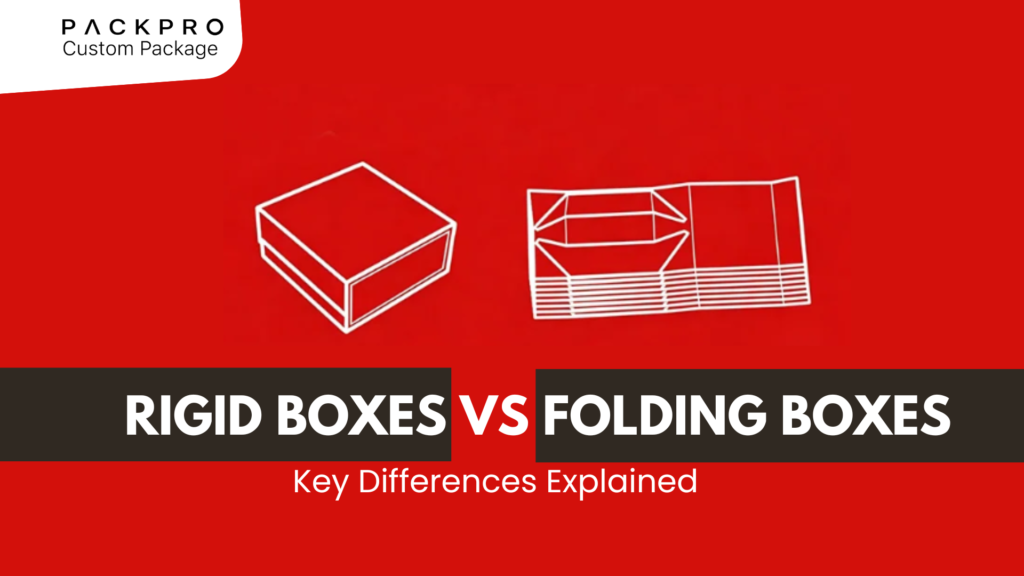
Rigid boxes and folding cartons are the two dominant packaging formats in global consumer goods. Understanding their differences in structure, cost, application, and brand impact is essential for making informed packaging decisions. This guide breaks down both formats with practical detail for procurement managers, brand owners, and packaging designers.
Quick answer: Rigid boxes are made from non-folding greyboard, assembled by hand, and deliver premium tactile quality. Folding cartons are die-cut from lighter paperboard, fold flat for storage, and are more cost-efficient for high-volume retail applications. The right choice depends on product value, target margin, distribution channel, and brand positioning.
Structure and Materials
A rigid box is constructed from thick greyboard, typically between 1200 and 2400 gsm, that does not fold flat after assembly. The greyboard shell is wrapped in a separately printed or specialty paper. The structure is assembled by hand, with components cut individually and joined using adhesive. This construction gives rigid boxes their characteristic weight, density, and precise corners.
A folding carton is manufactured from lighter paperboard, typically 230 to 500 gsm, that is printed as a flat sheet, die-cut into a specific shape, and scored for folding. The flat carton is shipped to the brand or contract packer, where it is erected and filled. Folding cartons are compatible with automated filling and closing operations.
Cost Comparison
Rigid boxes cost significantly more per unit than folding cartons at equivalent volumes. The greyboard material, the hand-assembly process, and the separate wrap paper printing all contribute to higher production cost. At typical luxury packaging volumes, rigid boxes range from $2 to $15 or more per unit depending on size, material, and finish.
Folding cartons at standard retail volumes typically range from $0.30 to $2 per unit depending on board weight, print complexity, and finishing. The automated production process, efficient material utilization, and compatibility with high-speed operations all reduce cost per unit significantly.
Brand Positioning and Consumer Perception
Rigid boxes communicate premium quality before the product is seen. The weight, the smooth surfaces, the precision of the corners, and the satisfying resistance of the lid create a physical experience that signals luxury and care. For products positioned at the high end of their category, rigid box packaging supports and reinforces the price point.
Folding cartons communicate efficiency and accessibility. Well-designed folding carton packaging can present a brand professionally and attractively, but the physical experience of handling a folding carton is inherently less premium than a rigid box. For products at mainstream or accessible premium price points, folding cartons deliver appropriate presentation at the right cost.
Distribution and Logistics
Rigid boxes, because they cannot be collapsed, are shipped assembled or partially assembled. This increases the volume occupied per unit during transit and storage, which raises logistics cost compared to folding cartons that ship flat.
Folding cartons ship flat in count-bound bundles and are erected at point of packing. This dramatically reduces storage volume and transit cost, which is a significant commercial advantage at high volumes and long supply chain distances.
When to Choose Each Format
Choose rigid boxes when the product is positioned at a premium or luxury price point, when the unboxing experience is a meaningful part of the brand story, when gift appeal is important to the purchasing decision, or when the product value justifies the higher packaging cost.
Choose folding cartons when the product is positioned at mainstream or accessible premium price points, when automated filling and high-volume production are required, when shipping efficiency is a significant cost factor, or when the packaging budget cannot accommodate the higher cost of rigid construction.
What is the main difference between rigid boxes and folding cartons?
Rigid boxes use thick non-folding greyboard assembled by hand, delivering premium weight and quality. Folding cartons use lighter paperboard that ships flat and is erected at packing, making them more cost-efficient for high-volume retail use.
Are rigid boxes more expensive than folding cartons?
Yes. Rigid boxes typically cost $2 to $15 or more per unit depending on size and finish. Folding cartons typically range from $0.30 to $2 per unit at standard retail volumes.
Which packaging is better for luxury products?
Rigid boxes are the standard choice for luxury products because their weight, structure, and tactile quality signal premium positioning before the product is opened.
Can folding cartons look premium?
Yes. With the right design, finish techniques such as soft-touch lamination, foil stamping, and spot UV, folding cartons can present a brand at an accessible premium level effectively.