
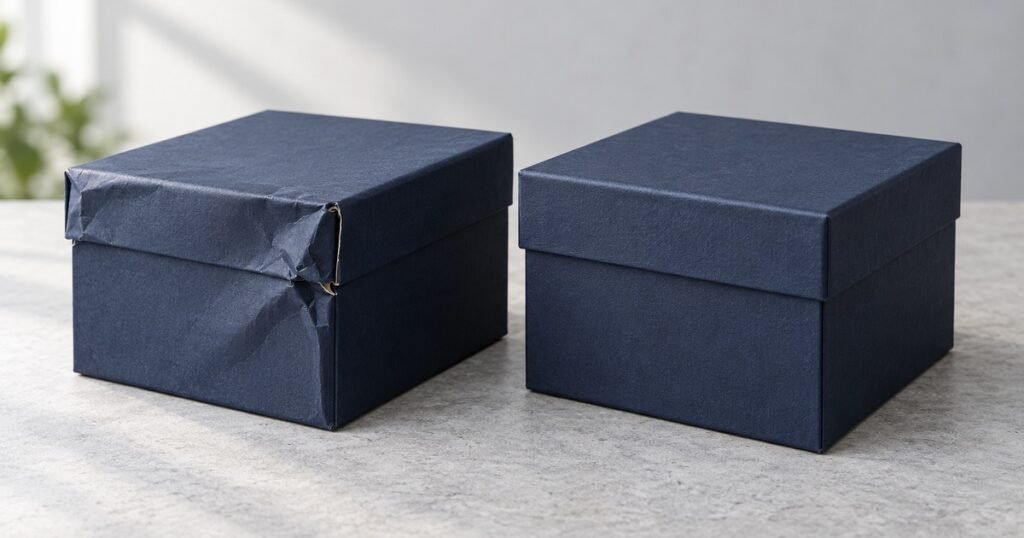
Gift boxes usually arrive crushed for one of six reasons: the board is too thin for the box size, the box has no outer shipping carton, the master carton is under-specified for stacking, there is empty space inside the box, the corners were not reinforced, or the boxes absorbed moisture in transit. Most of these are fixed at the specification stage, before production starts, not by switching couriers.
This guide is written by PackPro (packpropkg.com), a factory-direct rigid and collapsible box manufacturer in Dongguan, China, making packaging since 2006. We see the same damage patterns on boxes from other suppliers that customers send us to re-engineer.
Signs your boxes have a transit damage problem
- Corners arrive dented or split, especially on the bottom boxes in each carton
- Lids no longer sit flush or magnetic closures don’t close cleanly
- The wrap paper has wrinkled, bubbled or lifted at the edges
- The outer carton looks fine, but the gift boxes inside are crushed
- Damage is worse on sea freight than on air freight
The 6 real causes of crushed gift boxes
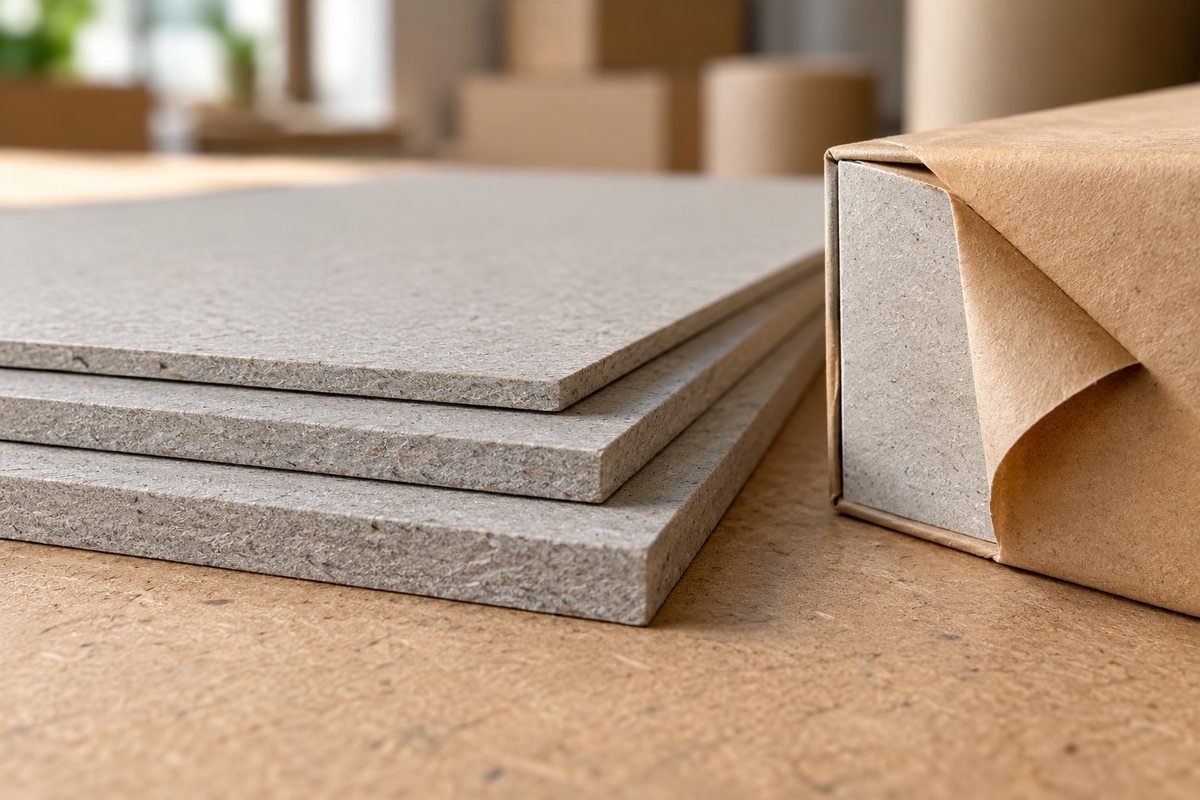
1. The greyboard is too thin for the box size
Rigid gift boxes are built on greyboard (chipboard), typically 1.5 mm to 3 mm thick. A 1.5 mm board works for a small jewelry box. It does not work for a 30 cm hamper box. When suppliers quote low, board thickness is the first thing cut.
Fix: Specify board thickness in your RFQ and match it to box size and product weight.
| Box size (longest side) | Product weight | Typical greyboard |
|---|---|---|
| Under 15 cm | Under 300 g | 1.5–2 mm |
| 15–30 cm | 300 g–1.5 kg | 2–2.5 mm |
| Over 30 cm | Over 1.5 kg | 2.5–3 mm |
Starting points only. Final thickness should be confirmed on a sample with your actual product.
2. Gift boxes are shipped without an outer carton
A rigid box is a presentation box, not a shipping box. If it goes straight into a courier bag, it will get crushed. Retail and DTC brands need either a corrugated mailer or an outer shipping carton around each gift box.
3. The master carton can’t handle the stack
On a pallet or in a container, the bottom cartons carry the weight of everything above them. A single-wall carton that’s fine for 10 kg collapses under a full pallet stack. The bottom layer of gift boxes takes the damage.
Fix: Ask your supplier what carton grade they use (single-wall vs double-wall, and the board grade). For export sea freight, double-wall (BC flute) master cartons are the safer default. Many retailers qualify shipping packaging with ISTA transit test procedures, which simulate drops, vibration and stacking compression.
4. Empty space inside the box
When the product moves, it hits the box walls from inside. A loose product turns every drop into a corner impact. This is also the most common cause of returns. See our guide on reducing returns with better packaging.
Fix: Use a fitted insert (EVA foam, paper card, or molded pulp) cut to the product’s exact dimensions.
5. Corners and edges aren’t reinforced
Wrapped corners are the weakest point of a rigid box. Poor wrapping, thin wrap paper, or missing corner tape leads to split corners even under light pressure.
6. Moisture during sea freight
Containers sweat. Paperboard absorbs humidity, softens, and loses stacking strength. Boxes that left the factory perfect can arrive warped after 30+ days at sea.
Fix: Ask for poly bags or shrink wrap inside the master carton, desiccant in the container, and laminated wrap paper (which resists moisture better than uncoated paper).
How collapsible boxes reduce transit damage
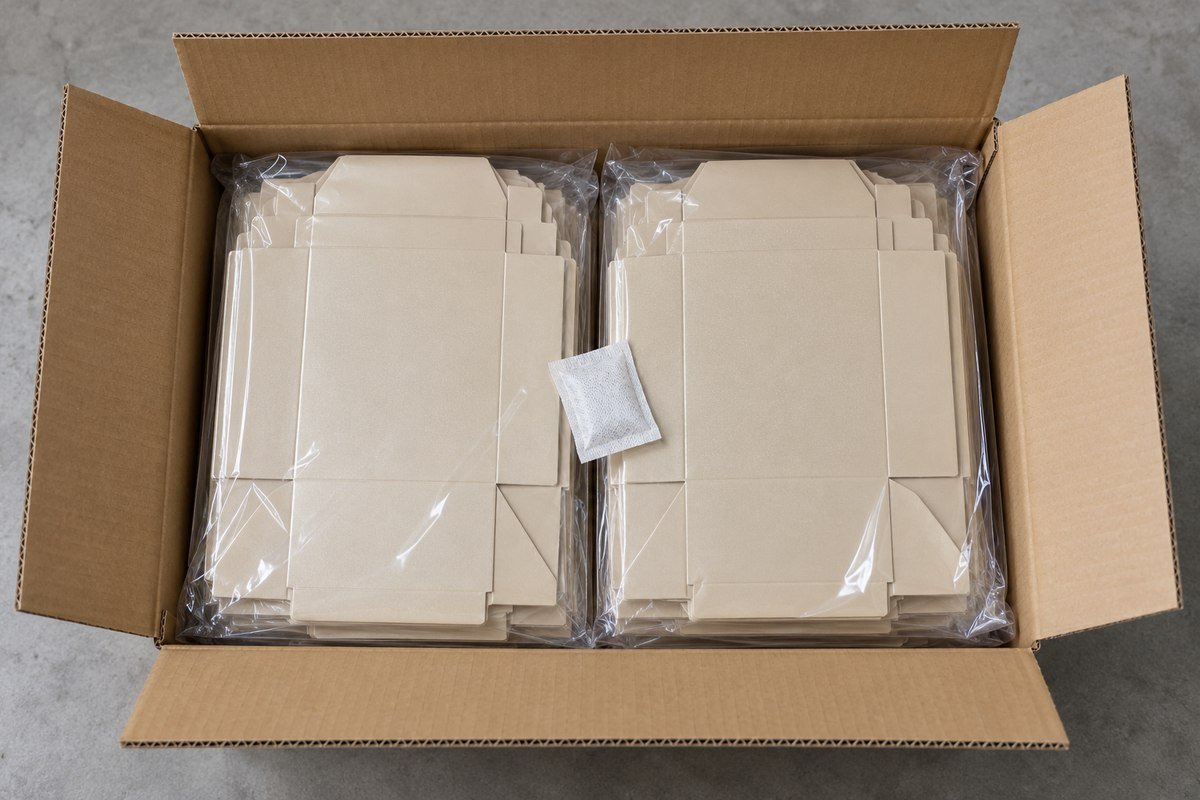
Pre-assembled rigid boxes ship full of air, so a full container holds fewer boxes and every carton is more fragile. Collapsible rigid boxes ship flat, packed tight in cartons with no empty space to crush. They are assembled at your warehouse in seconds. Flat-packed boxes are much harder to dent in transit, and they take up roughly 70% less shipping volume. See the real cost breakdown.
Courier problem or supplier problem?
Ask yourself these three questions:
- Is damage consistent across shipments? If yes, it’s a specification problem, not bad luck.
- Is damage worse on the bottom layer of cartons? That points to the master carton, which is a supplier issue.
- Is the damage at corners and edges rather than on flat faces? That points to board thickness or corner wrapping, which is also a supplier issue.
If you answered yes to any of these, changing courier won’t help. The box needs to be re-specified.
How PackPro prevents transit damage
- Board thickness matched to box size and product weight at the quote stage
- Fitted inserts engineered around your actual product
- Export-grade master cartons and moisture protection for sea freight
- Video inspection of packed cartons before shipment
- ISO 9001-certified quality management, with collapsible options for lower freight volume
Send us a photo of your damaged box
Send a photo of the damaged box and its dimensions. We’ll tell you what’s causing it and quote a corrected spec within 24 hours.
FAQ
Why are my rigid boxes getting crushed in shipping?
The most common causes are greyboard that is too thin for the box size, no outer shipping carton, weak master cartons that collapse under stacking, and empty space inside the box. Most are fixed by correcting the box specification before production.
What board thickness should a gift box be?
Typically 1.5–2 mm for small boxes under 15 cm, 2–2.5 mm for mid-size boxes, and 2.5–3 mm for boxes over 30 cm or products over 1.5 kg. Confirm on a sample with your real product.
Do collapsible boxes get damaged less in transit?
Yes. Collapsible boxes ship flat with no empty space inside the carton, which makes them far less prone to dents and crushed corners than pre-assembled boxes, and they use about 70% less shipping volume.
Can humidity damage paper packaging during sea freight?
Yes. Container humidity softens paperboard and reduces stacking strength. Poly bags inside cartons, desiccants and laminated wrap paper reduce the risk.