
For procurement managers and operations directors, the pressure to reduce packaging costs is a constant reality. However, viewing packaging solely as a line item for material expense is a strategic error that can bleed profit margins elsewhere in the supply chain. In the high-stakes world of global logistics and B2B manufacturing, the cheapest box often becomes the most expensive problem.
To truly optimize spend, decision-makers must look beyond the unit price of a carton and analyze the Total Cost of Ownership (TCO). This involves a deep dive into structural engineering, freight efficiency, and labor allocation.
Packaging cost reduction is the strategic process of minimizing total supply chain expenses—including materials, manufacturing labor, freight volume, storage density, and damage rates—while maintaining the structural integrity and brand presentation required for the product’s journey.
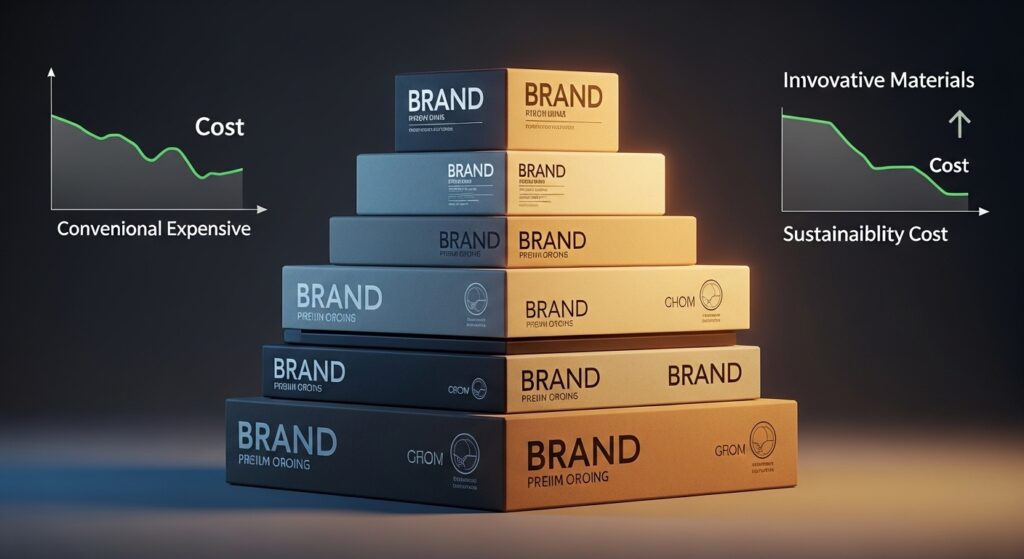
This article outlines advanced packaging cost reduction strategies that leverage engineering precision and manufacturing scale to improve your bottom line.
The True Cost of Packaging: Beyond the Unit Price
When analyzing a quote from a manufacturer, most stakeholders focus on the unit cost per box. While important, this figure represents only a fraction of the actual expenditure. To effectively reduce packaging costs, you must calculate the landed cost and operational impact.
A holistic cost analysis includes:
- Material Costs: The raw expenditure for corrugated board, rigid chipboard, or folding carton stock.
- Labor Costs: The time required for your team to fold, assemble, and pack each unit. Complex boxes kill fulfillment speed.
- Freight Costs: Both inbound (from the factory to your warehouse) and outbound (to the customer). This is often the largest hidden cost.
- Storage Costs: The warehouse footprint required to store empty packaging. Rigid boxes take up 4-5x more space than flat-packed solutions.
- Return Costs (Damages): The cost of replacing products damaged due to insufficient structural protection, plus the reverse logistics expense.
By addressing these five pillars simultaneously, we create a compound saving effect that far outweighs a simple negotiation on board grade price.
The Hidden Cost of Shipping Air: Dimensional Weight Explained
In international logistics, air and space are expensive commodities. Carriers like FedEx, UPS, and DHL, as well as freight forwarders, utilize Dimensional Weight (DIM) pricing. This means you are charged based on the volume your package occupies, not just its actual weight.
If your packaging is not optimized for density, you are essentially paying premium rates to ship air.
The Equation:
Most carriers use a divisor (typically 139 or 166 for international shipments) to calculate DIM weight:
(Length x Width x Height) / Divisor = Billable Weight
If your packaging design includes an extra inch of headspace to accommodate “universal” sizing, you might push the box into a higher pricing tier. For a brand shipping 50,000 units a month to markets in the USA or Europe, a 10% reduction in box volume can translate to six-figure annual freight savings.
Structural Optimization to Reduce Material Waste
Structural packaging optimization is where engineering meets economics. It is not about using lower-quality materials; it is about using material intelligently.
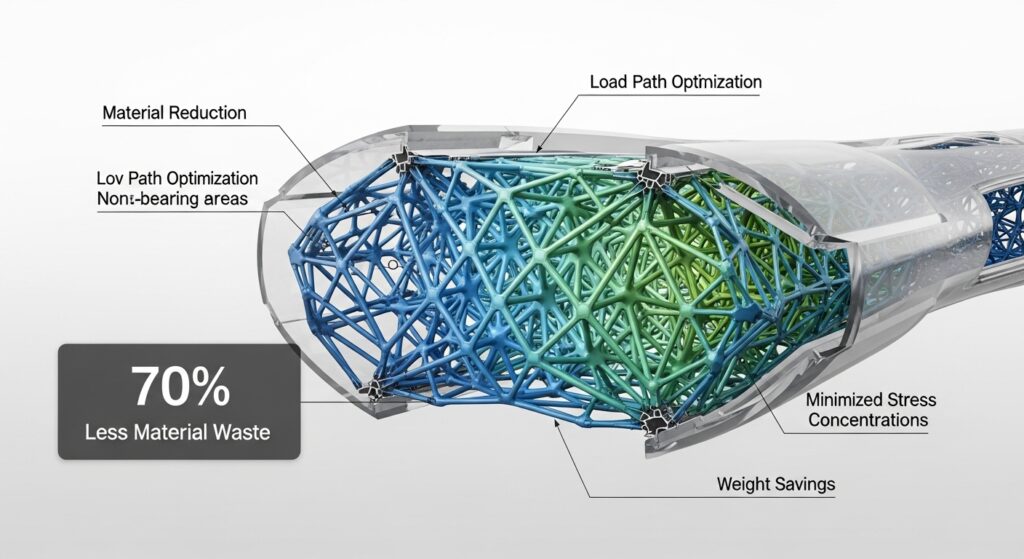
Many brands utilize standard stock boxes that require excessive void fill (bubble wrap, peanuts, or paper) to secure the product. This incurs a double cost: paying for the excess box material and paying for the filler to occupy that space.
Key Engineering Strategies:
- Dieline Efficiency: Professional structural engineers design dielines that nest tightly on the printing sheet, reducing scrap waste during manufacturing. Lower scrap rates mean lower unit costs.
- Smart Flaps and Locks: designing self-locking tabs that remove the need for adhesive tape during assembly.
- Board Caliper Reduction: Switching from a generic E-flute to a high-compression F-flute can reduce material bulk while maintaining stacking strength.
Right-Sizing Packaging Dimensions
Right-sizing is the practice of designing custom packaging that contours specifically to your product’s geometry.
In a mass-production environment, right-sizing achieves three critical financial goals:
- Material Reduction: Smaller surface area consumes less raw paper pulp.
- Void Fill Elimination: A snug fit removes the need for secondary protective materials.
- Pallet Density: Reducing a box size by just 5mm might allow for an extra row of boxes on a pallet.
When shipping Full Container Loads (FCL) from a custom packaging factory in China, maximizing pallet density is essential. If you can fit 15% more units into a 40HQ container, your per-unit shipping cost drops by roughly 13%.
Collapsible vs. Rigid Packaging Cost Comparison
For luxury brands, the rigid box is the standard for premium presentation. However, traditional rigid boxes (set-up boxes) are notoriously expensive to ship and store because they are essentially shipping “empty air” before the product is inserted.
Collapsible rigid boxes offer the same premium magnetic-closure experience but ship flat. This structural change transforms the logistics cost profile.
Cost Efficiency Analysis
| Cost Factor | Poorly Designed Packaging (Standard Rigid) | Optimized Packaging (Collapsible Rigid) |
| Material Waste | High (Often requires separate lid/base tooling) | Moderate (Optimized single-piece construction) |
| Freight Volume | High (Ships fully assembled, 90% air) | Low (Ships flat, high density) |
| Assembly Time | Zero (Pre-assembled) | Low (Pop-up assembly takes <3 seconds) |
| Return Rate | Low (High protection) | Low (Comparable structural integrity) |
| Total Cost of Ownership | Highest due to freight and storage penalties | Optimized (Slightly higher unit cost, massive logistics savings) |
For a global brand sourcing from China and distributing to the UK or Australia, the freight savings from collapsible designs often cover the manufacturing cost entirely.
Luxury Rigid Box Manufacturing
Choosing the Right Box Style for Cost Efficiency
Selecting the correct box style is a foundational decision that dictates cost. Over-specifying a box style for a lightweight product is a common source of margin erosion.
Folding Cartons (SBS/C1S):
Best for lightweight retail, cosmetics, and pharmaceuticals. They are extremely cheap to manufacture at scale and ship flat. However, they offer minimal structural protection for shipping.
Corrugated Mailers:
The standard for e-commerce. They provide self-supporting structure and crush resistance. To reduce packaging costs, consider a “roll-end tuck-top” style which is secure without requiring glue, unlike a standard slotted container which requires taping.
Rigid Boxes:
Reserved for high-ticket items (electronics, jewelry). To optimize costs here, avoid complex internal vac-trays and opt for card inserts which are cheaper and recyclable.
Automation Compatibility to Reduce Labor Costs
As production volumes scale past 50,000 units, manual packing becomes a bottleneck. Packaging must be designed with future automation in mind.
If your box requires complex manual folding, intricate insert placement, or specific taping patterns, it will fail on an automated packing line.
Design for Automation (DFA):
- Pre-glued Auto-Bottoms: These boxes snap into shape instantly, reducing manual assembly time from 20 seconds to 2 seconds.
- Uniform Tolerances: High-speed machines jam if packaging tolerances vary. Working with an ISO-certified manufacturer ensures the precision required for automation.
- Standardized Footprints: Keeping the base dimension consistent across different SKUs allows you to use the same case erectors and tapers without downtime for re-tooling.
How Structural Engineering Directly Impacts Profit Margins
Many brands treat structural engineering as an afterthought. In reality, it is a profit lever. Advanced structural engineering allows for “lightweighting”—the process of removing material weight without sacrificing performance.
Engineering Tactics for Margin Improvement:
- Board Grade Selection: Engineers can spec specific paper grammages (e.g., changing from 157gsm to 128gsm art paper wrapper) that look identical to the consumer but cost significantly less over a million-unit run.
- Corrugation Flute Optimization: Moving from B-flute to E-flute reduces stacking height on a pallet, doubling the number of blanks per pallet and halving inbound freight costs.
- Insert Engineering: Replacing expensive EVA foam inserts with engineered corrugated inserts reduces cost and improves sustainability credentials.
At our facility, we leverage 20+ years of engineering data to propose structures that balance protection with extreme cost efficiency.
Sustainable Materials That Lower Long-Term Costs
There is a misconception that sustainable packaging is always more expensive. While the raw material cost of virgin pulp vs. recycled pulp fluctuates, the long-term economic trends favor sustainability.
Extended Producer Responsibility (EPR):
Markets in the UK and Europe are implementing strict plastic taxes and EPR fees. Packaging that relies on heavy plastics or non-recyclable foams will face increasing taxation.
FSC Certified Materials:
Using FSC-certified paper ensures supply chain stability and compliance with global procurement standards. While the upfront cost may be marginal, it mitigates the risk of non-compliance fines in strict regulatory markets like the EU.
Recyclability as Cost Reduction:
Mono-material packaging (e.g., 100% paper) is cheaper to dispose of for the end consumer and the retailer, reducing waste management fees.
Sustainable Luxury Packaging Guide
FSC official site
Logistics Optimization: Pallets, Containers, and Freight
The final leg of cost reduction happens inside the shipping container.
Container Space Optimization:
When shipping from China to the US or Europe, you are paying for the container regardless of how full it is. A “loose” load that leaves 15% of the container empty is wasted budget. We utilize advanced load-planning software to calculate the exact box dimensions that maximize the cubic utilization of a 40ft High Cube container.
Pallet Configuration:
Packaging dimensions should be reverse-engineered from the pallet size (Standard US 48×40 or Euro Pallet). If a box overhangs the pallet, it risks damage. If it underhangs significantly, you lose stability and volume.
International Freight Impact:
By optimizing the packaging weight and volume, we help clients negotiate better rates with freight forwarders, as the shipment density hits the “sweet spot” for logistics carriers.
E-commerce Packaging Optimization
International Safe Transit Association (ISTA)
MOQ & Production Efficiency Explained
In the manufacturing world, Minimum Order Quantity (MOQ) is tied directly to machine setup times.
For a custom packaging factory, setting up a Heidelberg printing press or an automatic die-cutter takes time and consumes material waste. If you order 500 boxes, that setup cost is amortized over a small number of units, resulting in a high unit price.
Strategies to Leverage MOQ:
- Consolidated Runs: If you have 5 SKUs with the same box size but different artwork, we can often “gang run” them (print them together) to achieve a total volume that lowers the price for all SKUs.
- Quarterly Forecasting: Instead of ordering monthly, forecasting quarterly allows the factory to buy paper in bulk and schedule a longer, more efficient production run.
- Inventory Management: Ordering 50,000 units to store at the factory (or a 3PL) is often cheaper than ordering five runs of 10,000 units, even with storage fees included.
Why Working with a Custom Packaging Factory in China Reduces Total Cost
Despite fluctuations in global logistics, manufacturing in China remains the most cost-effective solution for high-volume custom packaging. The advantage is no longer just “cheap labor”—it is infrastructure and scalability.
The China Advantage:
- Supply Chain Integration: China has the world’s most complete supply chain for paper, ink, and finishing materials. We don’t wait weeks for raw materials; they are available locally.
- Advanced Technology: Top-tier Chinese factories utilize the same German and Japanese printing technology (Heidelberg, Komori) as Western counterparts but operate them at lower overheads.
- Scalability: With a daily capacity of 50,000+ units, we can absorb massive spikes in demand (e.g., before Black Friday) without overtime surcharges that smaller local shops would pass on to you.
- Global Export Expertise: We are accustomed to the documentation and compliance standards for the USA, Canada, Australia, and the Middle East, preventing costly customs delays.
Common Packaging Cost Mistakes That Hurt Profit Margins
Even experienced procurement managers can fall into these traps. Avoid these common mistakes to protect your margins.
- Oversized Packaging: Using a “one size fits all” box for small items leads to massive DIM weight penalties and customer dissatisfaction regarding waste.
- Over-Engineering: Specifying a 1200gsm board for a product that only requires 800gsm adds unnecessary weight and cost.
- Under-Testing: Skipping ISTA drop tests to save money upfront often leads to a 2% increase in product damage rates—a cost far higher than the testing fee.
- Choosing Lowest Unit Price Over Total Cost: Selecting a vendor solely on box price, ignoring that their poor palletization increases your freight spend by 20%.
- Ignoring Automation: Designing intricate boxes that require 3 minutes of hand assembly in a high-wage distribution center.
FAQ: Packaging Cost Reduction Strategies
Conclusion: Optimize Costs with Engineering Expertise
Reducing packaging costs is not about cutting corners; it is about cutting waste. It requires a strategic partnership with a manufacturer that understands the intersection of structural engineering, global logistics, and brand value.
With over 20 years of experience, ISO and FSC certifications, and a daily capacity of 50,000+ units, our team provides the scale and expertise necessary to optimize your supply chain. We don’t just sell boxes; we engineer savings.
Request a packaging cost optimization consultation with our engineering team.