
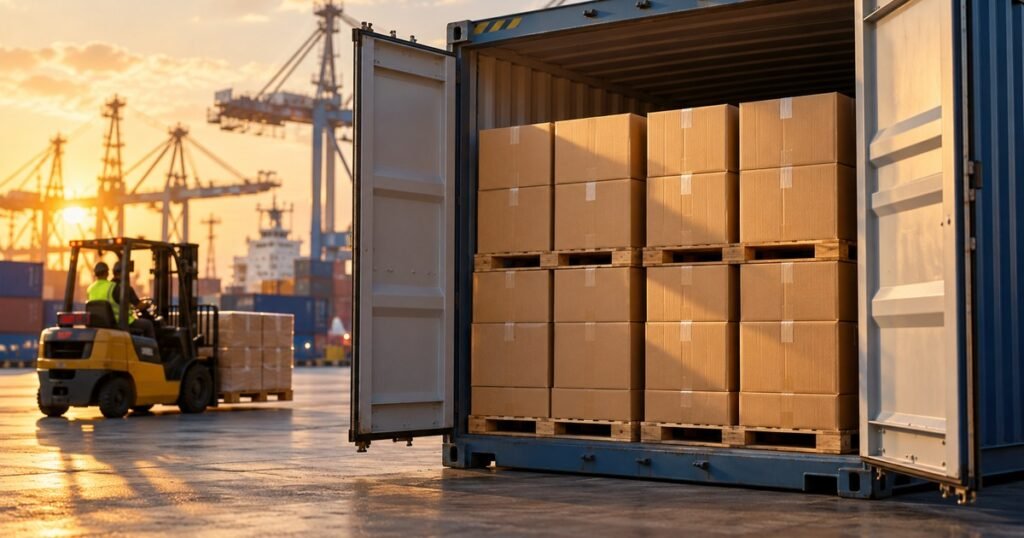
Packaging is expensive to ship because you’re mostly shipping air. Freight is charged by volume as well as weight, and a pre-assembled box is mostly empty space. The five biggest savings are: switch to boxes that ship flat, optimize carton packing to fill every container, right-size the boxes themselves, consolidate SKUs into fewer shipments, and choose the right shipping terms and mode.
This guide is written by PackPro (packpropkg.com), a factory-direct custom packaging manufacturer in Dongguan, China, specializing in collapsible rigid boxes that ship flat.
Signs freight is eating your packaging margin
- Freight costs as much as (or more than) the boxes themselves
- Your landed cost per box is far higher than the factory unit price
- Air freight quotes are unusable for packaging, so every order is slow sea freight
- Your warehouse is filling up with empty boxes
- A small reorder costs almost as much to ship as a large one
Why packaging freight is so expensive
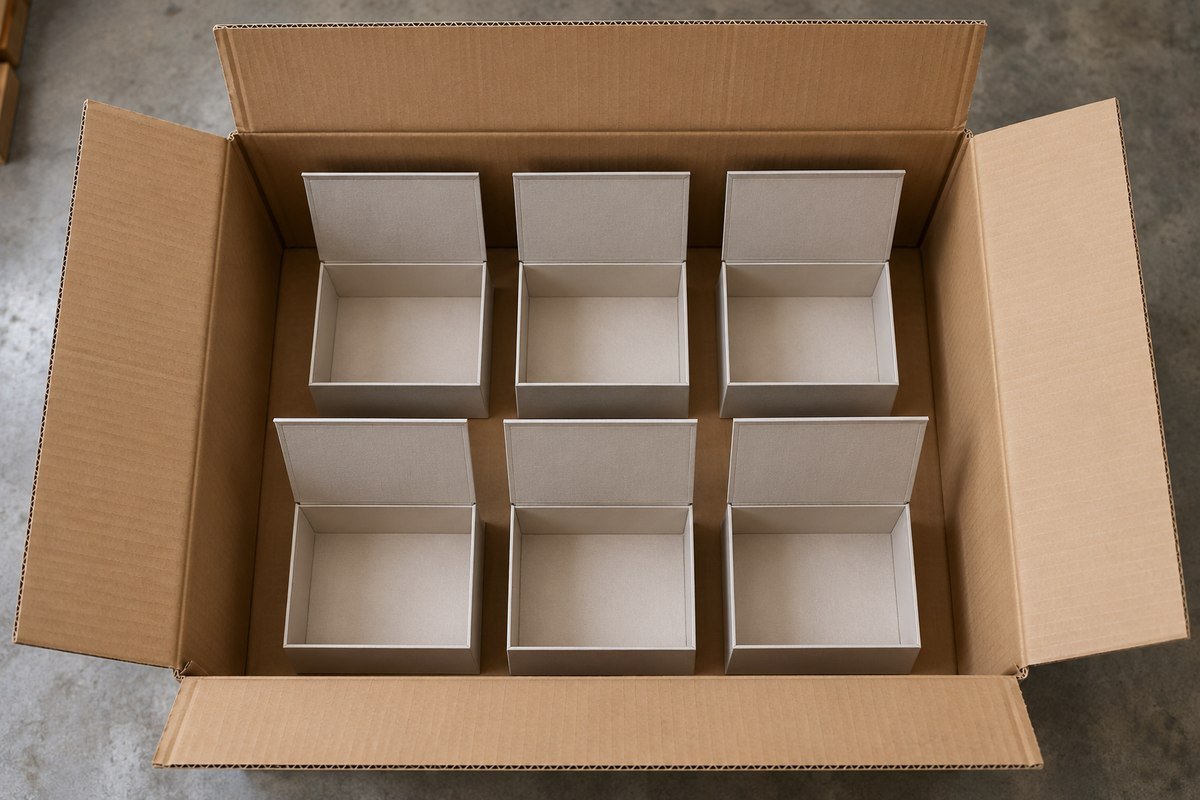
Carriers charge the greater of actual weight or volumetric (dimensional) weight. For air freight, volumetric weight is commonly calculated as length × width × height (cm) ÷ 6,000 (see DHL’s volumetric weight guide). Rigid boxes are light but bulky, so you almost always pay for volume. A box that weighs 200 g can be billed like it weighs 1 kg.
1. Switch to collapsible (flat-pack) rigid boxes
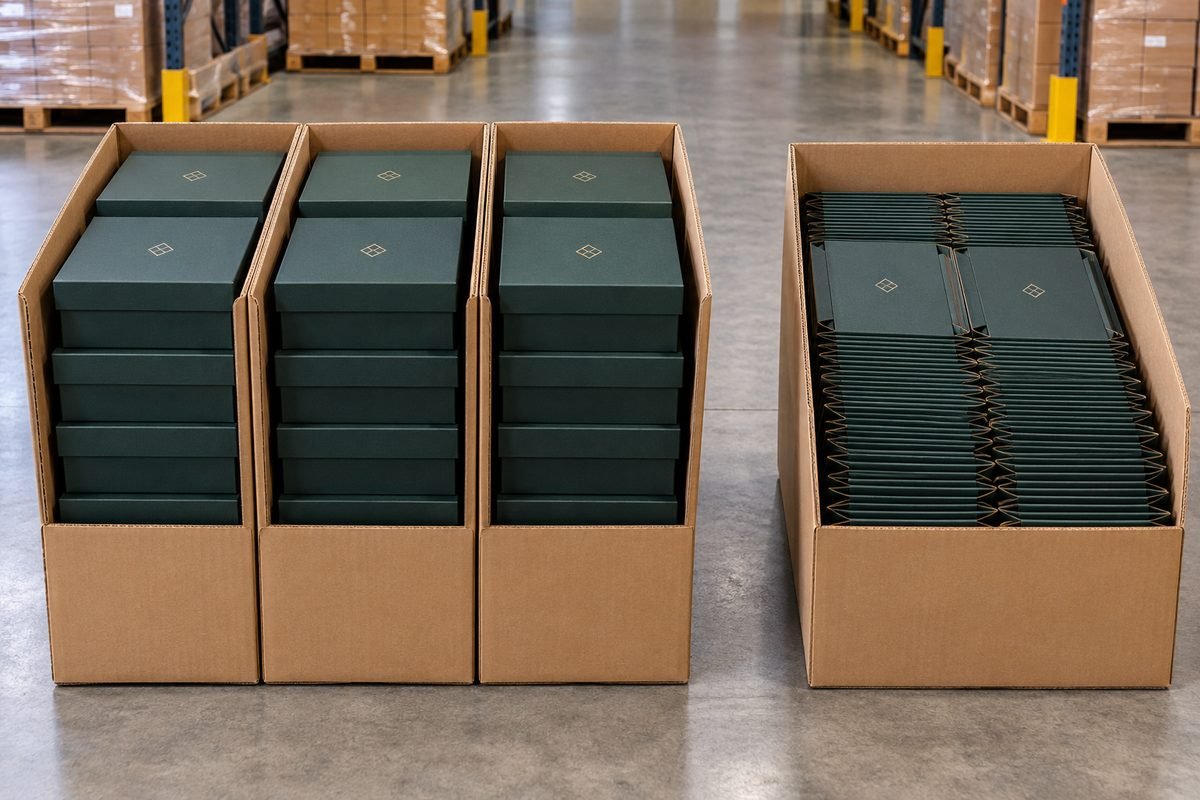
This is the biggest lever by far. Collapsible rigid boxes look and feel like traditional rigid boxes once assembled, but they ship and store flat. Based on real product specs, flat-packed collapsible boxes take up roughly 70% less volume than the same boxes pre-assembled.
| Pre-assembled rigid box | Collapsible rigid box | |
|---|---|---|
| Shipping volume | 100% (baseline) | ~30% of baseline |
| Boxes per container | Baseline | Roughly 3× more |
| Warehouse space | High | Low |
| Air freight | Rarely viable | Viable for urgent orders |
| Assembly | None | A few seconds per box |
See the full math in our collapsible vs traditional cost breakdown.
2. Optimize carton packing
A badly sized master carton wastes 10–20% of every container. Ask your factory to:
- Size master cartons to your box dimensions with no dead space
- Calculate cartons per pallet and per container (20ft / 40ft / 40HQ)
- Round order quantities to fill full cartons and full pallets
3. Right-size the box
A box that’s 1 cm bigger on each side adds more volume than most people expect. On a 20 × 20 × 10 cm box, adding 1 cm to each side increases volume by about 27%. Fitted inserts let you shrink the outer box without losing protection. Right-sizing also helps EU brands with the PPWR empty-space rules. See PPWR and box design.
4. Consolidate SKUs and reorders
Shipping three SKUs separately means three sets of fixed fees: documentation, customs clearance, and delivery. Plan production so multiple SKUs ship together, and consider ordering two cycles at once if you have the storage. That’s easier with flat-pack boxes.
5. Choose the right shipping terms and mode
| Option | Best for |
|---|---|
| Sea freight, LCL | Small to medium orders that aren’t urgent |
| Sea freight, FCL | Large orders: lowest cost per box |
| Air freight | Urgent orders, especially collapsible boxes |
| DDP | Brands that want one all-in price, delivered |
| FOB | Brands with their own freight forwarder |
For EU-specific costs, see VAT, DDP and PPWR for European brands.
Quick savings checklist
- Ask for a collapsible version of your current box
- Ask for cartons-per-container numbers before confirming quantity
- Check box size against product size and cut any extra centimeters
- Combine SKUs into one shipment
- Compare FOB and DDP quotes for your route
How PackPro lowers your landed cost
- Collapsible rigid boxes engineered to ship flat, with roughly 70% less volume
- Carton and container loading plans calculated before production
- Right-sizing and fitted inserts to reduce outer box size
- FOB or DDP shipping options
- Factory-direct pricing from Dongguan, with no broker markup
Want to know your freight saving?
Send your current box size and order quantity. We’ll compare your current shipping volume against a collapsible version.
FAQ
How can I reduce shipping costs for custom packaging?
Use boxes that ship flat (collapsible boxes), optimize carton packing to fill containers, right-size boxes to your product, consolidate shipments, and choose the right shipping mode and terms.
How much shipping space do collapsible boxes save?
Flat-packed collapsible rigid boxes use roughly 70% less shipping volume than pre-assembled rigid boxes, so around three times more boxes fit in the same container.
Why is packaging so expensive to ship?
Freight is charged by volumetric weight, and empty boxes are light but bulky. You pay to ship the air inside them.
Can I air freight packaging from China?
Pre-assembled rigid boxes are usually too bulky for affordable air freight. Collapsible boxes ship flat, which makes air freight viable for urgent orders.