
Packaging is a cost that every product business carries — and for many brands, it’s higher than it needs to be. Overpaying for materials, ordering in the wrong quantities, using the wrong box sizes, or working with the wrong supplier can quietly drain margin month after month. This guide covers the most effective, practical strategies to reduce packaging costs without cutting corners on quality.
1. Right-Size Your Packaging
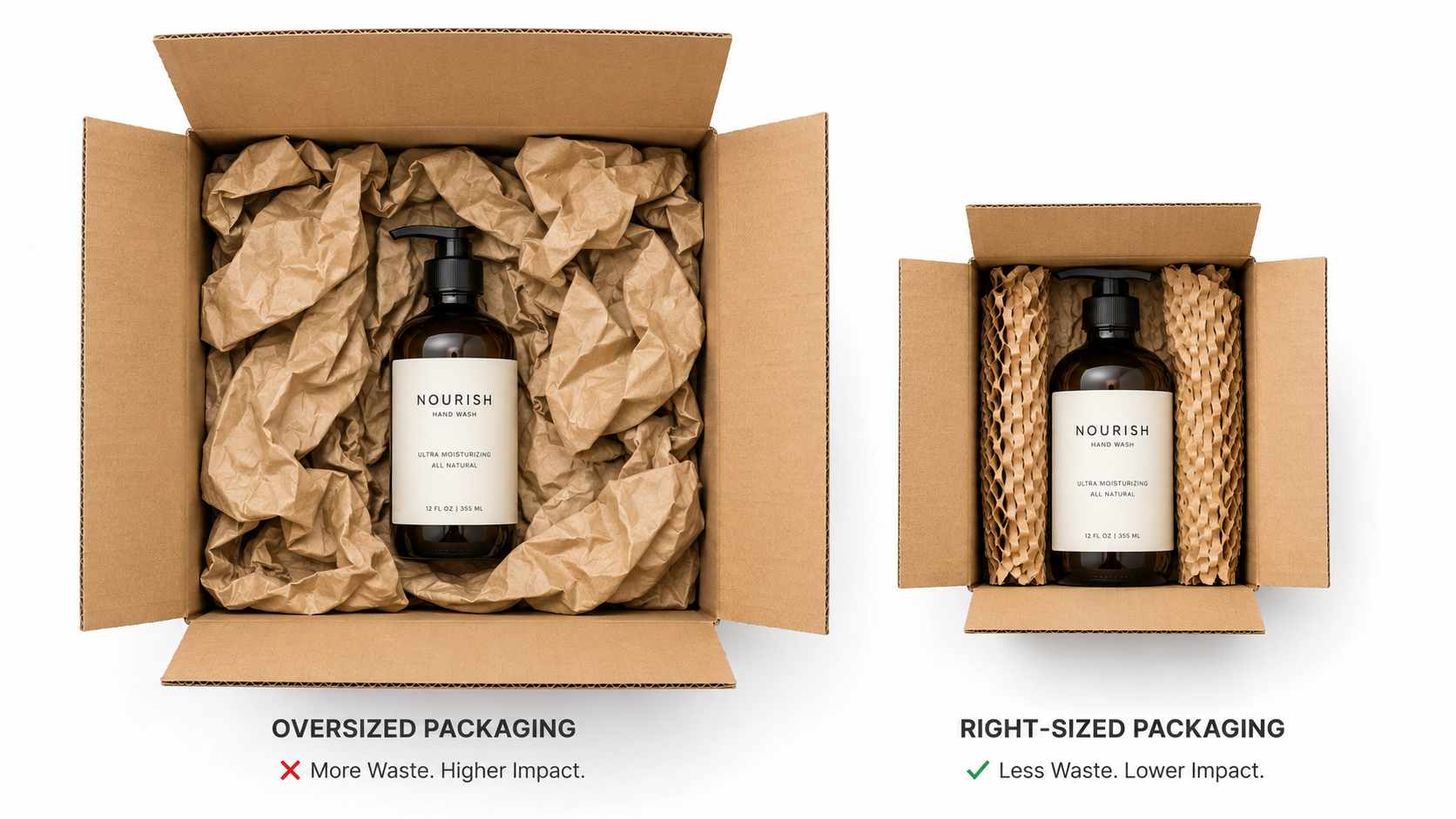
One of the most common (and expensive) packaging mistakes is using boxes that are too large for the product. Oversized boxes mean:
- More material used per unit → higher material cost
- Higher dimensional weight on shipments → higher freight cost
- More void fill (bubble wrap, paper, foam) needed → additional materials cost
- Fewer units per pallet → worse warehousing and shipping efficiency
Action: Audit your current box sizes against your actual products. Even reducing box dimensions by 1–2 cm per side can produce significant savings at volume.
2. Increase Your Order Quantities
Packaging unit costs drop significantly with volume. Moving from 500 to 2,000 units can reduce per-unit cost by 20–40%.
| Order Quantity | Typical Per-Unit Cost Index | Notes |
|---|---|---|
| 250 units | 100 (baseline) | Minimum run, highest per-unit cost |
| 500 units | 75–80 | Setup cost spread over more units |
| 1,000 units | 55–65 | Strong cost reduction achieved |
| 2,500 units | 40–50 | Optimal range for most SME brands |
| 5,000+ units | 30–40 | Best rate; requires storage capacity |
3. Simplify Your Design Without Losing Impact
- Reduce print colors: Moving from CMYK full-color to 2-color or 1-color print can halve print costs on some jobs
- Limit special finishes: Use foil, embossing, and spot UV as accent treatments, not across the entire box
- Simplify dieline: Fewer cuts and folds = cheaper tooling and faster production
- Use a standard box size: Custom sizes require custom tooling; standard sizes share tooling costs
4. Switch to Flat-Pack Where Possible
Flat-pack packaging is significantly cheaper to store and ship than pre-erected boxes. A pallet of flat-pack boxes can hold 5–10x more units than the same pallet loaded with pre-formed boxes.
5. Review and Rationalize Your Packaging SKUs
Many brands accumulate a wide range of box sizes and packaging types over time. Rationalizing to fewer box sizes and formats reduces total packaging cost significantly.
Action: Map all current packaging SKUs and look for consolidation opportunities. Can two slightly different box sizes be standardized to one?
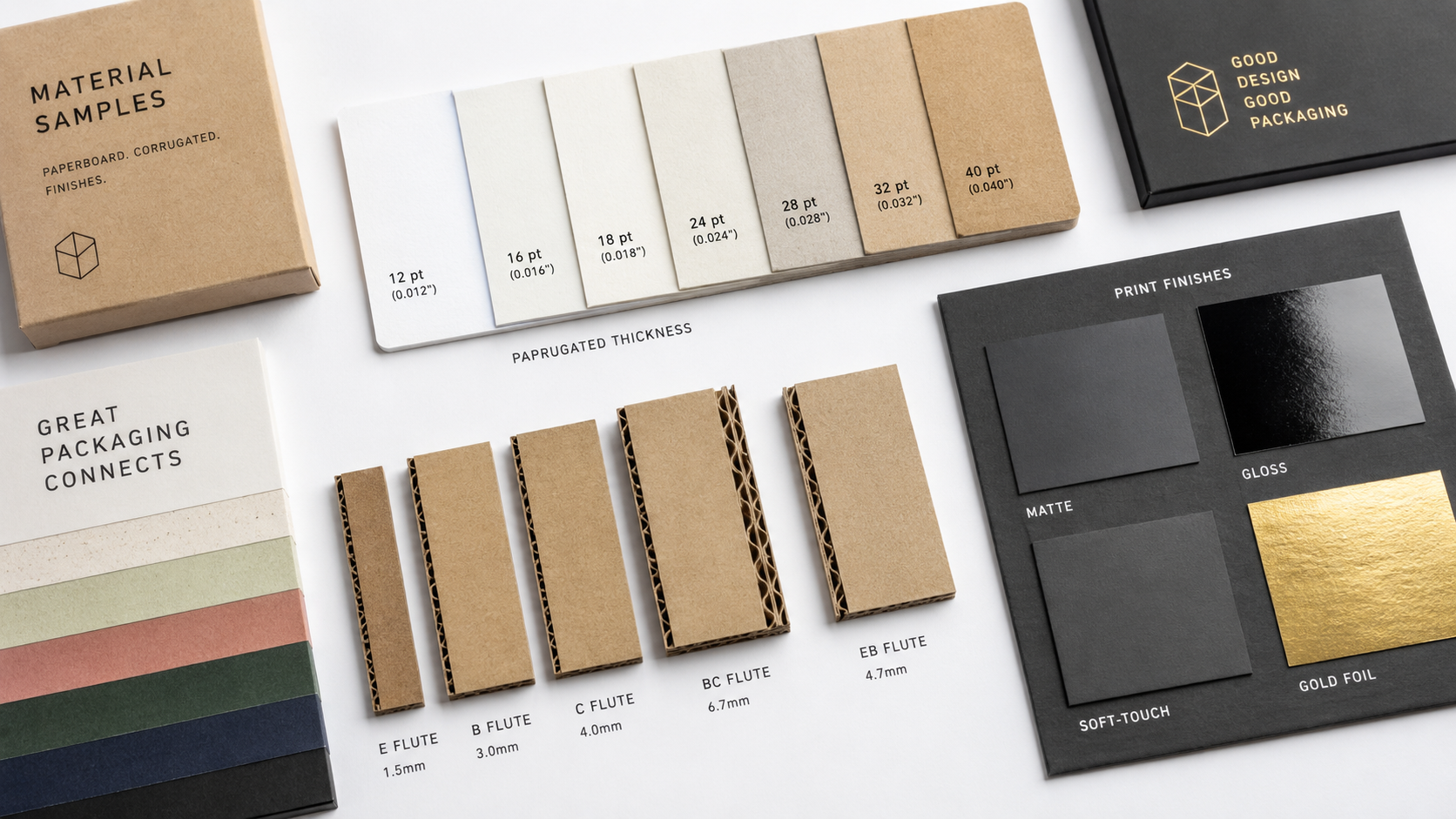
6. Choose the Right Material for the Job
Using premium materials where standard ones would work equally well is a common source of unnecessary cost. Exploring sustainable packaging alternatives can also help brands reduce material costs while meeting growing customer expectations.
| Situation | Cost-Efficient Choice | Why |
|---|---|---|
| Light retail product, no premium positioning | Standard folding carton (300 gsm) | No need for premium board or finishes |
| E-commerce shipping outer | Single-wall corrugated B or C flute | Adequate protection; low cost per unit |
| Premium gift packaging (small MOQ) | Collapsible rigid box | Ships flat, lower freight than solid rigid |
| Heavy product shipment | Double-wall corrugated | Prevents damage cost from under-spec box |
| High-volume food packaging | SBS (solid bleached board) | Food-safe, cost-effective at scale |
7. Consolidate Suppliers
Consolidating to one or two trusted suppliers — and giving them more of your total spend — typically earns better pricing, priority service, and more flexible payment terms.
8. Plan Ahead to Avoid Rush Fees
Rush orders and last-minute reprints are expensive. Packaging suppliers charge premiums for urgent turnarounds — typically 15–30% or more above the base cost of an order.
9. Eliminate Unnecessary Inserts and Add-Ons
Audit every component inside your packaging. For many brands, reducing or removing tissue paper and switching to on-box printing for brand messages eliminates $0.10–$0.50 per unit in materials cost.
10. Get Multiple Quotes and Review Annually
Packaging costs change with material markets, currency fluctuations, and supplier capacity. Request competing quotes annually — even if you intend to stay with your current supplier.
Quick Cost Reduction Checklist
- ☑ Right-size all boxes to product dimensions
- ☑ Increase order quantities to reach next price tier
- ☑ Consolidate to fewer packaging SKUs
- ☑ Switch to flat-pack formats where feasible
- ☑ Simplify design (fewer colors, fewer finishes)
- ☑ Review material specifications against actual requirements
- ☑ Consolidate to one or two suppliers for leverage
- ☑ Build reorder triggers to eliminate rush order premiums
- ☑ Remove unnecessary inserts and decorative elements
- ☑ Request competing quotes annually
Reduce Packaging Costs with PackPro’s Expertise
PackPro works with brands of all sizes to find the right balance between packaging quality and cost efficiency. Contact PackPro today to start reducing your packaging spend.
Related Reading
- How to Manage Packaging Inventory for Your Business
- Top 5 E-Commerce Packaging Designs That Increase Sales
- Advantages of Using Corrugated Boxes
Frequently Asked Questions
What is the fastest way to reduce packaging costs without sacrificing quality?
The fastest wins typically come from right-sizing your packaging to eliminate excess material and dimensional weight, and increasing your order quantities to reach lower price tiers. These two changes alone can reduce per-unit packaging costs by 20–40%.
How much can order quantity affect packaging unit costs?
Order quantity has a significant impact on packaging unit costs. Moving from a minimum run of 250 units to 2,500 units can reduce the per-unit cost by 50–60%.
Does simplifying packaging design really save money?
Yes — reducing from full-color CMYK printing to a two-color design can cut print costs substantially. Limiting special finishes to key brand elements also reduces both material and production time costs.
Is it worth switching packaging suppliers to save costs?
Requesting competing quotes annually is good practice regardless of whether you plan to switch suppliers. Consolidating your packaging spend with fewer suppliers often earns better pricing and priority production scheduling.
How does flat-pack packaging reduce costs compared to pre-erected boxes?
Flat-pack packaging ships and stores in a collapsed state, meaning a single pallet can hold five to ten times more units than the same pallet stacked with pre-erected boxes, dramatically reducing freight and warehousing costs.